Beginner Fermentation Starter Kit UK: What to Buy First
As an Amazon Associate I earn from qualifying purchases. This page contains affiliate links — if you buy through them, I earn a small commission at no extra cost to you.
Forget the fancy £50 ‘starter kits’ you see online; you can launch your first batch of fermented vegetables with just three essential items and a bit of patience. I’ve been there – scrolling through glossy Instagram feeds, wondering if I was about to waste money on gadgets I’d never use, or worse, end up with mouldy cabbage. As a fellow home cook who’s learned a thing or two, I’ll show you exactly what you need, where to buy it in the UK, and how to sidestep the common faff that leaves many first-time fermenters feeling stuck. If you’re curious about my own fermentation journey, you can read more about me here.
The good news is, you can start fermenting vegetables at home with just three core items: a UK-sized Kilner jar, a glass fermentation weight to keep everything safely under the brine, and the right kind of non-iodised pickling salt, measured carefully at 2% of your water volume. These crucial components are all readily available from UK retailers for well under £20. You absolutely do not need an expensive, all-in-one kit to get a successful, delicious first batch going. By the end of this, you’ll have a clear, budget-friendly shopping list and a solid plan to start fermenting vegetables with confidence.
Ready to check you’ve got everything covered? Download the Free Fermentation Starter Checklist and keep it handy while you shop.
The “Must‑Have” List (The Core Kit)
If you strip away the hype, a successful fermentation hinges on three things: a non‑reactive container, a way to keep the produce under the brine, and the right kind of salt. Here’s the practical breakdown.
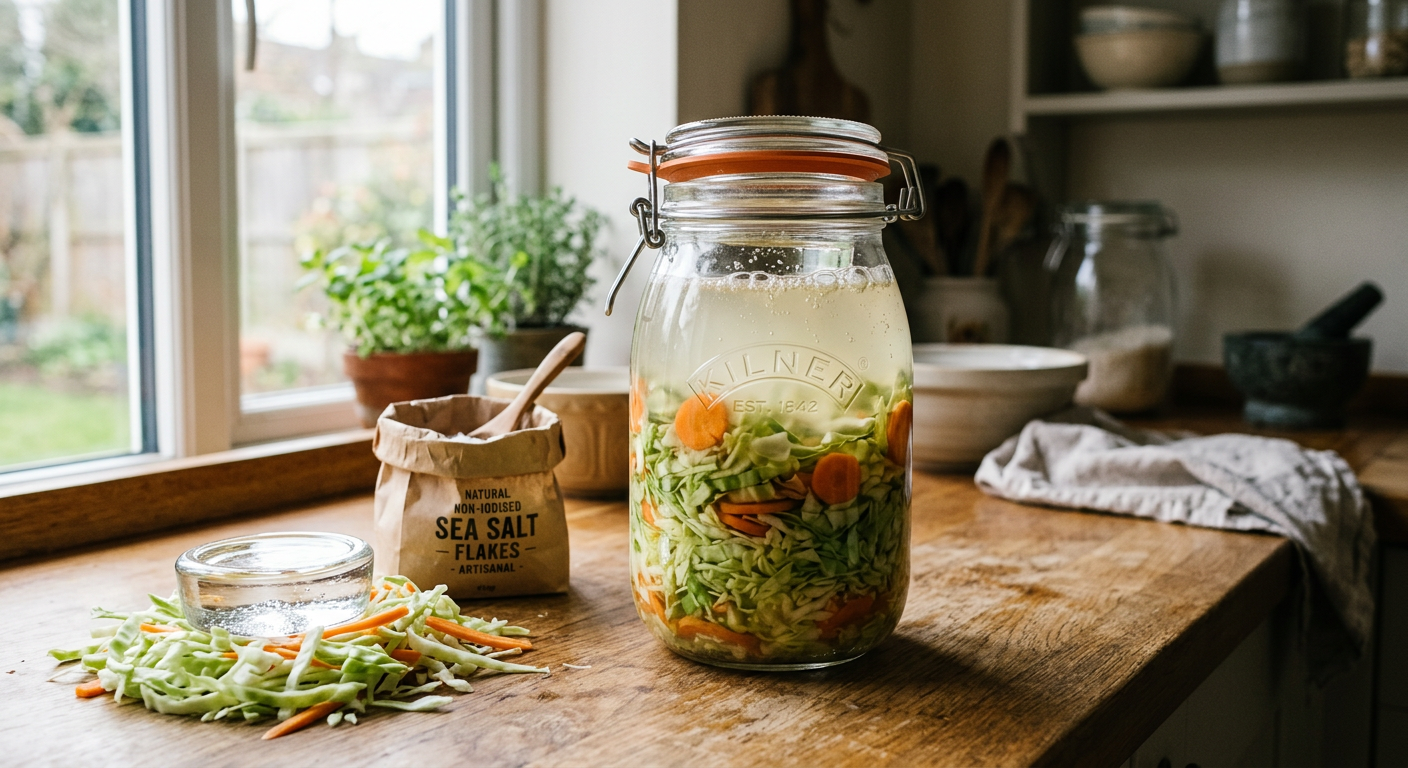
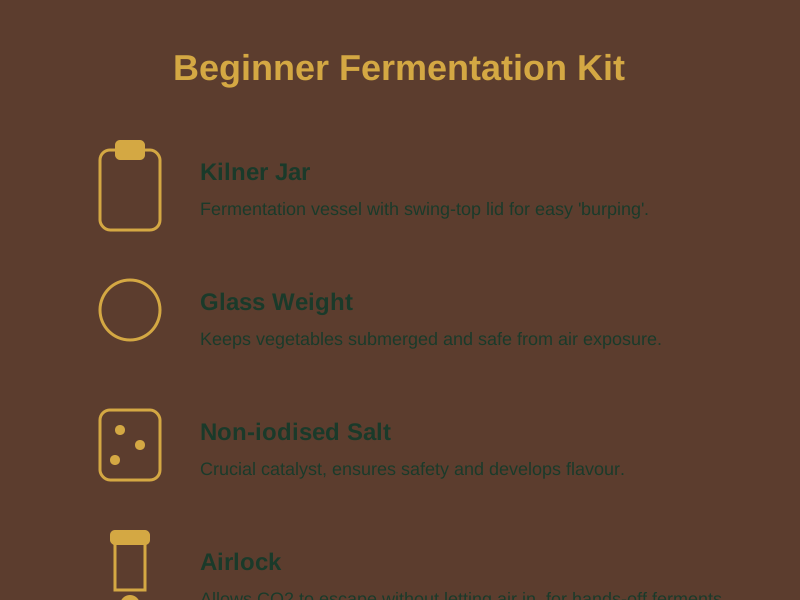
The Jar: Kilner jars with swing‑top lids are the UK standard. They seal tightly, are easy to open for “burping”, and you won’t have to wrestle with the US‑style two‑piece Mason lid that often feels fiddly and can let air in. A 1 Litre jar (around £8‑£12) is perfect for a first sauerkraut or a batch of quick pickles; if you’re feeling ambitious, a 2 Litre size adds only a few quid more and gives you room to experiment.
The Weight: Keeping vegetables submerged is the golden rule – the moment something sits above the brine, mould loves it. A glass fermentation weight (usually a smooth, food‑grade stone or a small glass disc) is the safest bet because it’s non‑porous and can be sterilised in the kettle. You can find a decent one for roughly £5‑£10 on Amazon UK or Lakeland. If you’re really tight on cash, a clean, heavy glass jar turned upside‑down works as a makeshift weight, but I learned the hard way that a cheap plastic piece can absorb odours and become a breeding ground for unwanted microbes. Remember, good hygiene is essential for any food preparation, including fermentation, to avoid unwanted bacteria. The NHS offers solid advice on general food hygiene that applies here too.
The Salt: Non‑iodised pickling salt is a must. Iodine and anti‑caking agents in regular table salt inhibit the lactic‑acid bacteria that do the fermenting, and they can leave an off‑taste. Aim for a 2 % salt‑to‑water ratio – that’s about 20 g of salt per litre of water. A 500 g bag of fine sea salt from Waitrose or a bulk pack from The Spiceworks costs roughly £4‑£6 and will last you many batches.
Budget note: If you’re looking for a cheap alternative to a dedicated glass weight, the IKEA KORKEN jar (around £3‑£5) can be filled with water and used as a weight – it’s not specialised, but it does the job without the extra shipping cost of specialist items.
What you’ll spend: Roughly £15‑£20 for the three essentials – well under the price of most “starter kits” that include unnecessary extras.
The “Nice‑to‑Have” List (The Upgrade Kit)
Once you’ve nailed the basics, you might want a bit more convenience or capacity. These upgrades aren’t essential, but they do smooth out the process.
Airlock System: A fermentation airlock, such as the Masontops Pickle Pipe (paid link) or the Fermentology lid, lets CO₂ escape without you having to remember to “burp” the jar daily. It’s especially handy in winter when you’re fermenting at lower temperatures and the process slows down. Prices hover around £10‑£15 on Amazon UK.
Fermentation Crock: For larger batches – think a full‑size sauerkraut for a family of four – a stoneware crock (e.g., the Harsch 20 L model) provides ample room and a built‑in weight plate. The downside is the upfront cost (roughly £70‑£90) and the need for a sturdy countertop, so it’s a step up only when you’re sure you’ll use it regularly.
pH Meter (Optional): If you’re curious about the exact acidity of your brine, a basic Salter pH meter (£15‑£20) can give you a reading. It’s not required for safety – the brine’s salty, sour smell is usually a reliable guide – but it’s a fun tool for the science‑curious.
| Upgrade | Pros | Cons |
|---|---|---|
| Airlock | Hands‑off fermentation, less mould risk | Adds a few pounds to the kit, extra cleaning |
| Crock | Large capacity, traditional look | Expensive, heavy |
| pH Meter | Precise monitoring, good for experiments | Not needed for everyday pickles, calibration required |
UK‑Specific Buying Guide
Finding the right gear without breaking the bank is easier when you stick to UK‑based retailers.
- Lakeland – excellent range of Kilner jars and glass weights; free UK delivery on orders over £30.
- Amazon UK – quick shipping, plenty of glass weight options; just watch the “Ships from abroad” tag, as US‑based sellers can add £10‑£15 in postage.
- John Lewis – reliable quality, especially for higher‑end jars; occasional sales bring a 2 Litre Kilner down to £10.
- IKEA – the KORKEN jar is a budget‑friendly weight alternative, and the price is consistent across the UK.
A quick tip: always check the product description for “UK stock” to avoid surprise customs fees. And remember, GBP pricing can fluctuate, so a £12 jar today might be £13 next week – not a huge deal, but worth a glance before you click “add to basket”.
What common pitfalls should beginners avoid when buying fermentation gear?
The market is full of “all‑in‑one” kits that promise a hassle‑free start, but most of them include items you’ll never use for vegetable fermentation. These often lead to wasted money and frustration for beginners.
- SCOBY‑centric kits: These are aimed at kombucha, not cabbage. You’ll end up with a culture you can’t use for sauerkraut, and the extra cost quickly adds up.
- Plastic weights: They’re cheap, but over time they absorb odours and can harbour bacteria. I once used a cheap silicone weight and noticed a faint rubbery taste in my pickles – a clear sign to ditch the plastic.
- Mason jars with two‑piece lids: In the UK they’re harder to source, and the sealing ring can let air in, increasing mould risk. Stick with Kilner swing‑tops for a reliable seal.
Don’t buy this: Any starter set that includes a fermentation crock, airlock, and a bunch of spices for under £30. If the price seems too good to be true, the quality probably is, and you’ll likely waste money on a half‑baked kit that still leaves you buying a proper jar and weight later.
Frequently Asked Questions
Can I use a regular Kilner jar without a weight?
Yes, you can, but you’ll be betting on the vegetables staying completely submerged. In practice, the brine often recedes as the veggies release water, and any exposed surface invites mould. A glass weight is the safest, most “set‑and‑forget” solution.
Do I really need non‑iodised salt?
Absolutely. Iodine and anti‑caking agents in table salt inhibit the lactic‑acid bacteria that drive fermentation and can leave a metallic aftertaste. Pickling or fine sea salt does the job without the interference.
Is a starter kit worth it?
Only if it bundles a dedicated airlock and a proper glass weight. Anything else – especially kits that throw in a SCOBY or exotic spices – is extra cost you don’t need for basic vegetable ferments.
Where can I buy glass weights in the UK?
Specialist fermentation shops on Amazon UK stock them, and Lakeland often carries a small selection. I’ve also seen the IKEA KORKEN jar repurposed as a weight – not a purpose‑built piece, but it works in a pinch.
What size jar should I start with?
A 1 Litre Kilner jar is perfect for a first batch of sauerkraut or a small batch of pickled carrots. If you want to experiment with larger volumes, step up to a 2 Litre jar – the price difference is minimal and the extra space gives you room to play.
Essential Fermentation Kit Comparison
| Item | Purpose | Approx. Cost | Key Feature |
|---|---|---|---|
| Kilner Jar | Fermentation vessel | £8 - £12 | Swing-top lid for easy ‘burping’ |
| Glass Weight | Keeps veg submerged | £5 - £10 | Non-porous, easy to sterilise |
| Non-iodised Salt | Fermentation catalyst | £4 - £6 | 2% ratio for safety and taste |
| Airlock (Optional) | CO₂ release | £10 - £15 | Hands-off fermentation |
| Fermentation Crock (Optional) | Large batches | £70 - £90 | Built-in weight plate |
| pH Meter (Optional) | Acidity check | £15 - £20 | Precise monitoring tool |
Where to Go From Here
You now have a clear picture of the three essential items – Kilner jar, glass weight, and non‑iodised salt – and where to source them without paying a fortune on shipping. Remember, fermentation is more about patience and a clean environment than about fancy gadgets. With the basics sorted, you can start experimenting with flavours, from classic German sauerkraut to spicy kimchi, and watch the transformation happen right in your kitchen. For more recipes and guides, check out my blog.
If you’re ready to make sure you’ve ticked every box before you head to the shop, download the Free Fermentation Starter Checklist. It walks you through the exact quantities, cost ranges, and hygiene steps you’ll need for a successful first batch.
Got a question or need a hand with a specific recipe? Feel free to get in touch – I’m always happy to help a fellow fermenter avoid the mouldy pitfalls I’ve learned about the hard way.
Happy fermenting, and may your brine stay perfectly under the surface!
Related Guides
For a complete overview, see our Essential Fermentation Equipment for UK Beginners.
Sources & Further Reading
- NHS - Food Hygiene and Safety
- Lakeland - Fermentation Essentials
- The Spiceworks - Bulk Salt Suppliers
As an Amazon Associate I earn from qualifying purchases. The products linked above are ones I would use or recommend on my own camps.
Note: The information provided is for general guidance only. Always verify specific product details and safety guidelines with a qualified professional or official source.