Best Beef Cuts for Biltong in the UK
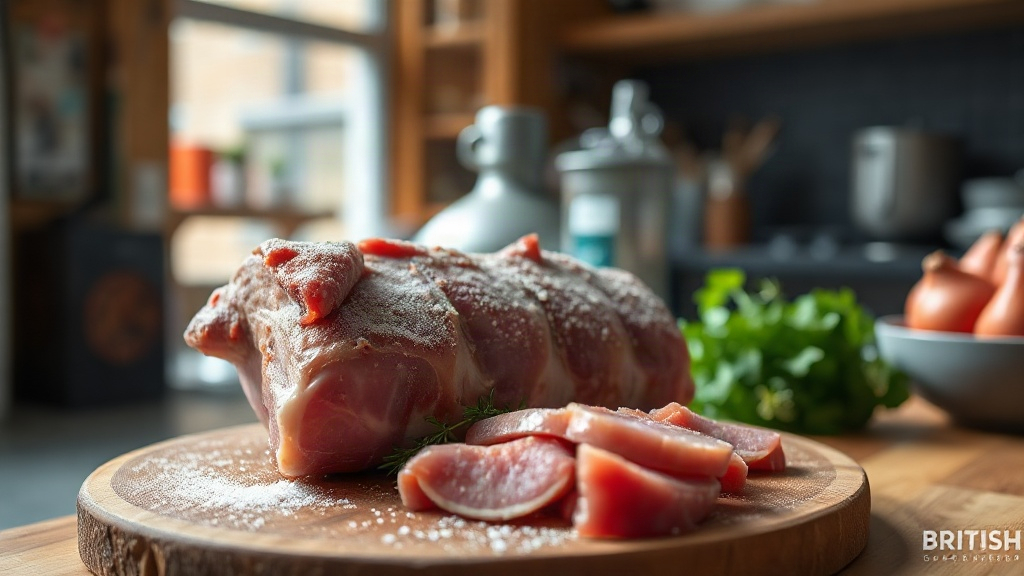
When you’re buying beef for biltong at a UK butcher or supermarket, you’ll typically find three main cuts: topside with its straight grain running cleanly along the muscle, silverside carrying a tougher connective seam through the centre, and premium sirloin with its rich marbling that pushes the price up considerably. Each has distinct drying characteristics that will shape your final result.
Most failed biltong batches trace back to choosing the wrong cut, not mistakes in curing. The right meat needs to stay lean as it dries, slice cleanly along the grain, and avoid large exterior fat pockets that can turn rancid.
What Makes a Good Biltong Cut?
Three physical properties determine how well a cut works for biltong: fat distribution, grain consistency, and structural simplicity.
📺 Watch: How To Make The Best Biltong You Ever Tasted
Fat matters most for shelf life. While some internal marbling adds flavour, external fat deposits oxidise quickly and are the main reason home biltong spoils. Trim all visible fat before curing to avoid this.
The grain direction dictates how the dried meat pulls apart. Biltong should tear along parallel muscle fibres like splitting logs. Inconsistent or interlocked grain creates ragged strips that look and feel rough. When examining a cut, look for clear, unidirectional fibres.
Simple muscle structure makes trimming straightforward. Cuts with one dominant muscle group and minimal connective seams give you predictable results. For example, avoid using stewing beef as it comes from tougher parts with significant connective tissue designed to break down during slow cooking, not drying; you need lean muscle cuts like topside or silverside that dry properly into strips.
Topside: The Reliable Choice
Topside comes from the inside hind leg and delivers exactly what biltong needs: lean meat with minimal exterior fat, consistent grain running lengthwise, and easy trimming. Its availability in UK supermarkets makes it accessible, though prices vary by retailer and cut size. That straight grain ensures the dried meat pulls apart in satisfying strips rather than tearing unevenly. The cut itself doesn’t add strong flavour—fat content matters more. Lean cuts like topside produce cleaner, focused flavours as they dry. Standard supermarket beef works perfectly; look for “Topside of Beef” from the fresh counter, focusing on freshness and leanness rather than seeking specialist products.
For a first batch, topside offers reliability. Once comfortable with the process, you can experiment with different spice blends or curing times.
Silverside: The Premium Option with Complications
Often marketed as the ideal biltong cut, silverside works for premium producers but presents practical challenges for home users. A seam of tougher connective tissue runs through the muscle, making clean slicing more difficult. While priced similarly to topside at many retailers, you’re getting a cut that requires more careful preparation.
The connective tissue doesn’t make silverside unsafe—just more work to achieve clean results. This extra effort matters when you’re starting out and want predictable outcomes.
Sirloin: Better Reserved for Other Uses
Sirloin’s rich marbling makes it excellent for steaks but problematic for biltong. The premium price reflects its barbecue appeal, but during drying, the meat loses significant weight through moisture loss, effectively doubling the cost of your finished biltong. More importantly, the fat that makes sirloin tasty when cooked becomes a liability during extended drying, increasing rancidity risk. More marbled cuts taste richer but carry higher rancidity risk during extended drying.
Alternative Options: Venison and Others
Venison has gained popularity in UK biltong making, but it’s a secondary option rather than a starting point. Traditional biltong flavours are calibrated for beef’s specific fat content and texture. Venison’s leaner composition and different fibre structure mean it dries faster and requires adjusted handling to avoid becoming overly tough.
📺 Watch: How to Make Venison Biltong Like a Pro
If you have access to venison through shooting or a game supplier, it’s worth experimenting with once you’ve mastered beef biltong. For most people buying from standard retailers, beef remains the more forgiving choice.
The cut you choose sets the ceiling for your biltong quality. Even the best spice blend can’t compensate for meat with the wrong grain structure or excessive exterior fat.
Quick Comparison of Biltong Cuts
| Cut | Grain Structure | Fat Content | Best For |
|---|---|---|---|
| Topside | Consistent, runs lengthwise | Lean, minimal exterior | Beginners, cost-effective batches |
| Silverside | Consistent but has connective tissue seam | Lean | Experienced users willing to work around the seam |
| Sirloin | Good marbling | High marbling | Barbecue, not recommended for biltong |
| Venison | Lean, different fibre structure | Very lean | Secondary option for experienced makers |
📺 Watch: Biltong for Beginners (Easy to Follow Recipe)
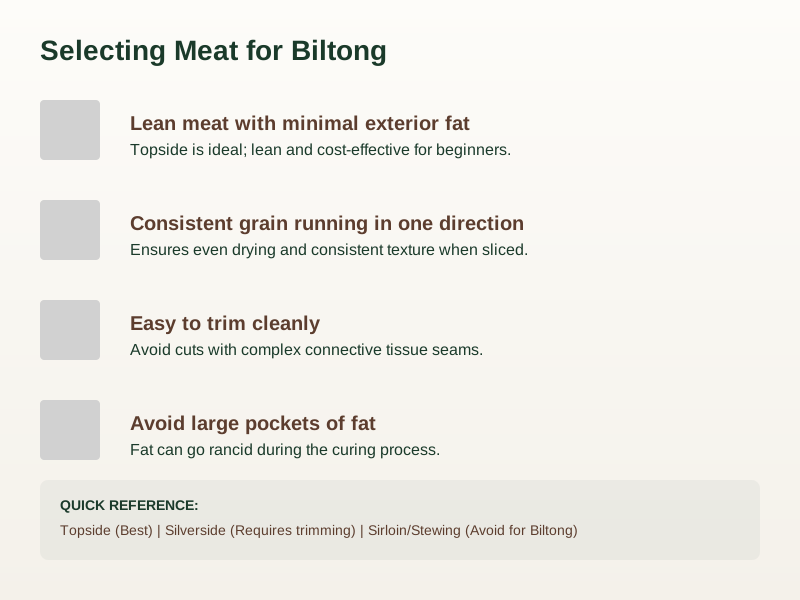
Which cut fits your budget and drying setup?
Topside delivers the right properties for most UK biltong makers—lean meat with consistent grain at a reasonable price. Silverside works but requires extra preparation around its connective seam. Sirloin’s premium cost and fat content make it poor value for drying. Once you’ve chosen your cut, our How to Make Biltong at Home in the UK guide covers the curing and drying process.
The difference between good and great biltong often comes down to starting with meat that has the right structure. Get that right and the rest follows more easily.
Grab our Free Fermentation Starter Checklist to ensure you have everything prepared before starting your first batch.
Related Guides
References
This guidance provides general principles for informational purposes. Always consult official sources for specific safety procedures.