Best Fermentation Jars & Weights UK for Small Batches
As an Amazon Associate I earn from qualifying purchases. This page contains affiliate links — if you buy through them, I earn a small commission at no extra cost to you.
Choosing the right fermentation jar for a small batch in a typical UK kitchen means thinking in litres, not US quarts. For a single head of cabbage or a few carrots, a 500ml to 1L jar is the sweet spot. Anything larger just takes up too much counter space and makes managing your brine tricky. I’ll walk you through the jars, weights, and hacks that actually work here, and clear up that litre-vs-quart confusion.
If you want a quick sanity‑check before you click “buy”, grab the free Fermentation Starter Checklist – it’ll walk you through the basics of brine, seals and weights.
The “Brine Problem”: Why Weights Matter
A ferment that sits under air is a breeding ground for mould – the dreaded kahm yeast that looks like a thin film on the surface. The science is simple: oxygen feeds the unwanted microbes, while a full submersion of vegetables in brine creates an anaerobic environment where the good lactic bacteria thrive. For general food safety advice, it’s always worth checking the Food Standards Agency (FSA) guidelines.
In the UK most starter jars have narrow necks, so the cabbage or carrots tend to float up as they release gases. When they breach the brine they dry out, and the exposed bits become a magnet for mould. A weight keeps everything “under the brine” and guarantees a safe, flavourful batch.
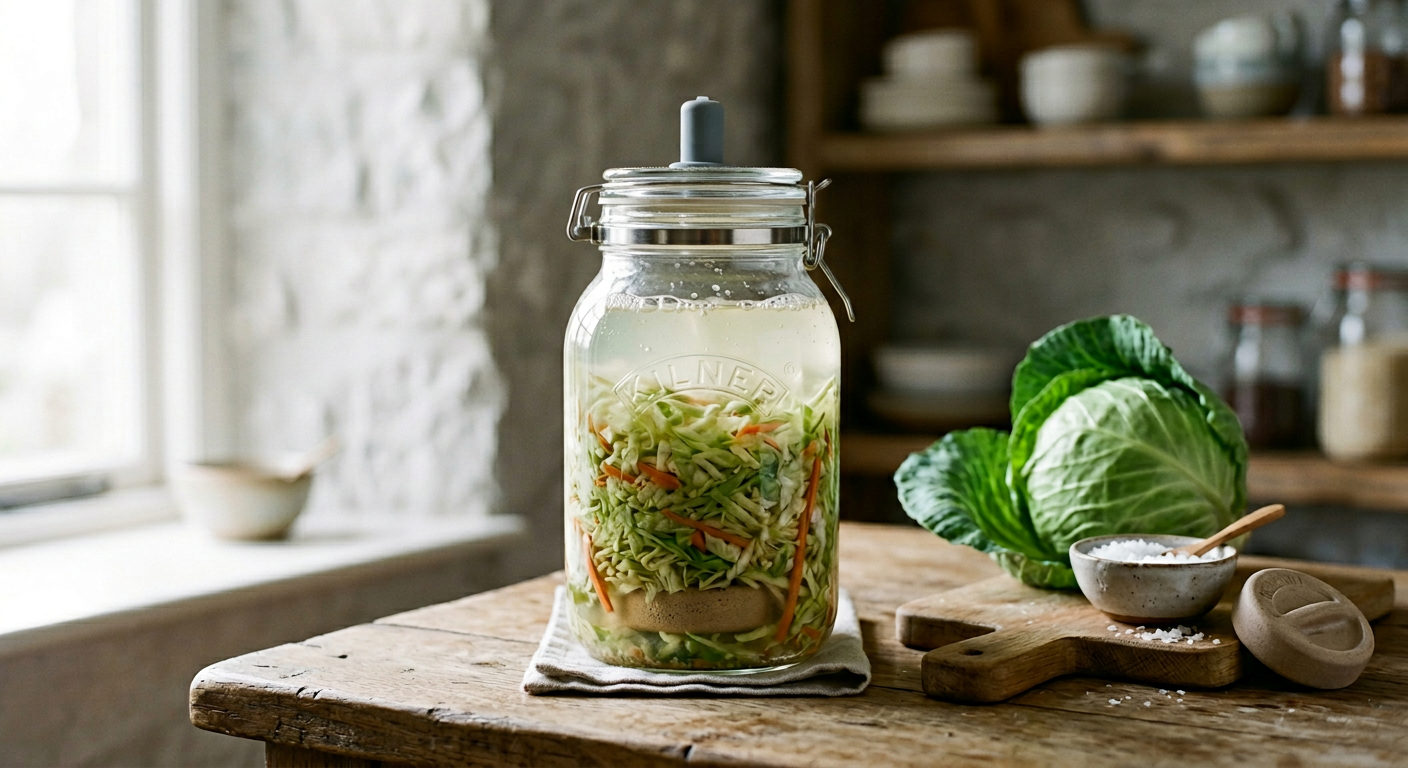
I learned this the hard way with a first‑attempt kimchi in a standard Kilner clip‑top jar. The cabbage rose to the top after a day, I saw a faint white film, and the whole batch went off. A simple ceramic weight would have saved me a ruined batch and a wasted head of cabbage.
Tip: If you ever forget to add a weight, the batch is likely to develop a thin, off‑colour film within 48 hours – bin it rather than gamble.
Which Fermentation Jars Work Best for Small Batches in the UK?
When you’re buying a jar you’re really choosing three things: the size, the seal, and whether the system includes a weight or airlock. Below are the options I’ve used regularly, together with the pros and cons that matter for a 500 ml–1 L batch.
| Jar | Size (L) | Seal type | Weight/airlock | Pros | Cons |
|---|---|---|---|---|---|
| Kilner Fermentation Jar Set (paid link) | 0.5, 1.0 | Rubber gasket (replaceable) | Ceramic “Pickle Pebble” + silicone airlock | All‑in‑one starter; rubber seal is easy to replace; weight fits snugly. | Rubber can degrade with hard water; set costs roughly £15–£25. |
| Weck Tulip Jar (paid link) | 0.5, 1.0 | Glass lid with rubber gasket (Maldon‑style) | No built‑in weight; you need a separate pebble or leaf | Elegant glass, great for serving straight from the jar; lid is reusable. | Gasket needs periodic replacement; you’ll have to buy a weight separately. |
| IKEA KORKEN Jar | 0.5, 1.0 | Clip‑top silicone seal | No weight; use airlock insert (sold separately) | Very cheap – roughly £5–£8 per jar; sturdy glass. | Clip‑top isn’t airtight for active fermentation; you must add an airlock to avoid pressure build‑up. |
| Kilner Clip‑Top Jar (standard) | 0.5, 1.0 | Clip‑top silicone | No weight; you must burp daily or fit an airlock | Good for storage after fermentation; cheap and widely available. | Not suited for high‑pressure fermentations; risk of “explosion” if sealed tightly. |
For a beginner looking to ferment a single head of cabbage or a handful of carrots, the safest, most convenient choice is a 1 L Kilner Fermentation Jar Set – it includes a reliable rubber seal, a ceramic weight, and a silicone airlock, all for roughly £15–£25.
Why the Kilner set is my go‑to: It bundles a reliable rubber seal (which I replace yearly) with a ceramic weight that sits flat on the veggies, and the silicone airlock lets gases escape without you having to “burp” every day. The Weck jar is lovely for a dinner party, but you’ll need to remember to buy a weight – it won’t come in the box.
I once tried a cheap glass jar from a discount store that claimed to be “fermentation‑ready”. The lid popped off after a few days of kimchi, spraying brine across the kitchen. The lesson? Cheap seals are a bit of a faff and not worth the risk.
UK Sizing Guide: Litres vs. Quarts
American recipes often talk in quarts and pints; in the UK we measure by litres. One US quart is essentially 1 L, while a US pint is about 500 ml. For small batches you’ll want:
- 500 ml (½ L) jar – perfect for a single serving of kimchi or a few pickled carrots.
- 1 L jar – ideal for one medium cabbage head or a larger batch of sauerkraut.
Buying a 2 L jar for a single head of cabbage is overkill – you’ll end up with a lot of unused headspace, which makes the brine level harder to manage and increases the risk of mould.
| US Size | UK Equivalent | Typical Use |
|---|---|---|
| Pint (½ qt) | 0.5 L | Small‑batch pickles, single‑serve kimchi |
| Quart | 1 L | Standard sauerkraut, medium cabbage ferment |
I measure my cabbage by the head rather than by weight; a medium head fits snugly into a 1 L jar with just enough room for the brine to cover it fully.
Weights: Ceramic, Glass, or DIY?
Ceramic Weights – the gold standard
Ceramic “pickle pebbles” are heavy, food‑safe, and sit flat on the vegetables. They’re easy to clean and won’t react with the brine. The Masontops Pickle Pebble (paid link), for example, costs roughly £8–£12 for a pack of three and lasts for years.
Glass Weights – a decent alternative
Glass weights, like those from Fermentology, are lighter than ceramic but still do the job. They’re usually a bit cheaper (around £5–£8 for a set) and can be sterilised in the microwave. The downside is they can chip if you drop them, and they’re a tad less stable on very soft veggies.
The “No‑Weight” Hack – cabbage leaf or marble
If you’re on a shoestring, a large cabbage leaf floated on top of the brine works surprisingly well. The leaf stays wet, adds a little extra flavour, and holds the veggies down. Glass marbles (the kind you’d use for a decorative vase) are another cheap fix – just make sure they’re clean.
The “Pickle Pipe” Alternative – silicone airlock
A silicone airlock creates a water barrier that stops air from reaching the ferment, meaning you can skip a physical weight altogether. The trick is to keep the water level high enough that the airlock stays submerged; otherwise you’re back to the brine problem.
I’ve used a cabbage leaf for a quick kimchi batch when I ran out of ceramic pebbles. It worked fine for a week, but the leaf started to wilt and I had to replace it. For long‑term fermenting, I still recommend a proper weight.
UK Water Hardness & Jar Maintenance
British tap water is often “hard”, meaning it contains high levels of calcium and magnesium. You can find out more about water quality in your area via Water UK. Over time these minerals can build up on rubber seals, especially the ones on Kilner and Weck jars, reducing their airtightness.
Maintenance tip: Soak the rubber gasket in a 1:1 vinegar‑water solution for about 10 minutes every few months, then rinse and dry. This keeps the seal supple and helps prevent the “leak‑through” that can let oxygen in.
When cleaning jars, avoid abrasive sponges – they can nick the rubber or the glass lip. A simple warm‑water wash with a soft cloth does the job. If you notice the seal is on the blink (hard, cracked or losing its bounce), replace it – they’re cheap, roughly £2–£4 each.
Frequently Asked Questions
Can I use a regular Kilner clip‑top jar for fermentation?
Yes, but you absolutely must either use a silicone airlock or remember to ‘burp’ the jar daily. Sealing it tight risks a pressure build-up that can burst the lid, which is a mess you don’t want.
What size jar should I buy for one head of cabbage?
For a medium head of cabbage, a 1 L jar is usually spot-on. If you’ve got a particularly massive one, you might need to step up to a 2 L jar, but most beginners will find the 1 L size works perfectly without too much empty space.
Do I really need ceramic weights?
Ideally, yes, ceramic weights are the safest, most reliable option, especially for longer ferments. If you’re in a pinch, a clean cabbage leaf or a handful of glass marbles can serve as a temporary fix for short-term batches, but I still recommend getting proper weights when you can.
What’s the difference between a Kilner Fermentation Jar and a standard Kilner Clip Top?
The main difference is that the Kilner Fermentation Jar set is ready to go for active fermenting, bundling a silicone airlock and ceramic weight right in the box. The standard Clip-Top version is really designed for storage, so if you want to ferment in it, you’ll need to add an airlock or burp it manually yourself.
Is IKEA KORKEN good for fermentation?
The IKEA KORKEN is excellent for storing things or for low-pressure pickling, but its clip-top lid isn’t really built for the high-pressure gases of active fermentation. If you plan to use it for fermenting, you absolutely must add a silicone airlock to safely vent those gases.
Where to Go From Here
You now have the basics: pick a 500 ml–1 L jar that fits your kitchen, make sure it seals tightly, and use a weight or airlock to keep the veggies under the brine. The Kilner Fermentation Set is the most straightforward starter – it bundles the seal, weight and airlock for roughly £15–£25, and it’s worth its salt for beginners. If you prefer a more visual jar, the Weck Tulip looks spot on on the table, just remember to buy a separate weight.
I switched to filtered water for my brine after noticing a faint mineral film on the Kilner seals. The jars sealed tighter, and my sauerkraut stayed crisp for longer.
Ready to put all this into practice? Download the Free Fermentation Starter Checklist – it walks you through brine ratios, seal checks and weight choices so you can start fermenting with confidence. If you’re curious about my journey into fermenting, you can read more about me.
Happy fermenting, and may your jars stay fully submerged!
Related Guides
For a complete overview, see our Essential Fermentation Equipment for UK Beginners.
Sources & Further Reading
As an Amazon Associate I earn from qualifying purchases. The products linked above are ones I would use or recommend on my own camps.
Note: General guidance only, verify details with a qualified professional or official source.