Best Meats for Homemade Jerky in the UK
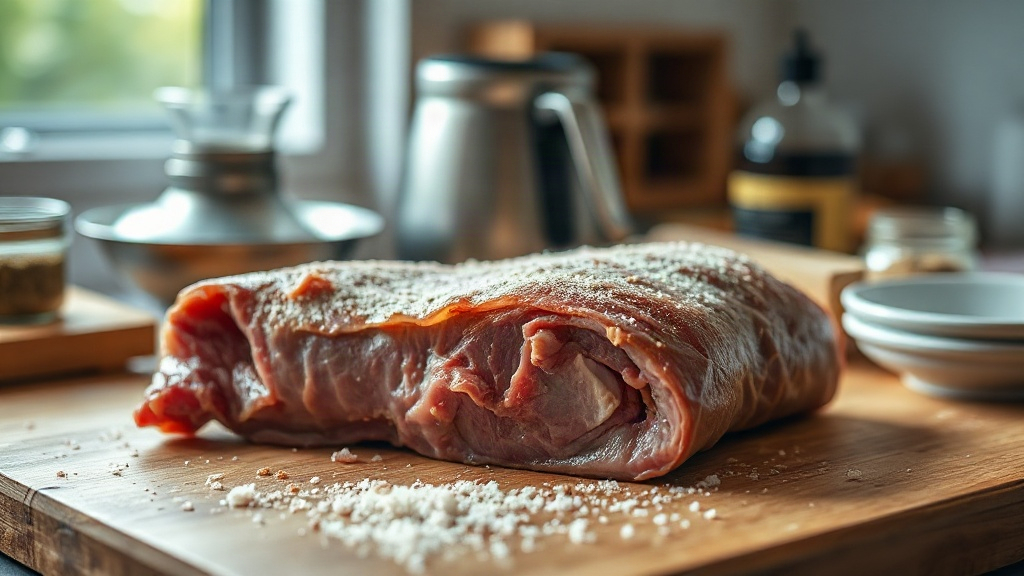
Lean beef topside is the single best choice for homemade jerky in the UK, thanks to its tight grain structure and favourable price per kilo, with silverside as a reliable runner-up.
The decisive factor isn’t protein content or price, but fat. Fat behaves differently to lean meat during drying—it doesn’t evaporate but instead can turn rancid, spoiling an entire batch. This makes leanness the primary consideration for jerky that actually keeps.
Understanding the Fat Problem
During the drying process, moisture is removed from meat to inhibit bacterial growth. However, fat remains largely unchanged and is prone to oxidative rancidity, which can cause jerky to develop off-flavours and spoil prematurely. While the drying process reduces moisture to prevent spoilage, it isn’t a sterilisation step that eliminates all risks.
Fatty cuts like ribeye, despite their appeal for grilling, present significant challenges for jerky making. The marbling—fat distributed throughout the muscle—cannot be effectively trimmed away, leaving pockets that won’t dry properly and increase spoilage risk.
The practical approach is straightforward: select the leanest cuts available and meticulously trim any visible external fat before processing. When in doubt, choose a leaner option—the success of your jerky often depends on the trimming done before slicing begins.
Topside and Silverside: The Prime Choices
For beginners, topside offers an ideal combination of attributes. This cut comes from a lightly worked muscle, resulting in a lean texture that dries evenly and slices cleanly. Available at most UK supermarkets and butchers, it provides good value while delivering the classic jerky texture most people expect—chewy, sliceable, and flavourful.
Silverside serves as a close alternative, sharing topside’s leanness but with a slightly firmer texture that produces a more fibrous jerky. Some home cooks prefer this characteristic bite, and it’s worth considering if topside isn’t available.
When preparing either cut, slice against the grain to break down muscle fibres and achieve the proper chewiness. Aim for consistent thickness—too thick and the centre remains unpleasantly chewy; too thin and you lose substance. A thickness of approximately 5mm works well for many preferences.
Both cuts are typically sold vacuum-packed, which helps maintain hygiene standards. Following proper food safety practices from the moment you open the package is crucial, as the drying process alone doesn’t eliminate all pathogens.
Working with Mince for Budget-Friendly Jerky
When whole cuts stretch the budget, lean beef mince provides a viable alternative. The challenge lies in achieving consistent thickness without a jerky gun or similar tool to form uniform strips. Irregular thickness leads to uneven drying—some pieces becoming over-dried while others remain too moist.
📺 Watch: Beef Jerky In The Air Fryer - It Works!
Even with proper tools, mince-based jerky has a denser, less fibrous texture than sliced whole cuts. It lacks the characteristic pull-and-tear quality but remains flavourful and cost-effective.
Mince jerky typically dries faster than whole cuts, requiring careful temperature control. Too much heat can seal the exterior before sufficient moisture evaporates from the interior, while insufficient heat may not adequately reduce bacterial risks.
If using mince, accurate measurement of both meat and seasonings becomes more critical than with whole cuts, where the meat’s inherent qualities carry more of the flavour profile.
Cuts and Preparations to Approach with Caution
Some cuts that work well for other cooking methods are poorly suited for jerky. Ribeye and fillet, with their significant marbling, represent poor value and increased spoilage risk for jerky making. The premium you pay for these cuts is largely for fat content that becomes a liability in dried meat.
Pre-marinated meats from supermarket counters present another common pitfall. These often contain high sugar content, which can burn during drying, mask the meat’s true condition, and create surfaces where bacteria may thrive. Many beginners discover too late that convenience comes at the cost of control over the final product.
It’s worth noting the distinction between jerky and biltong. While related, biltong—South African-style dried meat—uses a vinegar cure that provides additional preservation, sometimes allowing for slightly higher fat tolerance. American-style jerky relies more exclusively on drying, making leaner cuts particularly important.
Common Questions Answered
Can pork be used for jerky?
Properly trimmed pork loin or fillet can work well for jerky, as these cuts are sufficiently lean when all visible fat is removed. The same fat-content principles apply—select cuts with minimal marbling and trim thoroughly before processing.
Is oven-drying jerky safe?
Standard ovens can safely dry jerky with careful temperature management. Official food safety guidance emphasises reaching appropriate internal temperatures to address bacterial risks. If your oven’s lowest setting is too high, propping the door slightly ajar can help maintain suitable temperatures.
Should meat be washed before drying?
Current food safety advice recommends against washing raw meat, as this can spread bacteria through kitchen surfaces via splashing. Since jerky undergoes heating and drying, washing provides no benefit while increasing contamination risks.
For your shopping list, ask your butcher for topside or silverside by name, or look for lean beef mince as a supermarket fallback. A properly trimmed pork loin can also be a viable, lean alternative. Avoid fatty cuts like ribeye or pre-marinated meats, which are not recommended for jerky making.
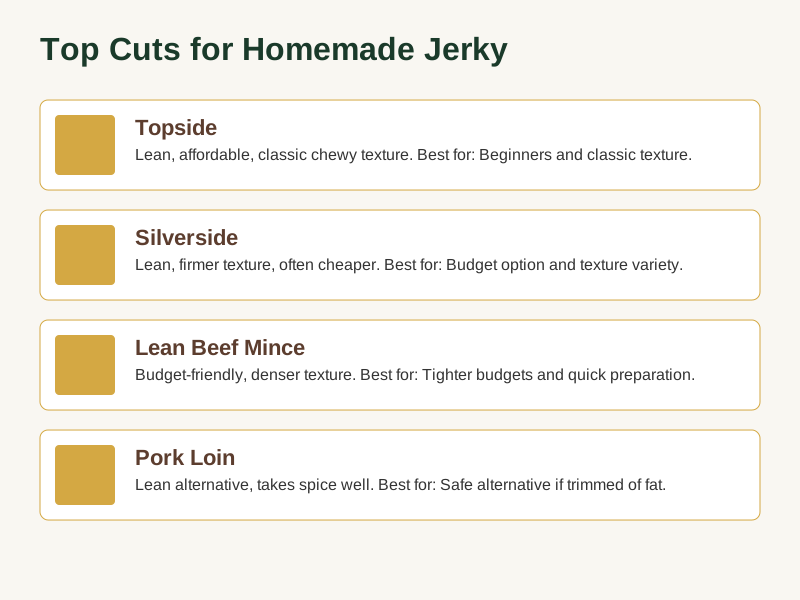
For your shopping list: ask your butcher for topside or silverside by name, or look for lean beef mince as a supermarket fallback. For complete preparation instructions, see our guide to making jerky at home in the UK .
Regardless of your cut selection, the fundamentals remain consistent: thorough fat trimming, scrupulous cleanliness, controlled drying temperatures, and proper storage in airtight containers in cool conditions. Well-made jerky can last for weeks and costs significantly less than commercial equivalents.