Common Home Curing Mistakes Beginners Make UK
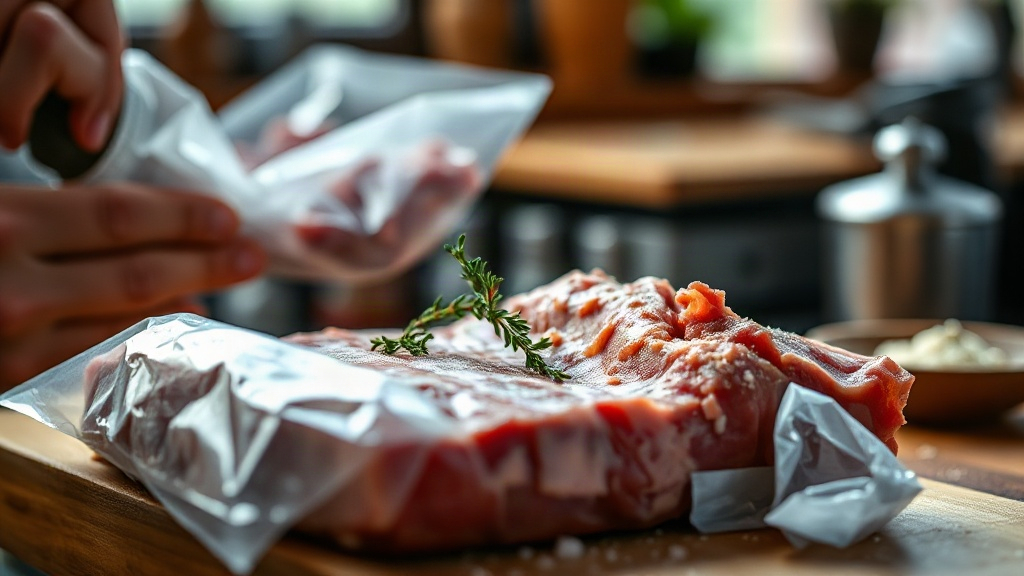
Most ruined home cures fail at the scales or the calendar rather than in the recipe. Every mistake discussed here is checkable before the meat is lost—if you know where to look.
Beginners often worry about over-salting, pull back on cure ratios, or wonder whether they can halve the Prague Powder. Somewhere along the way, going easy on the cure became standard advice.
It’s misguided. The real danger is under-curing—creating anaerobic pockets inside the meat where botulism and other pathogens can establish themselves. This counterintuitive reality particularly affects UK curers working with local ingredients.
The salt ratio isn’t primarily about flavour—it’s about reaching the concentration in the meat’s water phase that actually inhibits dangerous bacteria. Following recipes calibrated for different pork characteristics can lead to under-salting without realising it.
Work the salt out as a percentage of the meat weight, using your recipe’s figure (commonly somewhere in the 2–3% range for a dry cure). If you’re using Prague Powder No.1 as part of that, use the dose on its packet, usually only a few grams per kilogram of meat. At this dilution in a dry cure, it’s a trace amount designed to inhibit microbial growth. Understanding this mechanism helps lift the fear of “too much salt.”
A recipe is a starting point, not a sacred formula. The most common error is eyeballing quantities or approximating with vague measurements. Without knowing your exact meat weight, percentages become meaningless. Without a scale that reads to a fraction of a gram, you’re guessing with concentrated ingredients—not where you want to be with food safety.
UK food safety guidance for commercial producers requires documented hazard analysis. The principle applies to home curers too: curing is a controlled microbiological process, not just seasoning meat. Recipes alone cannot prove a method is safe; that comes from understanding the science.
Why accurate weighing matters more than you think
A scale that reads to a fraction of a gram is worth having for the small cure additions. While compact models work well for smaller batches, consider platform size if you regularly handle larger cuts.
📺 Watch: Bacon Cured With and Without Sodium Nitrite | Side by Side Comparison
Managing your curing environment
If your kitchen runs warm in summer—common in UK homes—even perfect salt ratios won’t prevent problems. In a warm kitchen, bacterial activity speeds up and a cure has less margin for error. Summer cures inherently carry more risk.
Warmth works against a slow cure, so for home curers this means finding a cooler spot when needed—a spare room, garage in winter, or dedicated chamber. Temperature monitoring confirms you’re in the safe zone.
Humidity control prevents surface hardening while centres remain moist. A thermometer and hygrometer remove guesswork. Humidity management often separates a successful batch from a failed one, and no recipe can calibrate for your kitchen.
Sanitisation beyond surface cleaning
Invisible contamination occurs when transferring bacteria from raw meat to your curing environment, or using containers not rated for prolonged contact with cured meats.
Failed curing setups often trace back to fan contamination. Meat particles and fat accumulate inside mechanisms, affecting fresh batches despite clean appearances. Disassemble and sanitise fans properly, not just wipe housings.
While vacuum sealers help with long-term storage, budget models may have reliability issues. A probe thermometer provides the final safety checkpoint, verifying meat reaches safe temperatures after curing and during cooking.
Developing curing judgement
Understanding core principles—accurate weighing, proper salt ratios, environmental control, the science behind each step—builds the judgement to troubleshoot issues rather than blindly following recipes.
Trust your senses: unusual smells, suspicious colours, or questionable textures warrant caution. No guide is worth serving compromised meat. You can achieve professional results at home by respecting the science and staying alert.
The night before your next batch, run this three-point audit: verify your scales are calibrated and ready, confirm your fridge maintains proper temperature, and calculate your cure by weight rather than volume. These simple checks prevent the most common failures.
Now you understand what separates successful cures from disappointing ones. Download the Free Meat Curing Starter Checklist to cover the essential steps beginners often miss—and bookmark our safety hub for quick reference when questions arise.
Related Guides
For a complete overview, see our Home Curing Basics & Safety for UK Beginners .
Note: General guidance only, verify details with a qualified professional or official source.