How to Cook with Sauerkraut & Kimchi (Without Killing the Good Bacteria)
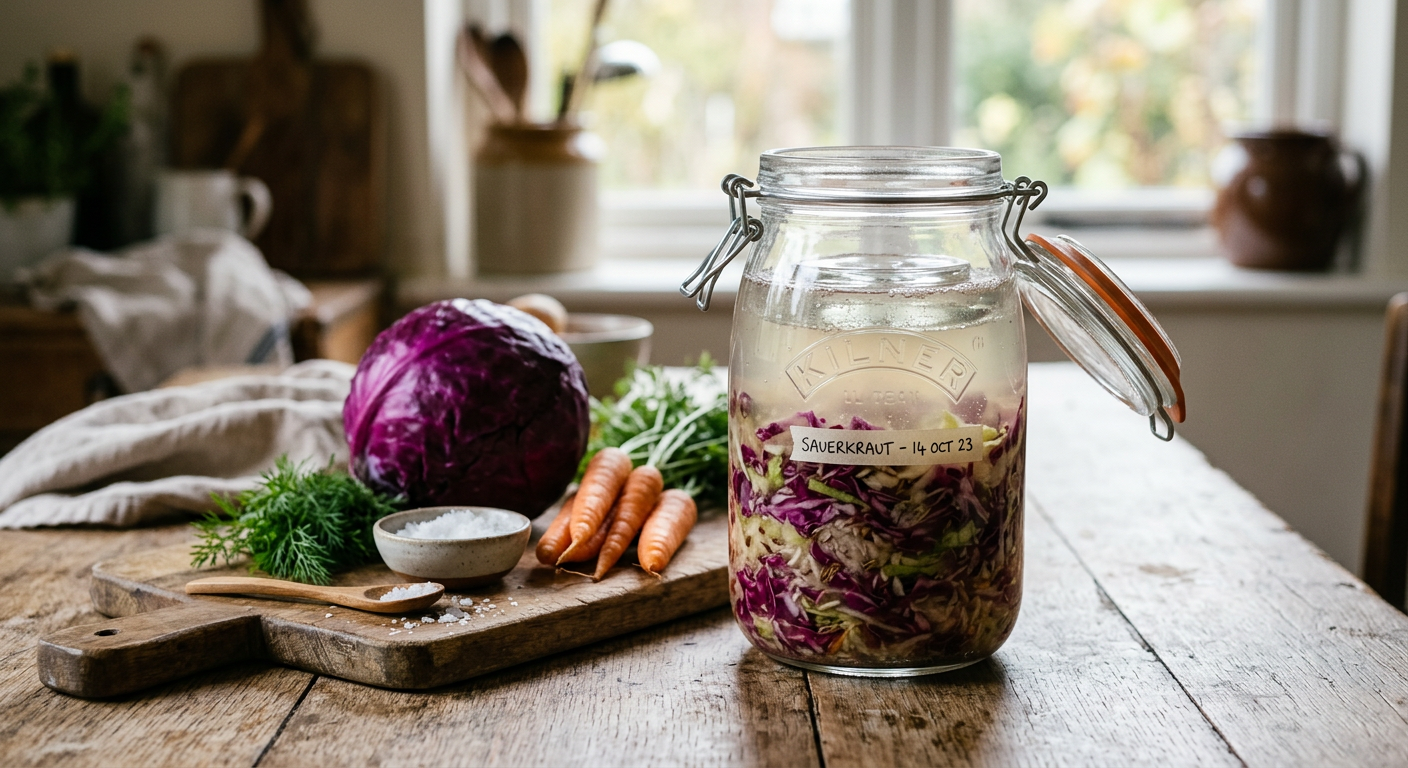
That familiar pause, spooning kimchi into a hot pan, wondering if you’re about to ruin all that hard work. It’s why many of us only eat our ferments raw. But here’s the honest truth: fermented vegetables are a flavour powerhouse, not just a fragile garnish. They can absolutely handle the heat, you just need to know the rules. I’ll show you how to keep that crunch, unlock new depths of flavour, and give you some cracking British-inspired dishes that will make your fermented veg sing. If you’re curious about how I stumbled into all this, you can read more about me here.
The Fermentation Heat Test
Heat does two things to fermented veg: it mellows the sharp acidity and it attacks the delicate cell walls that give the veggies their bite. Flavour survives; texture doesn’t. The rule of thumb is “low & slow” for sautéing or quick‑fire stir‑fry, and “add at the end” for anything that simmers.
- Flavour – Lactic acid and the umami compounds formed during fermentation are heat‑stable. A gentle stew will actually deepen the sweet‑sour balance.
- Texture – Once the cell walls break down, the veg can turn to a soggy paste. That’s why a quick flash in a hot pan keeps a nice crunch, whereas a rolling boil will mush most ferments within minutes.
A quick look at heat tolerance helps you decide when to add each type:
- Sauerkraut – Best for stewing or slow‑cooked casseroles; add the last 10 minutes.
- Kimchi – Holds up in stir‑fry or quick‑sauté; toss in 5 minutes before finishing.
- Pickled cucumbers – Keep them raw or use as a garnish – they turn to mush above 80 °C.
The Fermentation Heat Test itself is simple: drop a teaspoon of your ferment into a cup of water heated to the temperature you plan to use. If it stays intact for 30 seconds, it will survive the dish. I tried this with a jar of homemade sauerkraut in a slow cooker set to 85 °C – the kraut kept a pleasant bite, and the broth turned wonderfully tangy.
According to the Journal of Food Science, many lactobacilli remain viable at temperatures up to 55 °C for short periods, meaning a typical stew (just below boiling) still carries a good chunk of live cultures. The Food Standards Agency (FSA) reminds us that proper food handling is key, and while boiling (100°C) will certainly kill off all the bacteria, it’ll also destroy the texture you’re after, so it’s a double loss.
Mid‑article CTA: Now that you’ve got the heat test down, you might want to make sure you’ve got the right tools on hand. Grab our free Fermentation Starter Checklist to tick off jars, weights, and a good thermometer before you start cooking.
Why do some fermented vegetables turn to mush when cooked?
Fermented carrots stay crisp while fermented cucumbers go to mush because of the original vegetable’s structure and the length of the fermentation. During lacto‑fermentation, enzymes and acids gradually break down pectin, the glue that holds plant cells together. Hard, fibrous veg like carrots, daikon, or firm radishes retain enough pectin to survive a brief heat blast. Soft veg – especially cucumbers, soft peppers, and tender beans – lose that support quickly.
Texture Survival Guide
- Hold up well: Carrots, daikon, firm radishes, kale stems, cabbage leaves (when sliced thick).
- Turn mushy fast: Cucumbers, soft peppers, zucchini, tender beans, leafy kale when shredded very fine.
A practical tip: Pack the ferment tightly and keep it under the brine until you’re ready to cook. When you do cook, add the ferment in the final stages – a minute or two for stir‑fry, ten minutes for a stew.
I once added a whole jar of fermented cucumber slices to a hot curry, intending to let them soak up the sauce. Within two minutes the cucumbers dissolved into a soupy mess, and the whole dish lost its textural contrast. The lesson? Use fermented cucumbers only as a cold topping or add them just before serving, never as a cooking base.
UK Ingredient Pairings
British produce brings a sturdy backbone to fermented dishes. The local climate gives us kale, chard, beetroot, and proper brassicas that can stand up to the acidity and salt of a ferment without wilting.
1. Breakfast boost – Fermented kale & chard scramble
Sauté a handful of chopped kale stems with a spoonful of fermented kimchi, then fold in beaten eggs. The kimchi’s heat‑stable umami lifts the scramble, while the kale stays crisp enough to give a satisfying bite. Serve with toasted sourdough and a drizzle of fermented ketchup.
2. Lunch upgrade – Beetroot & sauerkraut sandwich
Layer thinly sliced pickled beetroot, a generous scoop of sauerkraut, and a slice of mature Cheddar between whole‑grain bread. The earthy beet pairs beautifully with the tang of the kraut, and the sandwich stays texturally interesting because the sauerkraut is added cold, right before you bite.
3. Dinner star – British kale & kimchi stir‑fry (see full recipe)
Heat a splash of rapeseed oil, toss in sliced kale stems, a handful of kimchi, and a dash of soy sauce. Finish with a squeeze of lemon and toasted sesame seeds. The sturdy kale stems hold up to the quick high‑heat stir‑fry, while the kimchi adds a spicy, fermented depth that cuts through the richness of a roast dinner gravy.
You can find the full step‑by‑step on the British Kale & Kimchi Stir‑fry page.
Safety & Texture (What to Avoid)
The biggest mistake I’ve seen – and one I made early on – is dropping a whole jar of kimchi straight into a pot of boiling water, thinking the heat would “activate” the bacteria. Not only did the jar crack, but the kimchi turned into a soupy, over‑salted mess, and any remaining live cultures were wiped out.
Key safety points
- Never boil fermented vegetables for more than a minute. Boiling destroys the live cultures and can create a texture that’s more mush than bite.
- Adjust seasoning – fermented foods bring salt and acidity. Reduce added salt by about a third and balance with a splash of sweet (e.g., a drizzle of honey) or fresh herbs.
- Store cooked ferments in clean glass jars, keep them in the fridge, and consume within 3–5 days. The cold slows any remaining bacterial activity and keeps flavours fresh.
The NHS.uk reminds us that while fermented foods are generally safe, any sign of mould (other than the harmless kahm yeast) or a foul, rotten smell means it’s time to bin it. Keep an eye on the brine level – if the veg sit out of the brine, they can spoil faster.
Frequently Asked Questions
Fermentation Texture Survival Guide
| Vegetable Type | Texture After Cooking | Best Cooking Method |
|---|---|---|
| Carrots, Daikon, Firm Radishes | Retains crispness | Stewing, Casseroles |
| Cabbage Leaves (Sliced Thick) | Holds shape | Slow Cooked Dishes |
| Kimchi | Softens but keeps flavour | Stir-fry, Quick Sauté |
| Pickled Cucumbers | Turns to mush | Raw or Cold Garnish |
| Soft Peppers, Zucchini | Becomes soggy | Avoid High Heat |
| Tender Beans | Disintegrates | Add at End of Cooking |
| Kale Stems | Stays crunchy | High Heat Stir-fry |
Where to Go From Here
Fermented vegetables are more than a tangy side – they’re a flavour catalyst that can elevate any home‑cooked meal, as long as you respect the heat limits and texture thresholds. Remember the three take‑aways: flavour survives moderate heat, texture is the real enemy, and British veg like kale and beetroot are perfect partners for your jars. For more tips, tricks, and recipes, have a browse through the rest of the blog.
If you’re ready to make sure you have the right jars, weights, and a reliable thermometer on hand, Download the Free Fermentation Starter Checklist – it’s a quick way to keep your kitchen ready for the next batch and the next cooked‑up adventure.
Happy fermenting, and enjoy the extra depth you’ll discover in everything from a simple stir‑fry to a classic Sunday roast.