Why Did My Ferment Go Wrong? Common Issues & Fixes UK

That fuzzy pink film stretching across your ferment, or the faint hiss as the lid pops off on its own – it’s enough to make your heart jump. Is it ruined? Unsafe? I’ve been there, staring at a misbehaving jar and wondering if I’d mucked it up. The good news is you’re not the first, and most of the culprits are completely avoidable. I’ve made every beginner mistake in my own UK kitchen, as you can read a bit more about here. Here, I’ll walk you through the biggest reasons a UK ferment goes off track, how to tell what’s harmless and what’s a real problem, and the exact steps to rescue or safely discard your batch. By the end, you’ll have a clear visual checklist, a temperature-control game plan for any British kitchen, and a simple next step to keep your future jars worth their salt.
What are the biggest reasons my ferment goes wrong?
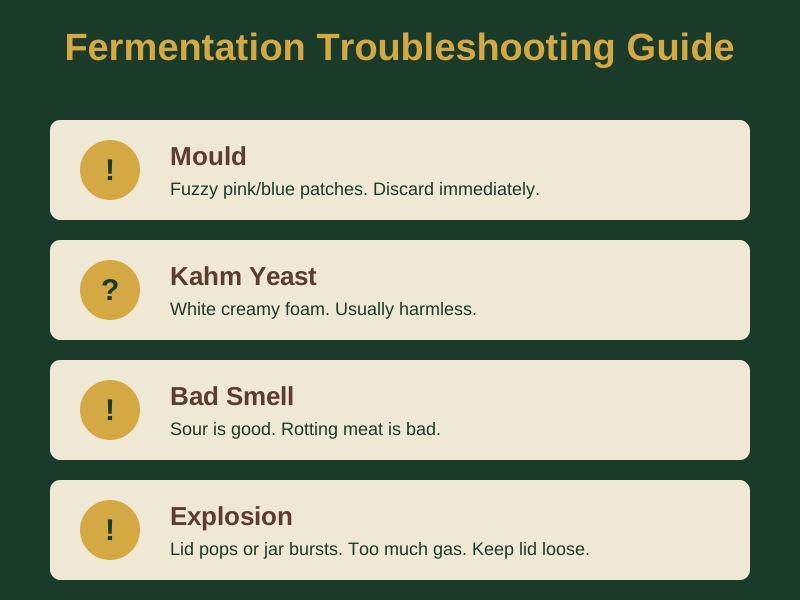
Mould, a truly bad odour, and pressure-built explosions are the three reasons most beginners panic. Spotting them early saves both ingredients and sanity.
- Mould – appears as fuzzy patches in pink, blue, green or black. It’s usually raised, velvety and may have a distinct musty perfume.
- Kahm yeast – the harmless white or creamy foam that sometimes forms on the surface. It’s smooth, often buttery, and smells mildly yeasty, not rotten.
- Bad smell – a sour, tangy aroma is the hallmark of a healthy lacto-ferment. A putrid, sulphuric or “rotting meat” odour signals trouble.
- Explosion – a jar that bursts or the lid that pops is a sign of rapid gas build-up, often caused by too-warm temperatures or over-filling.
When you open a jar of ferment and spot something suspicious, the first thing to remember is that visual cues, smells, and even sounds tell a story. The ‘Big Three’ signs of trouble are mould, a truly bad smell, or an unexpected explosion. If you see any fuzzy pink, blue, green or black growth on the surface, that’s mould – and you should discard the whole jar immediately. Unlike the harmless white ‘kahm yeast’ that sometimes forms, mould can send roots deep into the brine, contaminating the entire batch even if you only see a small spot. Trust your eyes and nose: a healthy ferment stays white-cream on top, smells pleasantly sour and tangy, and stays submerged under clear brine. A putrid, sulphuric, or ‘rotting meat’ odour is another clear warning sign. When in doubt, the safest move is always to toss it and start again – it’s not worth the risk.
Troubleshooting by Symptom
When you’re staring at a jar, the quickest way to a solution is to match what you see, smell, or feel with a clear set of actions.
Visual issues
- Floating vegetables – usually means the salt ratio was too low, so the brine isn’t dense enough. Sprinkle a pinch of extra sea salt (about ½ % of the vegetable weight) over the top, stir, and press the veg down with a clean weight.
- Discolouration – a pink hue often points to “kahm yeast”, which is safe if the smell is still sour. If the colour is mottled with fuzzy patches, it’s mould and you must discard.
- Cloudy brine – a milky appearance is normal in the first 24-48 hours as lactobacilli multiply. It should clear up within a few days.
Olfactory issues
- Sharp, vinegary bite – a sign of over-fermentation; the batch is still edible but will be very sour. Use it in salads or as a topping for cooked dishes.
- Rotten, sulphuric, or “wet dog” smell – indicates unwanted bacteria. Bin the batch and sanitise all equipment before the next try.
Textural issues
- Mushy carrots or beetroot – British carrots can be water-rich, especially from supermarkets in winter. Increase the salt to 2 % of the veg weight to draw out excess moisture and keep the crunch.
- Hard, under-salted cabbage – if the core stays firm after a week, the salt may have been too low. Add a little more salt and give it another day; the texture should soften as the brine penetrates.
A reader from Manchester once emailed me after finding their sauerkraut “soft as a pillow”. The culprit was a low-salt brine combined with a warm airing cupboard, which accelerated the breakdown. Adding a tablespoon of extra sea salt and moving the jar to a cooler spot rescued the flavour and restored crunch after a couple of days.
The “UK Factor” – Temperature & Humidity
British homes are a moving target for ferments. Central heating, draughty windows, and the occasional heatwave can swing the ambient temperature by more than ten degrees in a single day.
- Central heating – Most UK radiators keep rooms at 20-22 °C, but when you crank the thermostat up to 24 °C or higher, you’re actually killing the lactobacilli that give your ferment its tang. High temperatures can reduce lactic-acid production, encouraging mould growth instead. The Food Standards Agency offers guidance on safe food temperatures generally, and while fermentation is different, it highlights how crucial temperature control is.
- Airing cupboards – The classic “goldilocks” zone for a ferment is 18-22 °C. An airing cupboard that gets a burst of heat from the boiler can spike to 26 °C on a cold night, pushing the ferment into the danger zone.
- Summer windowsills – A sunny sill can push the temperature to 28 °C in July, especially in south-west England. That’s “too hot” for delicate kimchi, but sauerkraut can handle it if you loosen the lid to let gas escape.
- Humidity – British humidity, which is often high in winter, means the brine can become diluted as water evaporates from the veg. Top up with brine made from the same salt-to-water ratio to keep the environment stable.
UK Home Conditions checklist
- Aim for 18-22 °C; use a kitchen thermometer to be sure.
- Keep jars out of direct sunlight and away from radiators.
- If the kitchen runs hot, tuck the jar into a cool pantry or wrap it in a light duvet (“duvet fermentation” method) to buffer temperature swings.
- In winter, avoid the top shelf of the airing cupboard where boiler heat rises.
Now you know what to look for – Download the Free Fermentation Starter Checklist and keep your jars in the sweet spot all year round.
Safety & Disposal Guide
If you’re ever unsure, the honest answer is: throw it out. It’s a bit of a faff, but it’s worth it to avoid a nasty bout of food poisoning.
- One-Bite Rule – If you suspect mould, taste, or smell is off, discard the whole batch. Even a tiny speck of mould can send roots deep into the brine.
- Disposal – Do not pour mouldy brine down the sink – it can clog pipes. Instead, scoop the contents into a sealed bag and bin it with your food waste.
- Sanitise – After discarding, wash the jar, lid, and any weights in hot, soapy water and give them a quick rinse with a diluted bleach solution (1 tbsp bleach per litre of water) if you want extra peace of mind.
- When to seek medical advice – If you experience vomiting, diarrhoea, or severe stomach cramps after eating a suspect ferment, contact your GP. The NHS advice on food poisoning symptoms stresses that these symptoms are rare but should be taken seriously.
Prevention Checklist
Keeping your ferments safe and tasty is mostly about consistency. Here’s a quick, printable list you can stick to the fridge door.
- Submerge everything – Use a clean weight (a glass fermentation weight or a small zip-lock bag filled with brine) so no vegetable is exposed.
- Check salt ratio – 1.5-2 % sea salt of the total veg weight is the sweet spot for most UK vegetables.
- Monitor temperature – Aim for 18-22 °C; a cheap kitchen thermometer costs roughly £5-£10 and is worth the investment.
- Seal correctly – Use a fermentation lid with an airlock, or a regular jar with a loose-fit lid that you “burp” once a day.
- Inspect daily – Look for white foam (good), mould (bad), and note any odd smells.
For the best jars that won’t crack under pressure, see my notes on the Best Fermentation Jars for UK Homes.
Frequently Asked Questions
Is pink sauerkraut mold?
Not always. A pinkish hue is often “kahm yeast”, a harmless yeast bloom that looks pinkish when it’s thin. It’s safe if the smell remains pleasantly sour. If the pink is fuzzy, raised, or the odour is rotten, bin it.
Why did my jar explode?
Usually it’s gas build-up from rapid fermentation in a warm spot or an over-filled jar. Keep the lid loose or use an airlock, and store the jar where the temperature stays under 24 °C.
Can I scrape mold off the top and eat the rest?
No. Mould spores can travel through the brine, contaminating the whole batch. The safest move is to discard the entire jar.
What temperature should my ferment be in the UK?
Aim for 18-22 °C. Anything above 24 °C encourages unwanted microbes, while temperatures below 15 °C slow the process dramatically.
Why are my carrots soft?
British carrots, especially those bought in winter, can be water-rich. Increase the salt to about 2 % of the veg weight to draw out excess moisture and keep them crunchy.
Visual Cues & What They Mean
| Visual Cue | What It Means | Action |
|---|---|---|
| Pink, fuzzy, raised patches | Mould – discard | Toss the whole jar immediately |
| White, creamy, smooth film | Kahm yeast – safe | Usually harmless, skim if desired |
| Cloudy brine with bubbles | Normal fermentation | Continue fermenting, it should clear |
| Clear, colour-consistent brine | Healthy batch | Enjoy your ferment |
| Floating vegetables | Low salt ratio | Add salt and press down firmly |
| Mushy carrots/beetroot | Excess moisture | Increase salt to 2% of veg weight |
Where to Go From Here
You’ve now got the visual clues, the temperature tricks, and the safety steps to turn a panicked opening into a confident fix. Remember, most failures are just a matter of a few degrees or a pinch more salt away, and every batch teaches you something new. For more tips and troubleshooting, check out the rest of the blog.
If you want a tidy, step-by-step reminder for your next ferment, download the Free Fermentation Starter Checklist – it’s a printable cheat-sheet that covers everything from brine ratios to temperature checks.
Got more questions or a stubborn batch that still won’t behave? Drop me a line on the Contact page and we’ll sort it out together. Happy fermenting!
Related Guides
For a complete overview, see our Troubleshooting Common Fermentation Problems UK.
Sources & Further Reading
- Food Standards Agency - Food Safety and Hygiene
- NHS - Food Poisoning Symptoms
- Royal Society of Chemistry - Fermentation Science
Note: This information is for educational purposes only. Always verify specific food safety guidelines with official sources or a qualified professional.