Are Fermented Vegetables Actually Good for You? (The Honest UK Answer)
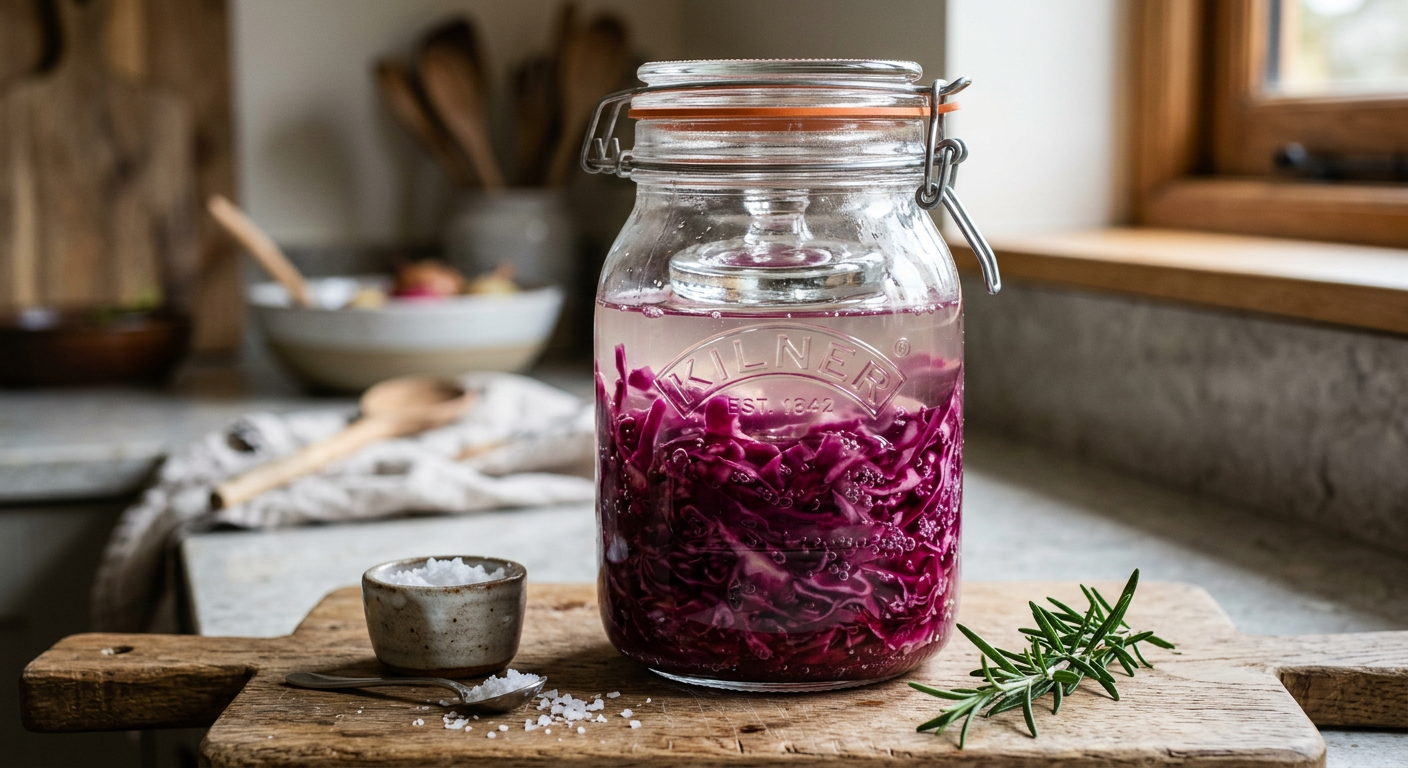
Forget the confusing labels and noisy headlines about ‘gut-boosting superfoods’ or fleeting fads. The truth about fermented vegetables is far simpler and more grounded in science. Your humble jar of homemade sauerkraut isn’t just an old tradition; it’s a living, complex food with genuine health perks, far removed from the sterile world of lab-grown ingredients. I’ll show you what the experts actually say, why traditional methods still win, and how easy it is to add these fantastic foods to your UK kitchen.
Download the Free Fermentation Starter Checklist and keep reading to see why the jar is still worth its salt.
The Science of the Jar: Why Traditional Beats Precision
Precision fermentation is a buzzword for a set‑up that uses genetically‑engineered microbes to churn out single proteins – think whey or casein for dairy‑free cheese. It’s great for producing isolated ingredients at scale, but it isn’t a replacement for whole‑food fermentations.
Whole‑food advantage – Traditional lacto‑fermentation creates a living ecosystem: dozens of Lactobacillus strains, yeasts, enzymes, B‑vitamins and short‑chain fatty acids (SCFAs) that work together. A lab‑produced protein lacks that symbiotic community.
UK context – Our grandparents preserved brassicas and root veg in stone‑ware crocks for months, long before any biotech lab existed. The low‑tech route is low‑cost, low‑energy and perfectly suited to a British kitchen where the temperature hovers around 18 °C in winter and 22 °C in summer.
Comparison at a glance
| Aspect | Precision Fermentation | Traditional Lacto‑Fermentation |
|---|---|---|
| Product type | Isolated protein or enzyme | Whole vegetable with live cultures |
| Micro‑life | Sterile, single strain | Diverse, live ecosystem |
| Nutrient profile | Targeted, limited | Vitamins, SCFAs, bio‑active compounds |
| Equipment | Bioreactor (£10 k+), specialist staff | Kilner jar (£15–£25), salt, kitchen |
| Time to market | Weeks‑months of R&D | Days‑weeks in a kitchen |
| Sustainability | Energy‑intensive, biotech waste | Minimal, uses surplus veg |
I first tried swapping a jar of lab‑cultured “probiotic powder” for a batch of fermented carrots. The powder promised a billion CFU per scoop, but the carrots gave me a tangy crunch, a burst of SCFAs, and a lively smell that no powder could match. The honest answer is, precision fermentation is brilliant for specific ingredients, but it doesn’t give you the full, living community that a jar of sauerkraut does.
Debunking the Hype: What the Science Actually Says
The International Scientific Association for Probiotics and Prebiotics (ISAPP) together with the British Nutrition Foundation (BNF) have issued a joint statement that fermented foods do contribute to a diverse gut microbiome when eaten regularly. They stress, however, that they are not a magic cure‑all.
Myth vs. Fact
Myth: Fermented foods will instantly fix any gut issue.
Fact: They are a beneficial addition to a balanced diet, supporting microbial diversity over time.
I once chatted with a nutritionist who warned, “Don’t rely on kimchi as your sole probiotic source.” The point wasn’t to dismiss fermented veg, but to keep expectations realistic – they’re a helpful piece of the puzzle, not the whole picture.
Safety first – When you keep vegetables fully submerged under a 2–3 % salt brine and store the jar at a steady 15–20 °C, the environment favours lactic acid bacteria and suppresses harmful microbes. The Food Standards Agency (FSA) notes that traditional vegetable fermentations are low‑risk when the “under the brine” rule is followed. In contrast, some processed “precision‑fermented” drinks may contain additives that some people find gut‑irritating.
A common mistake I made early on was forgetting to burp the jar for the first 48 hours. The pressure built up, the lid popped, and the brine sprayed all over the kitchen bench – a proper faff that could have been avoided with a simple fermentation lid.
Now you know the science backs the benefits while keeping the hype in check. If you’re ready to see what equipment will make the process smoother, check out our guide to the best Fermentation Equipment.
The UK‑Specific Benefits: What to Ferment at Home
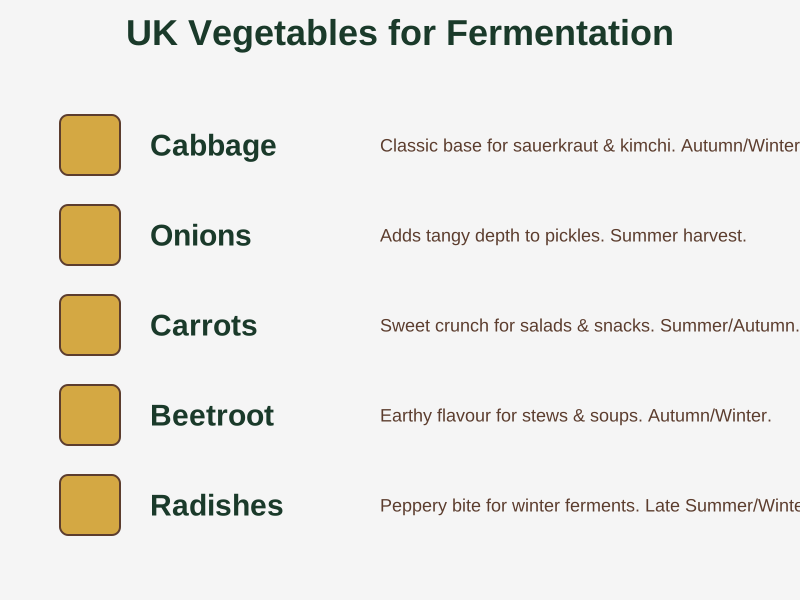
When most articles list cabbage and kimchi, they overlook the bounty of British veg that love a good brine. Here are the top five UK staples that turn into flavour‑packed ferments:
- Onions – Sweet or red onions develop a mellow, tangy bite perfect for a Sunday roast.
- Carrots – Their natural sugars give a gentle fizz; great in salads or as a snack.
- Beetroot – Deep colour, earthy flavour, and a boost of betaine.
- Radishes – Crunchy, peppery, and they keep well through winter.
- Cabbage – The classic base for sauerkraut and kimchi, still worth a mention.
Seasonal eating means you can preserve summer’s sweet onions in a jar that lasts until the next harvest. In winter, a batch of fermented beetroot adds colour to a bland stew. The British palate also loves a good chutney; a quick fermented carrot‑ginger chutney pairs beautifully with a ploughman’s lunch.
I tried fermenting a batch of beetroot without adding any extra spices, only salt and water. The result was a surprisingly bright, almost citrusy flavour that lifted a simple beet soup into something restaurant‑worthy. If you want a step‑by‑step for pickled onions, have a look at our Traditional British Pickled Onions recipe.
How to Incorporate Fermented Veg into Your Diet
The easiest way to reap the gut benefits is to make fermented veg a regular side rather than a one‑off experiment.
- Breakfast – Toss a spoonful of sauerkraut into scrambled eggs or mash it into smashed avocado toast. The acidity cuts through the richness and wakes up the palate.
- Lunch – Layer fermented carrots on a whole‑grain sandwich or mix them into a quinoa salad.
- Dinner – Serve a small heap of pickled onions alongside a classic roast beef, or stir fermented radishes into a curry for a subtle zing.
- Snacking – Keep a jar of fermented beetroot in the fridge; a handful gives a crunchy, salty bite that satisfies without the guilt.
3‑Day Meal Plan Snippet
| Day | Meal | Fermented addition |
|---|---|---|
| Mon | Breakfast | Avocado toast + 1 tbsp sauerkraut |
| Mon | Lunch | Chicken salad + pickled onions |
| Mon | Dinner | Roast lamb + fermented carrots |
| Tue | Breakfast | Scrambled eggs + fermented beetroot |
| Tue | Lunch | Veggie wrap + fermented radish slaw |
| Tue | Dinner | Veggie stew + a side of kimchi |
| Wed | Breakfast | Porridge + a dollop of fermented apple (optional) |
| Wed | Lunch | Tuna sandwich + pickled cucumber |
| Wed | Dinner | Fish pie + a spoonful of fermented cabbage |
These tiny tweaks add a burst of flavour and a modest dose of live cultures – roughly 1–2 tablespoons a day is enough to keep the gut happy without overwhelming the palate.
Now that you see how easy it is to weave fermented veg into everyday meals, the next logical step is to get your own starter kit organised. Download the Free Fermentation Starter Checklist to make sure you have everything you need before you open your first jar.
Frequently Asked Questions
Is precision fermentation better than traditional fermentation?
No, not for whole foods. Precision fermentation creates specific isolated proteins, which is very different from the complex, living ecosystem of bacteria, enzymes, and vitamins you get from traditional lacto-fermented vegetables. You just can’t replicate that rich community in a lab-grown product.
Are fermented foods safe?
Yes, absolutely, as long as you follow a few basic rules. The most important is to keep your vegetables fully submerged under a 2-3% salt brine. Always check for any signs of mould (anything fuzzy or coloured, not white kahm yeast) or off smells, and if in doubt, bin it.
What are the best vegetables to ferment in the UK?
For us in the UK, we’ve got a fantastic range of local veg that ferments beautifully. Cabbage is the classic for sauerkraut and kimchi, but don’t overlook onions for tangy pickles, and carrots, beetroot, and radishes all make brilliant, flavourful ferments that are easy to get hold of from British growers.
Do I need special equipment?
Not really to start. A simple Kilner jar and some good quality non-iodised sea salt are all you truly need. A fermentation lid can make burping your jars a bit less faff, but it’s definitely not essential when you’re just giving it a go.
How often should I eat fermented foods?
You don’t need much to get the benefits. A small serving, typically 1-2 tablespoons a day, is usually enough to support your gut diversity without overwhelming your palate. Think of it as a regular flavour boost rather than a massive dose.
UK Fermentation Staples
| Vegetable | Best For | Seasonality in UK |
|---|---|---|
| Cabbage | Sauerkraut, Kimchi | Autumn/Winter |
| Onions | Tangy pickles | Summer harvest |
| Carrots | Salads, Snacks | Summer/Autumn |
| Beetroot | Stews, Soups | Autumn/Winter |
| Radishes | Winter crunch | Late Summer/Winter |
Where to Go From Here
Traditional lacto‑fermentation remains a science‑backed, low‑tech way to enrich your diet with live cultures, vitamins and a dash of British flavour. You don’t need a biotech lab or a pricey supplement; a jar, some salt and a handful of UK vegetables will do the trick.
If you’re ready to start, the first thing to sort is your starter kit. Our Best Fermentation Jars guide walks you through the options, from budget‑friendly glass to air‑tight ceramic crocks. And remember, the easiest way to keep things on track is to follow a simple checklist – download the Free Fermentation Starter Checklist and tick each step as you go.
Happy fermenting, and enjoy the crunchy, tangy side of British kitchen tradition. Your gut will thank you, and your taste buds will be glad you gave the jar a go. If you’re keen to learn more of my tried-and-tested methods, have a look through the rest of our fermentation blog.
Related Guides
For a complete overview, see our Complete Guide to UK Vegetable Fermentation for Beginners.
Sources & Further Reading
- British Nutrition Foundation (BNF) - Probiotics and Fermented Foods
- Food Standards Agency (FSA) - Fermented Foods Safety
- International Scientific Association for Probiotics and Prebiotics (ISAPP)
Note: This article provides general guidance only. Always verify specific health claims and safety guidelines with a qualified professional or official source.