Homemade Fermented Ketchup Recipe UK: Tangy & Simple
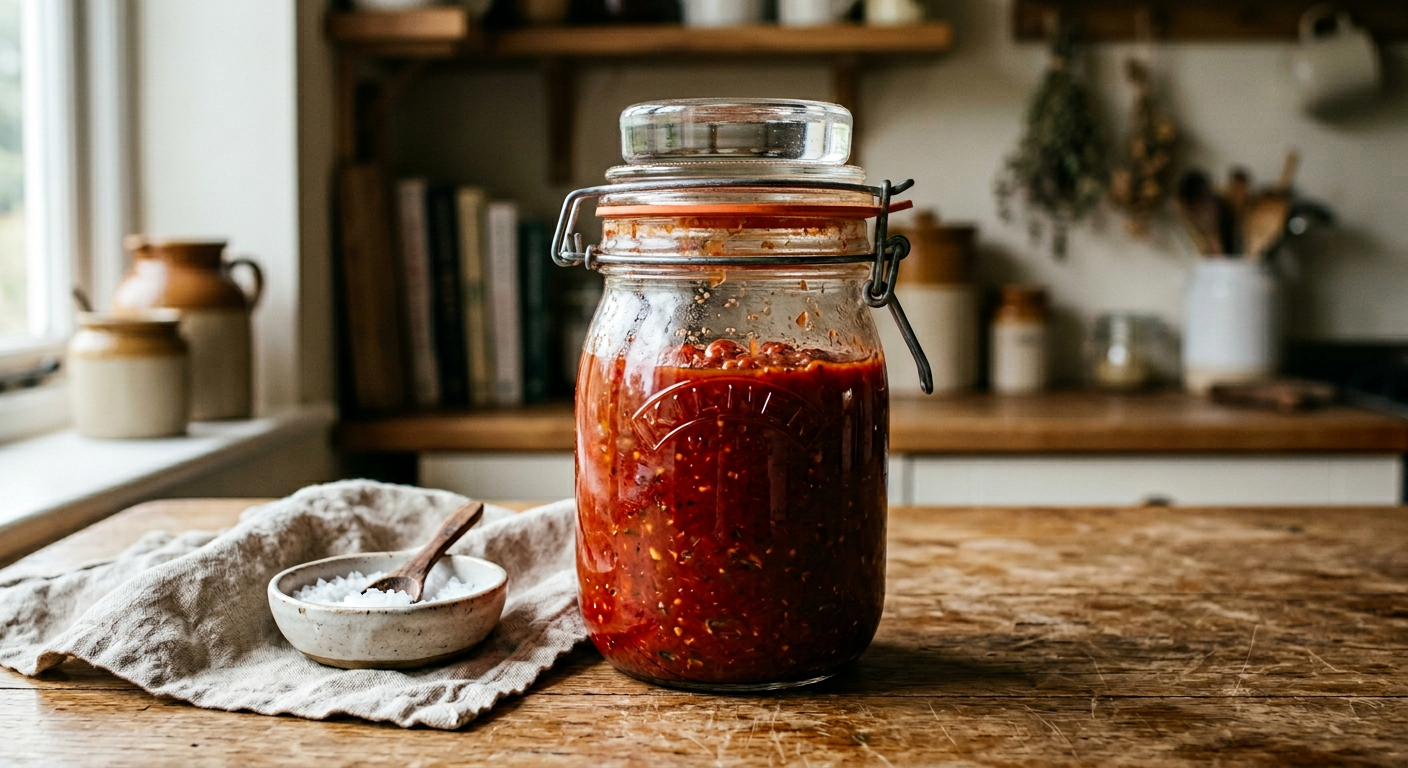
Shop-bought ketchup is fine in a pinch, but it’s a world away from the tangy, complex flavour you can make at home. This fermented version isn’t about slavishly copying Heinz; it’s about creating a condiment with a bit of life in it. You’ll get something lower in sugar, free from thickeners, and full of that sour-sweet balance that makes a chip taste better. I’ll show you how to make it work in a UK kitchen, using ingredients you can actually find, and share my simple taste test to get the flavour spot on.
What You Need (UK Ingredients & Equipment)
You don’t need much to get started. This is about using what’s already in your cupboard or easily grabbed from a British supermarket.
Ingredients – all from a typical British supermarket
Here’s what to pick up:
- Tomato paste – a 200 g tub of any no‑added‑sugar brand. I often use Heinz because it’s everywhere.
- Vinegar – Heinz Malt Vinegar gives that classic, slightly malty depth. Apple cider vinegar works for a milder, fruitier tang.
- Sweetener – local honey or a good maple syrup (Waitrose’s own is decent). The syrup adds a subtle caramel note I like.
- Spices – a small cinnamon stick, 4–5 whole cloves, 1 tsp mustard seeds, and a pinch of sea salt (Maldon flakes are lovely here).
- Water – filtered, lukewarm (about 150 ml).
Equipment – keep it simple
No fancy gadgets needed:
- Jar – a standard Kilner jar with a plastic clip-top or a Weck jar. On a budget, the IKEA KORKEN (around £5–£8) works, though the lid can be a bit fiddly.
- Airlock – optional, but handy if you’re new to this. A simple silicone “breather” lid works too.
- Weight – a proper fermentation weight or a small, clean glass bowl to keep everything submerged.
A quick budget note: The IKEA jar is the honest pick for a first batch. It’s not as sleek as a Kilner, but it’s worth its salt and does the job.
Before you start, it helps to have your workspace sorted. Download the Free Fermentation Starter Checklist to make sure you’ve got the right kit and a clean area to work in.
The Step‑by‑Step Fermented Ketchup Recipe
This isn’t complicated. Follow these steps and you’ll have a reliable, tasty batch.
- Mix the base – In a bowl, whisk the tomato paste, vinegar, sweetener, sea salt, and the whole spices together. Add enough lukewarm water to get a pourable, thick sauce consistency.
- Pack the jar – Spoon the mix into your sterilised jar. Press it down with a butter knife to make it compact and level. Drop your weight on top, then seal the lid loosely (or fit the airlock if using one).
- Ferment – Leave the jar at room temperature. In most UK kitchens (15‑20 °C), 3 days gives a gentle tang, while 5–7 days develops a deeper, funkier flavour. The honest answer is that temperature is the biggest variable – a warmer kitchen speeds things up, a cooler one slows them down.
- Burp the jar – Once a day, open the lid for a few seconds to release any built‑up gas. A faint hiss is normal; it’s just CO₂ from the active cultures.
- The Taste Test – After three days, try a spoonful. If it’s too tangy, stir in a bit more honey or syrup. Too sweet? Add a splash more malt vinegar. Tweak it until it hits that ketchup spot you’re after.
- Finish & store – Once you’re happy, seal the jar tightly and put it in the fridge. The cold slows the fermentation right down, and your ketchup will keep for 2–4 weeks.
A quick safety note: Keep the mixture fully submerged. Any exposed surface can grow mould. If you see black or green growth, bin the batch as advised by food safety experts. A thin white film (Kahm yeast) is harmless – just scrape it off.
Why is my Fermented Ketchup Fizzy or Mouldy?
A bit of fizz is usually fine, while mould needs dealing with. Here’s what’s likely happening.
- Fizz is a good sign – Those bubbles are carbon dioxide from the live bacteria, meaning your ferment is active and flavour is developing. It’s normal.
- Mould worries – Surface mould usually means the paste wasn’t completely under the brine. Press the weight down again and add a splash of brine (water with 1% salt) to cover it.
- Kahm yeast vs. bad mould – Kahm looks like a thin, white, powdery film and is harmless. Black, blue, or green patches are not. If you’re ever unsure, it’s safer to toss it.
- Off‑flavours – A sour, yeasty smell is normal. A rotten, sulphuric stink means something’s gone wrong – discard it.
Serving Suggestions & Storage
- Use it straight away on burgers, chips, or as a dip.
- Blend it with a touch more honey for a glaze on chicken wings.
- Store the sealed jar in the fridge. The cold slows the microbes right down, giving you a shelf life of about three weeks. The natural acidity from fermentation helps it last a bit longer than a plain homemade version source: UK Food Standards Agency on fermented foods.
Want more ideas? Explore more fermented condiments for inspiration on how to use your new ketchup.
Frequently Asked Questions
Can I use white vinegar instead of malt vinegar?
You can, but the flavour will be sharper and lack the malt’s earthy depth that makes ketchup taste like ketchup. If you use white vinegar, add a pinch more sweetener to balance the bite.
Why is my ketchup fizzy?
The fizz is carbon dioxide from the live cultures fermenting the sugars. It’s a sign of a healthy, active batch. Just remember to burp the jar daily to stop pressure building up.
How do I know if it has gone bad?
Look for black or green mould – that’s a clear sign to toss it. A white, powdery layer (Kahm yeast) is usually harmless; scrape it off and give it a sniff. If it smells rotten or rancid, bin it straight away.
Can I make this in a plastic container?
No. Plastic can leach chemicals and rarely seals airtight enough for safe fermentation. Stick to glass jars (Kilner, Weck, or the IKEA KORKEN) for a reliable, food‑safe process.
Is this lower sugar than Heinz?
Yes, absolutely. By using natural sweeteners and letting the fermentation develop tang, you need far less added sugar than commercial versions, which often rely on a hefty sugar load. You’re likely using significantly less sugar than the 22g per 100g found in many shop-bought ketchups source: NHS Eatwell Guide on sugars.
Fermentation Time & Temperature Guide
| Fermentation Duration | Temperature | Expected Result |
|---|---|---|
| 3 Days | 15-20°C | Gentle tang |
| 5-7 Days | 15-20°C | Deeper, funkier flavour |
| Warmer Kitchen | Variable | Speeds up process |
| Cooler Kitchen | Variable | Slows down process |
Where to Go From Here
So there you have it – a roadmap to a tangy, live ketchup that beats the supermarket staple on flavour and simplicity. The key is using UK-friendly ingredients, keeping everything submerged, and tweaking the sweet-sour balance to your taste.
Ready for your next batch? Download the Free Fermentation Starter Checklist to double‑check your jars, weights, and workspace before you begin.
If you hit a snag or just want to share how your ketchup turned out, drop me a line. I love hearing about kitchen experiments gone right (and the occasional faff). You can learn more about my journey into fermentation here. Happy fermenting!
Related Guides
For a complete overview, see our UK Fermented Condiments & Creative Ways to Use Them.
Sources & Further Reading
- UK Food Standards Agency - Food Poisoning
- UK Food Standards Agency - Fermented Foods
- NHS Eatwell Guide on Sugars
Note: General guidance only, verify details with a qualified professional or official source.