Homemade Vegan Kimchi Recipe UK: A Beginner-Friendly Guide
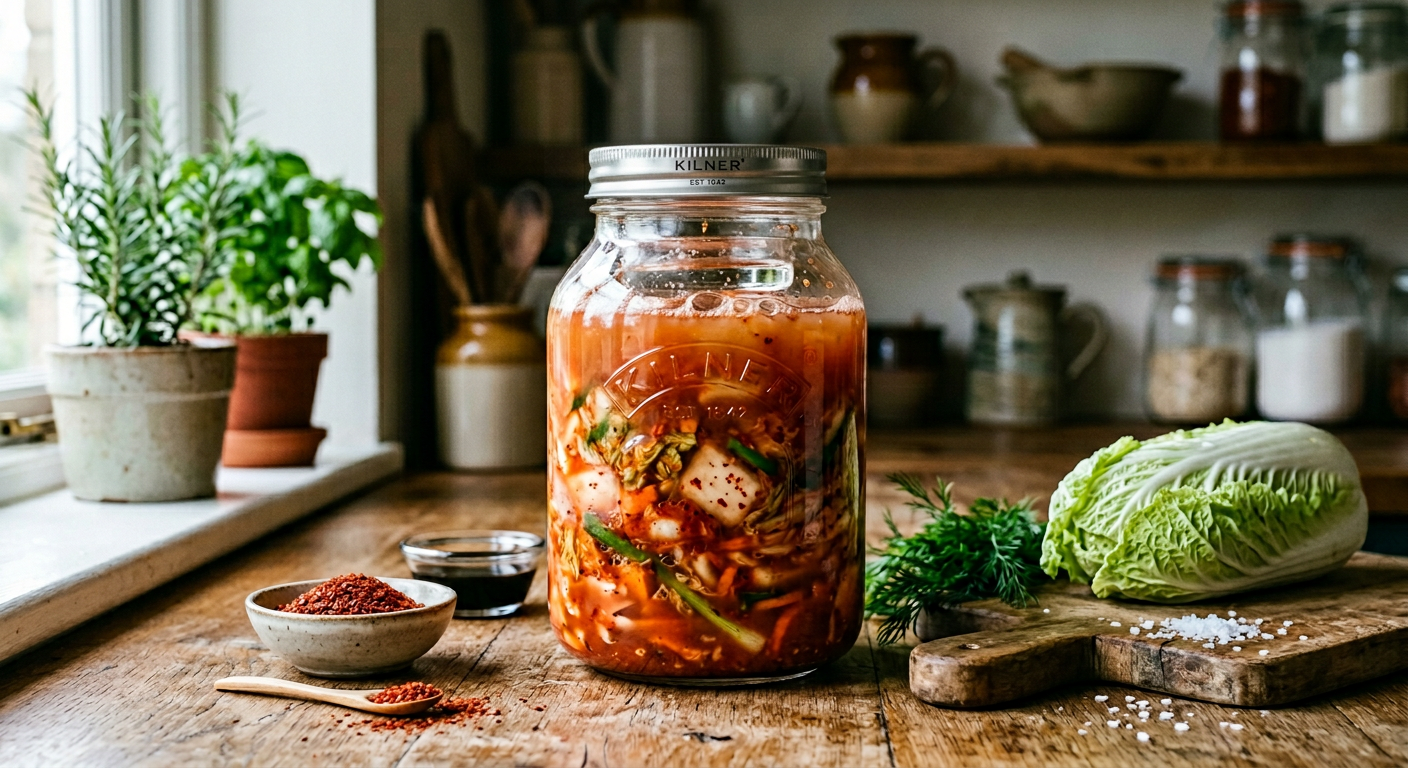
Forget the faff of hunting for exotic ingredients. Making proper, tangy vegan kimchi in a typical UK kitchen is far simpler than you think, without needing a special trip abroad. I’ll show you exactly how to swap the fish sauce, where to pick up the other bits, and the one crucial technique that keeps mould at bay. You’ll have a jar of live, active kimchi ready to eat in a week, and the confidence to make it again next month.
Why Vegan Kimchi is a Real Shift for UK Home Cooks
Traditional kimchi gets its depth from fish sauce, a fermented anchovy liquid that most vegans (and many meat‑eaters) simply won’t use. The biggest barrier isn’t the flavour; it’s the fact that the usual brands – like Sempio or Kikkoman’s Korean line – are hard to find in a Tesco or Sainsbury’s aisle.
The “Kitchen Sink” approach turns that problem on its head. Instead of hunting for a single exotic ingredient, you can build the same umami backbone from stuff that’s already on your shelf or a quick trip to the local Asian market. Here are the most reliable UK‑available boosters:
- Soy sauce + a strip of kombu (dried kelp) – a splash of full‑strength soy sauce (around 30 ml) plus a 5 cm piece of kombu, left to soak in warm water for 10 minutes, gives a salty, sea‑infused depth that mimics fish sauce beautifully.
- Coconut aminos – a slightly sweeter, lower‑sodium alternative you can find in the health food aisle of Holland & Barrett or larger Waitrose stores.
- Miso paste (white or yellow) – a teaspoon dissolved in a tablespoon of water adds fermented richness; it’s readily available in most Asian supermarkets.
All three options sit comfortably under £8 for a decent-sized pack, so you’re not breaking the bank. If you’re unsure which to try first, I usually start with the soy‑kombu combo because it’s the most “fish‑like” and cheapest.
For more on the science of lacto‑fermentation (and why the salt‑water brine works), have a look at my Guide to Fermentation on the blog – it’s the quick‑read I wish I’d had before my first batch.
The “Kitchen Sink” Vegan Kimchi Recipe
Prep time: 20 minutes | Fermentation: 5‑7 days | Makes about 1 kg
Ingredients (UK‑sourced)
- 1 kg Napa cabbage (look for it in the fresh produce aisle of larger Tesco, Sainsbury’s, or an Asian grocer; Savoy works in a pinch)
- 1 large carrot, julienned
- 1 small daikon radish, match‑stick cut (optional)
- 4 garlic cloves, minced
- 2 cm piece fresh ginger, grated
- 2 tbsp Korean red chilli flakes (gochugaru – available at Asian supermarkets; if you can’t find it, 1 tsp smoked paprika + a pinch cayenne works)
- 2 tbsp sea salt (Maldon flakes are lovely, but any fine sea salt will do)
- 30 ml soy sauce (regular, not low‑salt)
- 5 cm strip kombu, rinsed
- 1 tbsp sugar (optional, helps kick‑start fermentation)
Equipment
- A wide‑mouth glass jar (Kilner clip‑top jar is my go‑to; see my thoughts on Best Fermentation Jars UK)
- A small weight (a clean glass fermentation weight or a sealed zip‑lock bag filled with water)
- A non‑metallic bowl for mixing
- A clean kitchen cloth or lid for covering while the jar ferments
Step‑by‑step
- Salt the cabbage. Slice the cabbage lengthwise, then cut into 2‑cm strips. Toss with the sea salt in a large bowl, massage for 2‑3 minutes until it starts to wilt, then let it sit for 30 minutes.
- Make the “vegan fish sauce”. While the cabbage rests, dissolve the soy sauce in 100 ml warm water, add the kombu strip and let it steep for 10 minutes. Discard the kombu – you’ve extracted the briny depth you need.
- Rinse and drain. Rinse the salted cabbage under cold water, squeezing gently to remove excess liquid. Pat dry with a clean tea towel.
- Mix the aromatics. In the non‑metallic bowl combine garlic, ginger, chilli flakes, sugar, and the soy‑kombu liquid. Stir until a paste forms.
- Combine everything. Add the cabbage, carrot, and daikon to the bowl, then massage the paste into the vegetables until they’re well coated and start to release their own juices.
- Pack the jar. Transfer the mixture into the sterilised Kilner jar, pressing down firmly with a wooden spoon so the vegetables are completely submerged under their own brine. Leave about 2 cm headspace.
- Weight it down. Place the fermentation weight on top, then seal the jar with the clip‑top lid.
- Ferment. Store the jar at room temperature (ideally 18‑20 °C). Check after 24 hours – you should see tiny bubbles forming. If the vegetables are not fully covered, add a little extra brine (salt + water, 1 % solution).
- Taste and decide. After 5 days, open the lid, give it a sniff and a taste. If the flavour is to your liking, move the jar to the fridge; if you prefer a stronger tang, let it sit another day or two.
The single most important tip: always keep the vegetables under the brine. This prevents mould and keeps the fermentation safe, as recommended by the Food Standards Agency (FSA).
Quick‑look answer (stand‑alone)
To make vegan kimchi in the UK, you’ll need Napa cabbage, sea salt, a vegan umami boost like soy sauce and kombu, along with garlic, ginger, and Korean chilli flakes. Start by salting the cabbage and letting it wilt, which draws out water and creates its own brine. While that’s happening, prepare your vegan ‘fish sauce’ by steeping kombu in warm soy sauce. Combine all the aromatics with the rinsed cabbage, then pack it tightly into a wide-mouth jar, ensuring the vegetables are fully submerged under their own brine. Let it ferment at a consistent room temperature, ideally 18-20 °C, for 5-7 days. The crucial step is always keeping the vegetables under the liquid to prevent mould and ensure a safe, delicious batch.
Troubleshooting: Why Isn’t My Kimchi Bubbling? (UK Edition)
If your kimchi isn’t bubbling, the most common reasons are temperature, salt concentration, or air exposure. Fermentation is a waiting game, and the bubbles are a sign that lactic‑acid bacteria are doing their thing. If you’ve opened the jar after a couple of days and see no activity, consider these UK‑specific factors:
- Temperature. British winters often sit at 15 °C or lower, which slows bacterial activity. In that case, give it a week or two extra – the microbes are just being shy. During summer, 22 °C can speed things up, so keep an eye on the flavour to avoid over‑fermentation.
- Salt concentration. Too much salt can inhibit the bacteria; too little can let unwanted microbes flourish. A 2 % salt solution (20 g salt per litre of water) is the sweet spot. I once added a heaping spoon of sea salt, thinking “more is safer”, and ended up with a very salty, barely bubbling batch.
- Kahm yeast. A thin white film on the surface is usually harmless kahm yeast. Skim it off and keep the vegetables under the brine. If the film turns black, green, or smells like rotting meat, it’s time to bin the batch – the NHS Food Safety Advice is clear that any off‑odour warrants disposal.
- Air exposure. Make sure your jar’s lid is snug but not airtight; a little gas needs to escape. “Burp the jar” once a day for the first 48 hours if you’re using a completely sealed lid.
If you’ve checked all the above and still see no bubbles after a week, give the jar a gentle shake to redistribute the brine and wait another couple of days. Patience usually pays off.
Serving Suggestions & Storage in the UK Home
Kimchi is a flavour‑bomb that works in more places than you might think:
- As a side – a spoonful alongside a roast dinner adds a bright, tangy contrast.
- In a rice bowl – toss with steamed brown rice, avocado, and a drizzle of sesame oil for a quick lunch.
- On toast – spread a thin layer of vegan cream cheese and top with kimchi for a cheeky snack.
- In ramen – a handful dropped into the broth just before serving lifts the whole bowl.
Storage tip: Keep the jar in the fridge, ideally on a shelf rather than the door, where temperature fluctuations are minimal. In a typical British kitchen the jar will stay fresh for 3‑4 weeks; the flavour peaks after about 2 weeks of cold‑fermentation. For more detailed storage advice, see my How to Store Kimchi article on the blog.
Essential Equipment for Your First Batch
A good jar makes the whole process feel less like a science experiment and more like a kitchen hobby. Here’s what I rely on:
- Wide‑mouth glass jar – Kilner or Weck jars are spot on because the wide opening makes packing and cleaning a breeze. The clip‑top lid lets you “burp” without a fancy airlock.
- Weight – A clean glass fermentation weight or a sealed zip‑lock bag filled with water ensures the veggies stay under the brine. I once tried a ceramic stone that cracked when I dropped it, so stick to something sturdy.
- Lid or cloth – If you prefer a cloth cover, use a clean kitchen linen and a rubber band; otherwise the Kilner clip‑top does the job.
Budget alternative: The IKEA KORKEN jar is the honest budget pick – you can buy a set for roughly £12‑£15. The lid’s rubber seal is a bit fiddly, but it’ll keep the air out well enough for a beginner batch. Just remember to replace the lid if it starts to lose its snap.
Frequently Asked Questions
Can I make vegan kimchi without fish sauce?
Absolutely! The best UK-friendly swap is a simple mix of soy sauce and a strip of dried kombu. This combination gives you that crucial salty, oceanic umami that fish sauce provides, all without any animal products. I find it works a treat.
Where can I buy Napa cabbage in the UK?
You’ll typically find Napa cabbage in the fresh produce section of larger supermarkets like Tesco, Sainsbury’s, or M&S, especially those with a good ‘world food’ aisle. If it’s proving a bit elusive, Savoy cabbage is a decent stand-in – just make sure to slice it a little thinner than you would the Napa.
Why is there a white film on top of my kimchi?
A thin white film is usually kahm yeast, which is a harmless by-product of healthy fermentation, so don’t panic! Just skim it off the surface and make sure your vegetables are still safely submerged under the brine. If it ever turns black, green, or smells genuinely rotten, then it’s time to play it safe and bin the batch.
Do I need a special fermentation jar?
Not at all, a standard Kilner-style clip-top jar is perfectly fine when you’re starting out. I’ve used them for years! The most important thing isn’t a fancy airlock, but simply making sure all your vegetables stay completely submerged under the brine. A fermentation weight or even a sealed bag of water does the trick.
How long does homemade vegan kimchi last?
Once it’s in the fridge, your homemade vegan kimchi will happily keep for 3-4 weeks. The flavour actually deepens and gets even more complex over time, so you’ll find it evolves – often for the better – the longer it sits in the cold. I usually find it’s at its peak after about two weeks in the fridge.
Vegan Kimchi Ingredient Substitutions
| Ingredient | Traditional Option | Vegan UK Alternative |
|---|---|---|
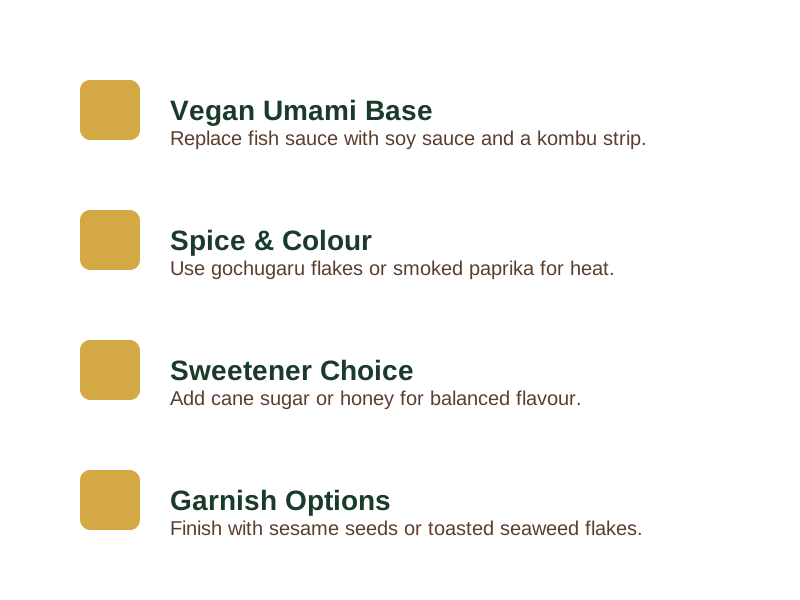
| Fish Sauce | Anchovy-based | Soy sauce + Kombu strip |
| Red Pepper Paste | Gochujang | Gochugaru flakes or smoked paprika |
| Sugar | Fish sauce sometimes contains sugar | Cane sugar or honey |
| Garnish | Fish flakes | Sesame seeds or seaweed flakes |
Where to Go From Here
You’ve now got the recipe, the equipment list, and the troubleshooting know‑how to make a reliable vegan kimchi in a British kitchen. The biggest hurdle for most beginners is simply getting started – everything else falls into place once the vegetables are under the brine and you give them time.
If you’re ready to lock down your kit and avoid any last‑minute faff, check out my Fermentation Starter Checklist. It’s a quick, printable guide that ensures you have the right jars, weights, and ingredients before you even turn on the tap. If you’d like to know a bit more about me and how I got into all this, head over to the About page.
Happy fermenting, and enjoy the burst of flavour that only a proper, live‑active kimchi can bring to your plates!
Related Guides
For a complete overview, see our Sauerkraut, Kimchi & Pickles: UK Beginner Recipes.
Sources & Further Reading
- Food Standards Agency - Fermented Foods
- NHS - Food Safety and Hygiene
- Royal Horticultural Society - Vegetable Growing
Note: This guide provides general information for home fermentation. Always verify safety guidelines with official food safety bodies and consult a qualified professional for specific dietary or health advice.