The Perfect Biltong Vinegar and Spice Mix
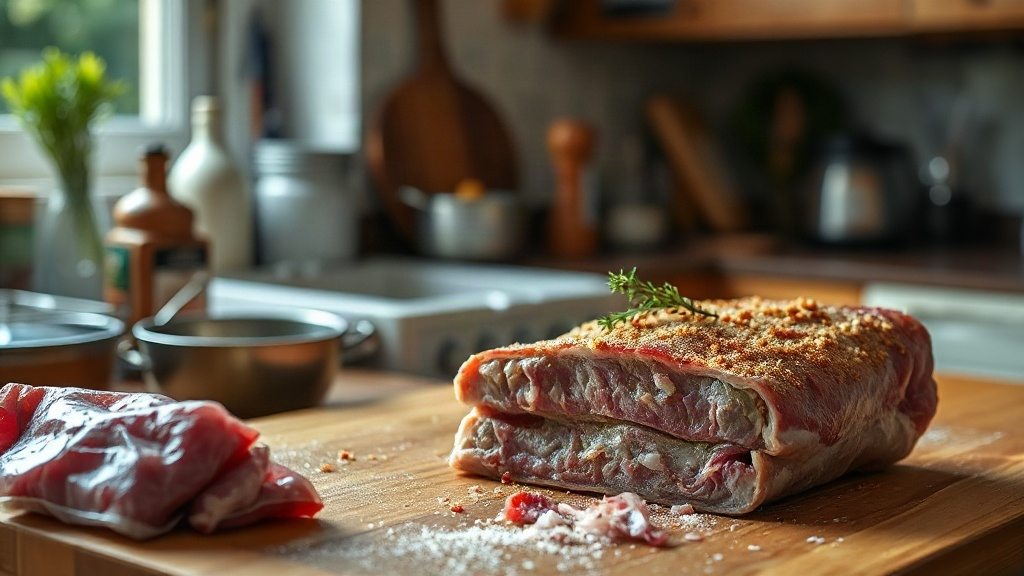
Vinegar handles the two critical safety jobs that spices can’t touch: it reduces surface pH to inhibit bacterial growth and draws initial moisture from the meat. While everyone debates coriander ratios, getting the vinegar application right determines whether your biltong is merely tasty or genuinely safe to eat.
That burning sensation from overly salty biltong? That’s a flavour misstep. The real risk comes when vinegar application fails to create the acidic environment needed to prevent spoilage organisms from thriving.
What Goes Into a Traditional Mix
A basic biltong spice mix needs just four components: salt, malt vinegar, black pepper, and coriander. Optional additions like sugar or chilli flakes alter the flavour profile but don’t contribute to safety.
📺 Watch: How to Use the BiltongMate Spice Mix to Make Biltong
Salt draws out moisture and aids preservation. Vinegar provides bacterial inhibition through acidity. Coriander and pepper deliver the signature flavour. Each element has a distinct role, with vinegar carrying the heaviest safety responsibility.
The “perfect” blend involves personal preference for spice quantities, but vinegar measurement requires precision, not estimation.
How Vinegar Creates a Safety Barrier
Raw meat surfaces provide ideal conditions for bacterial growth, with natural pH levels that support microorganisms. Applying vinegar introduces acetic acid that lowers surface pH below the 4.6 threshold recognised by food safety authorities as inhibiting many common spoilage bacteria.
Apply vinegar evenly across all meat surfaces according to your recipe’s specified quantity. The spice mixture flavours the meat but won’t compensate for inadequate vinegar application.
After curing, pat the meat dry gently rather than rinsing, which could dilute the protective acidic layer. The vinegar establishes safety; the spices build flavour on that foundation.
Applying the Mixture Correctly
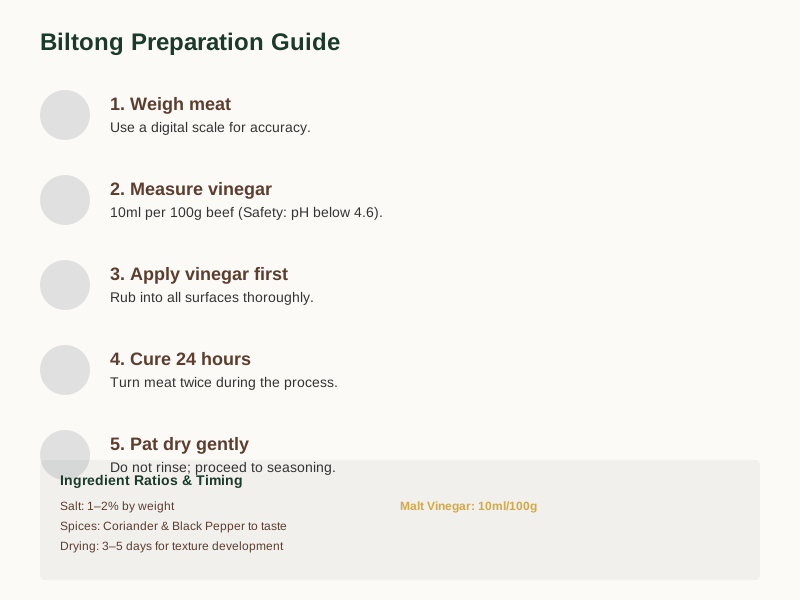
Begin by weighing your meat to determine appropriate quantities. Use a digital kitchen scale for accuracy.
Apply the measured vinegar first, rubbing it thoroughly into all surfaces. Then add your spice mixture—typically including salt at approximately 1-2% of meat weight, plus coriander and black pepper to taste. While spice ratios can vary, vinegar quantity remains fixed for safety.
Refrigerate the meat for around 24 hours, turning it occasionally to ensure even penetration. Afterwards, gently pat dry with paper towel—don’t rinse. The goal is removing excess moisture while preserving the vinegar’s protective effect.
Achieving Proper Drying Conditions
Biltong dries through airflow rather than applied heat. Gentle air circulation in a cool environment produces better results than rapid drying, which can cause case hardening—where the exterior becomes tough while interior moisture remains trapped.
A well-ventilated space with subtle air movement works well. A dedicated biltong box provides ideal conditions, but a cool cupboard with a small fan can achieve similar results in UK homes. The key is consistent, gentle airflow rather than direct blowing.
Drying typically requires several days depending on meat thickness and ambient conditions. Properly dried biltong feels firm externally while retaining slight internal flexibility.
Common Questions Answered
Can I substitute white vinegar for malt vinegar?
While malt vinegar contributes traditional flavour, white vinegar contains comparable acetic acid content and provides similar pH reduction. The safety mechanism remains identical, though the final taste profile will differ.
What’s the shelf life of finished biltong?
When thoroughly dried and stored in an airtight container under refrigeration, biltong generally remains safe for consumption for several weeks. Discard any batches showing mould, unusual texture, or off odours.
Do I need special equipment for drying?
A biltong box isn’t essential. Many UK kitchens provide adequate conditions using simple setups—a cool, ventilated space with a low-speed fan and proper hanging arrangements suffice for successful drying.
As a guideline, malt vinegar is used for pH reduction and flavour, while salt is applied at approximately 1-2% of meat weight for moisture extraction. Coriander and black pepper are added to taste for flavour, and the drying period of several days is essential for texture development.
Moving Forward with Confidence
The process is straightforward: weigh meat, measure vinegar precisely, apply spices, cure refrigerated, pat dry gently, and hang in a cool, airy space. Understanding why vinegar comes first—handling pH reduction and initial moisture draw—transforms biltong making from recipe-following to informed practice.
Remember two crucial details: the vinegar-to-meat ratio specified in your recipe, and coriander as the essential flavouring component. These elements create the foundation for safe, authentic biltong.
For comprehensive guidance, see our How to Make Biltong at Home in the UK . Ready to begin? Download the Free Fermentation Starter Checklist for practical next steps.
Reference Materials
Note: This article provides general guidance. Consult official sources or qualified professionals for specific safety procedures.