How to Rinse and Slice Home Cured Bacon

The cross-section is the only place the cure’s success is visible — uniform colour means the salt and nitrite reached the centre, a grey core means they didn’t, and rinsing cannot fix that. This is the checkpoint most home curers skip, rushing to wash off surface salt before confirming the cure worked all the way through.
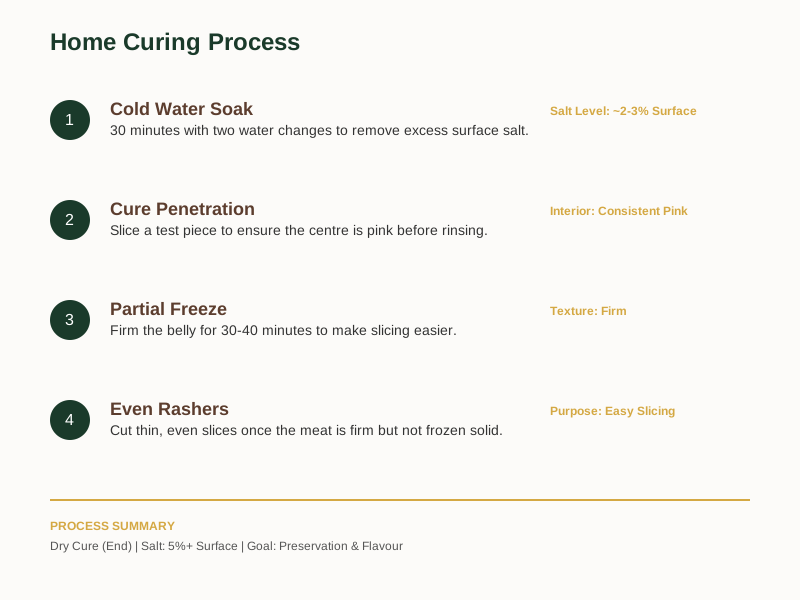
Once you’ve verified that pink penetration, the rest is mechanical: draw out excess surface salt with a cold water soak, firm the belly for clean slicing, then portion. The timing matters less than the sequence — rinse before you slice, but only after you’ve checked the cure. A partial freeze makes the knife work cleaner, though a sharp blade and patience will manage without.
This is the bridge between “technically cured” and “actually edible.”
Why Your Bacon Tastes Too Salty
Dry curing works from the outside in. Salt migrates inward from the surface over days, leaving the outer layers significantly more concentrated than the interior. Commercial bacon achieves balance through industrial processing — tumbling, brine injection, precise control. Home dry curing lacks these tools, so the surface ends up with substantially more salt than any eating salt level.
📺 Watch: How to make English Bacon cured and cooked
The excess isn’t distributed through the meat — it’s concentrated in the brine layer that formed on the outside during the cure. Rinse this away and you remove the harsh edge. Skip it, and you’re eating concentrated surface salt that only intensifies as moisture cooks off in the pan.
What fools beginners is that the belly looks finished. Firm, coloured, aromatic. But appearances deceive: the surface salt remains at levels that overwhelm the palate. The fix is simple water and time, applied at the right moment.
The Rinse: Drawing Out Surface Salt
Start with a quick cold water rinse — thirty seconds to wash loose cure from the surface. Then submerge the belly in fresh cold water and leave it. Change the water once during the soak. After half an hour total, drain and pat dry with kitchen paper.
The water change matters. Initial soaking pulls salt from the surface; stagnant water lets some migrate back. Fresh water for the second stretch maintains outward diffusion. What you’re removing is concentrated surface salt, not the cure you built through the week. The interior seasoning stays intact.
Soaking longer than necessary creates problems. Extended immersion draws salt from deeper meat, leaving uneven seasoning — under-salted surface, bland interior. The goal is reducing surface excess, not reversing your curing work.
Some professional curers rinse loins after curing, before air-drying or smoking. It’s a recognised step in managing final salt levels, not a home-kitchen workaround.
One point on pink curing salt: rinsing doesn’t compromise safety. Prague Powder #1 performs its antimicrobial function during the cure period, absorbed and converted before you ever touch water to the surface. What rinsing removes is table salt and surface spices, not the nitrite protection already locked into the meat.
The Slice: Working With Firm Meat
Fresh pork belly is soft and pliable — difficult to cut evenly, prone to squishing under the blade. The practical solution is temporary firming.
Lay the rinsed, dried belly flat in the freezer. Give it time to chill through without freezing solid — the surface should resist light pressure like chilled deli meat, not yield like raw flesh nor resist like frozen brick.
At this firmness, slicing becomes controlled. The knife passes cleanly; rashers hold their shape. An electric slicer handles this texture well if you have one, though a sharp chef’s knife and steady hand work fine — slower, but equally effective.
Avoid freezing solid. Brittleness makes cutting harder and stresses blades. This is temporary firming for portioning, not storage freezing. Once sliced, you can properly freeze portions for the longer term.
Checking Cure Penetration: The Safety Step
Here’s where sequence matters. Rinse first, or check first?
📺 Watch: How to Cure Bacon at Home | Pork Belly to Bacon
If you followed a measured recipe with weighed ingredients and standard timing, the cure is almost certainly complete. But if you’re uncertain — new to curing, or estimating rather than measuring — verify before rinsing.
Slice a thin piece from the belly end. Examine the cross-section. Proper curing shows pink consistently from edge to centre. Grey or whitish core indicates incomplete penetration. That means more curing time, not rinsing.
Rinsing before checking obscures the visual cues. Once soaked and dried, the surface changes; reading penetration becomes harder. Uncertain? Slice, check, then rinse. Confident? Rinse, firm, then slice the lot.
Storing Your Portions
Wet slices stacked together spoil quickly. Ensure complete dryness before packing.
Vacuum sealing offers the best home protection against freezer burn and oxidation. Sealed portions keep well for months in proper freezer storage. Users report clear texture advantages over loose wrapping — no ice crystal damage, no degradation.
Without a vacuum sealer, press slices flat between baking paper layers for fridge storage (use within two weeks). For freezing, double-wrap in cling film then foil, expelling air carefully.
Some curers oil slices lightly with neutral oil before sealing, which some say improves texture over longer storage. The evidence is thin, so treat it as optional.
Home Curing: Salt Levels & Safety
| Stage | Salt Level | Purpose |
|---|---|---|
| Dry Cure (End) | High surface concentration | Preservation & flavour foundation |
| After Rinse | Moderate surface level | Palatable eating salt |
| Interior | Consistent pink | Safe, cured throughout |
| After Partial Freeze | Firm texture | Clean portioning |
Where to Go From Here
Fry one rasher first. Judge the salt level and the thickness you’ve achieved. Only then slice the remaining belly — thicker for frying, thinner for grilling. The first taste tells you whether you’ve hit your mark.
The measuring, the waiting, the checking: that’s the craft. Rinsing and slicing are the final translation from technical correctness to actual pleasure. Once the rhythm is established, it becomes automatic.
Ready to expand? Download the Free Fermentation Starter Checklist for your next preserving project.
Related Guides
For the complete curing process, see How to Cure Bacon at Home in the UK .
Note: General guidance only. Verify details with qualified professionals or official sources.