How to Store Fermented Vegetables (Fridge vs Pantry Rules for UK)
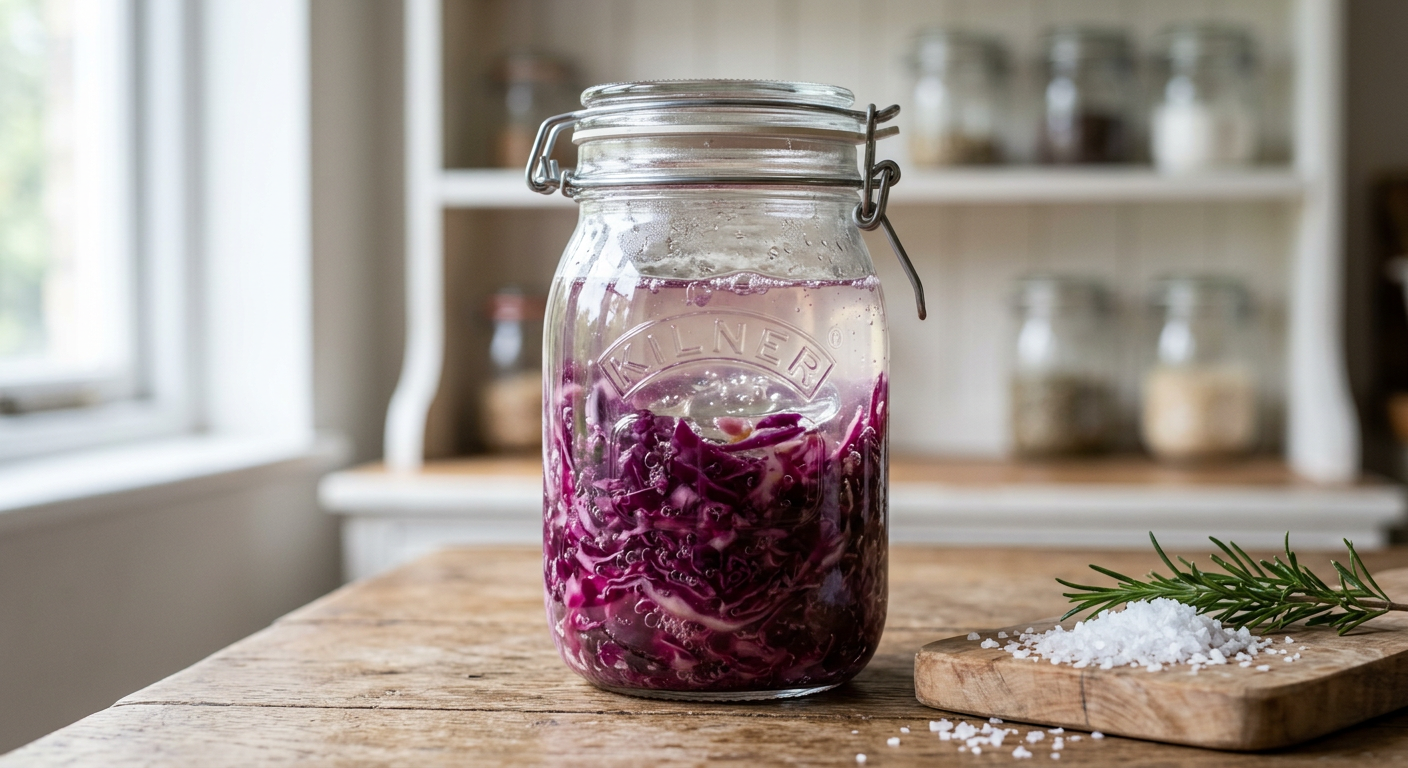
As an Amazon Associate I earn from qualifying purchases. This page contains affiliate links — if you buy through them, I earn a small commission at no extra cost to you.
So, you’ve made a batch of kimchi or sauerkraut, and now you’re faced with the age-old question: fridge or counter? It’s a common worry for new fermenters – is this still good, or have I accidentally brewed trouble? The truth is, storing your fermented vegetables safely isn’t rocket science. I’ve made all the mistakes so you don’t have to, and I’ll show you exactly where to keep them, how to seal them, what to look out for, and how long they’ll stay deliciously crunchy.
Where Should You Store Fermented Vegetables?
Once the active fermentation phase is over, your fermented vegetables belong in the fridge. While you can let the jar sit on the counter for the first week or two to let the flavours develop, anything beyond that is a gamble, especially during a warm British summer when kitchen temperatures can hover above 20 °C. Chilling dramatically slows down microbial activity, turning a weekly fermentation into a months-long shelf life.
A simple rule‑of‑thumb chart helps keep things straight:
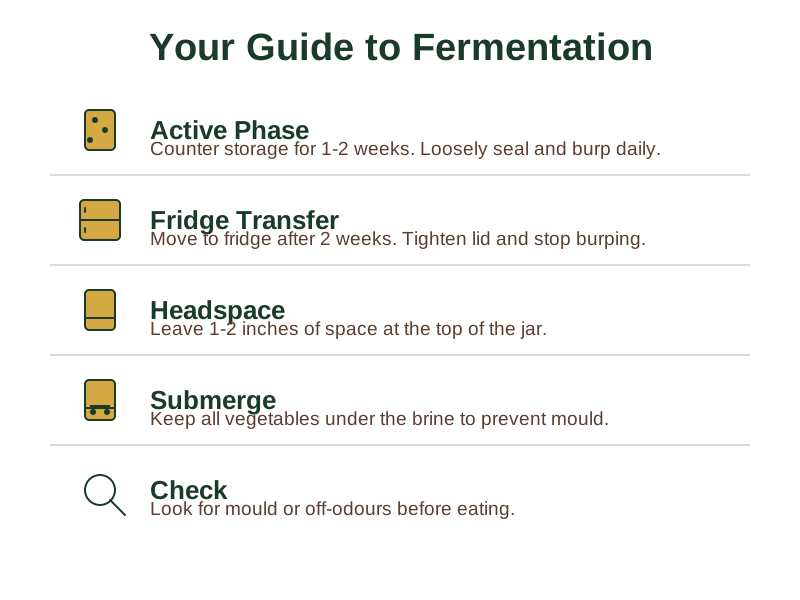
- First 1‑2 weeks: Counter, lid loosely sealed, burp daily.
- After 2 weeks: Transfer to the fridge, tighten the lid, no more daily burping needed.
I learned this the hard way when a batch of kimchi I left on the bench for three weeks turned a pleasant tang into a sour, fizzy mess that sprayed brine across the kitchen. The culprit? Too much time at room temperature, which let unwanted microbes outgrow the lacto‑culture. You can read more about my early fermenting mishaps on the about page.
If you’re watching the budget, the IKEA KORKEN jar is the honest pick – it costs roughly £12‑£15 and does the job. The only downside is the fiddly lid mechanism; if you don’t tighten it just right, air can sneak in and spoil the batch.
The Food Standards Agency (FSA) notes that low‑acid, lacto‑fermented foods kept at ≤ 5 °C remain safe for extended periods, because the beneficial bacteria stay dominant while spoilage organisms are held in check.
The “How” – Equipment & Headspace
Headspace: the silent enemy
When you pack vegetables into a jar, aim for 1‑2 inches of headspace at the top. Too much air means oxygen can feed mould and yeasts that you don’t want. Too little, and you risk overflow when gases build up during fermentation. I once used a wide‑mouth mason jar and filled it to the brim; the next day the lid popped off, and I spent a half‑hour cleaning the kitchen floor.
Keeping everything under the brine
The golden rule is simple: everything must stay submerged. If a leaf or slice floats, it becomes a breeding ground for mould. Use a fermentation weight – a clean glass disc, a stainless‑steel weight, or a small zip‑lock bag filled with brine – to press the veg down. The Fermentation Weights page on our site has a few budget‑friendly options, starting at around £8.
Choosing the right jar
Here’s how different jar types stack up for storage:
- Kilner Clip‑Top: Spot on for fridge storage. The rubber seal is reliable, and the clip makes it easy to open for a quick taste.
- Weck Tulip: Great for serving at the table – the glass gaskets give a tight seal but cost roughly £25‑£30, so it’s a bit of a splurge.
- Masontops Pickle Pipe (paid link): No daily burping needed; the pipe lets gas escape without letting air in. It’s a handy choice if you’re short on time, though the pipe can be fiddly to clean.
All three keep air out, but the Kilner’s simple clip is the most “worth its salt” for everyday use.
Now that you know what to look for in a jar and how to keep your veg under the brine, Download the Free Fermentation Starter Checklist to make sure your next batch is airtight and ready for the fridge.
Signs of Spoilage vs. “Good” Fermentation
The “white scum” myth
Many beginners panic at the pale film that sometimes forms on top of their sauerkraut. That’s usually kahm yeast, a harmless by‑product of lacto‑fermentation. It smells mildly yeasty and can be skimmed off. The University of California Agriculture & Natural Resources explains that kahm yeast is live and active but not dangerous. However, if the film looks fuzzy or gives off a sour, off‑odour, it’s best to discard the batch.
Mould – the deal‑breaker
Green, pink, or fuzzy growth is mould, and the honest answer is: throw it out. Mould can produce mycotoxins that aren’t worth the risk.
Off‑odours and texture
If you detect a rotten‑egg smell or ammonia, that’s a sign of unwanted bacterial activity – bin it. Likewise, if the veg become mushy or develop a slimy coating, they’ve passed their prime.
Trust Your Nose checklist:
- Smell: tangy, slightly sour → good; rotten‑egg, ammonia → discard.
- Look: clear brine, no coloured mould → fine; green/pink fuzz → toss.
- Feel: crisp, firm → ok; mushy, slimy → no.
How Long Do They Last? (UK Context)
Here’s a rough guide for how long different types of ferments typically last in a UK fridge:
- Sauerkraut / Kimchi: 3‑6 months in the fridge.
- Pickles (cucumbers, carrots): 1‑2 years if kept cold and sealed.
- Soft veg (courgette, beetroot): 1‑2 months – they lose crunch quickly.
- Hard veg (carrots, radish, turnip): 6‑12 months – lower water content keeps them firm.
These timelines line up with the National Center for Home Food Preservation’s guidance, adjusted for typical UK fridge temperatures of 4‑5 °C.
Frequently Asked Questions
Can I store fermented vegetables in a plastic container?
No, it’s really best to stick to glass. Plastic is porous and can absorb odours, plus it can harbour lingering microbes even after a good wash. Glass is non-porous and generally safer for fermentation.
Do I need to burp my jars every day?
Only during the active fermentation phase, which is typically the first 1-2 weeks on the counter. Once you move your jar to the fridge, the process slows dramatically, so daily burping isn’t necessary anymore.
Is the white film on top mould?
Usually, that pale film is just kahm yeast, which is harmless. It smells mildly yeasty and can be skimmed off. However, if it looks fuzzy, green, pink, or gives off a truly off-odour, then it’s best to discard that layer, or even the whole batch if you’re unsure.
Can I freeze fermented vegetables?
Yes, you can, but be prepared for a softer texture after thawing. Freezing pauses the fermentation, but the cell walls of the vegetables break down, making them less crunchy. Frozen ferments work well in soups, stews, or cooked dishes, but they won’t be ideal for a crisp snack.
Fermentation Storage Timeline
| Phase | Location | Action | Duration |
|---|---|---|---|
| Active | Counter | Loosely sealed, burp daily | 1-2 weeks |
| Storage | Fridge | Tighten lid, no burping needed | 3-6 months (Sauerkraut/Kimchi) |
| Storage | Fridge | Tighten lid, no burping needed | 1-2 years (Pickles) |
| Storage | Fridge | Tighten lid, no burping needed | 1-2 months (Soft veg) |
| Storage | Fridge | Tighten lid, no burping needed | 6-12 months (Hard veg) |
Where to Go From Here
You now have the core rules for keeping your ferments safe: store in the fridge after the initial active phase, keep everything under the brine, use a reliable jar with the right headspace, and watch for mould or off‑odours. When you follow these steps, your sauerkraut stays crisp for months, your kimchi stays spicy for half a year, and your pickles stay tasty for a year or more.
If you want a quick reference to make sure you haven’t missed anything, Download the Free Fermentation Starter Checklist – it walks you through the whole process from jar selection to final storage. For more tips and my latest kitchen experiments, check out the Preserve & Pickle blog.
Enjoy the fruits of your labour, and remember: a properly stored ferment is the best way to keep your kitchen‑grown harvest tasting fresh, day after day. Happy fermenting!
Related Guides
For a complete overview, see our Troubleshooting Common Fermentation Problems UK.
Sources & Further Reading
- Food Standards Agency (FSA) - Chilling
- National Center for Home Food Preservation
- University of California Agriculture & Natural Resources
As an Amazon Associate I earn from qualifying purchases. The products linked above are ones I would use or recommend on my own camps.
Note: General guidance only, verify details with a qualified professional or official source.