Sauerkraut, Kimchi & Pickles: UK Beginner Recipes
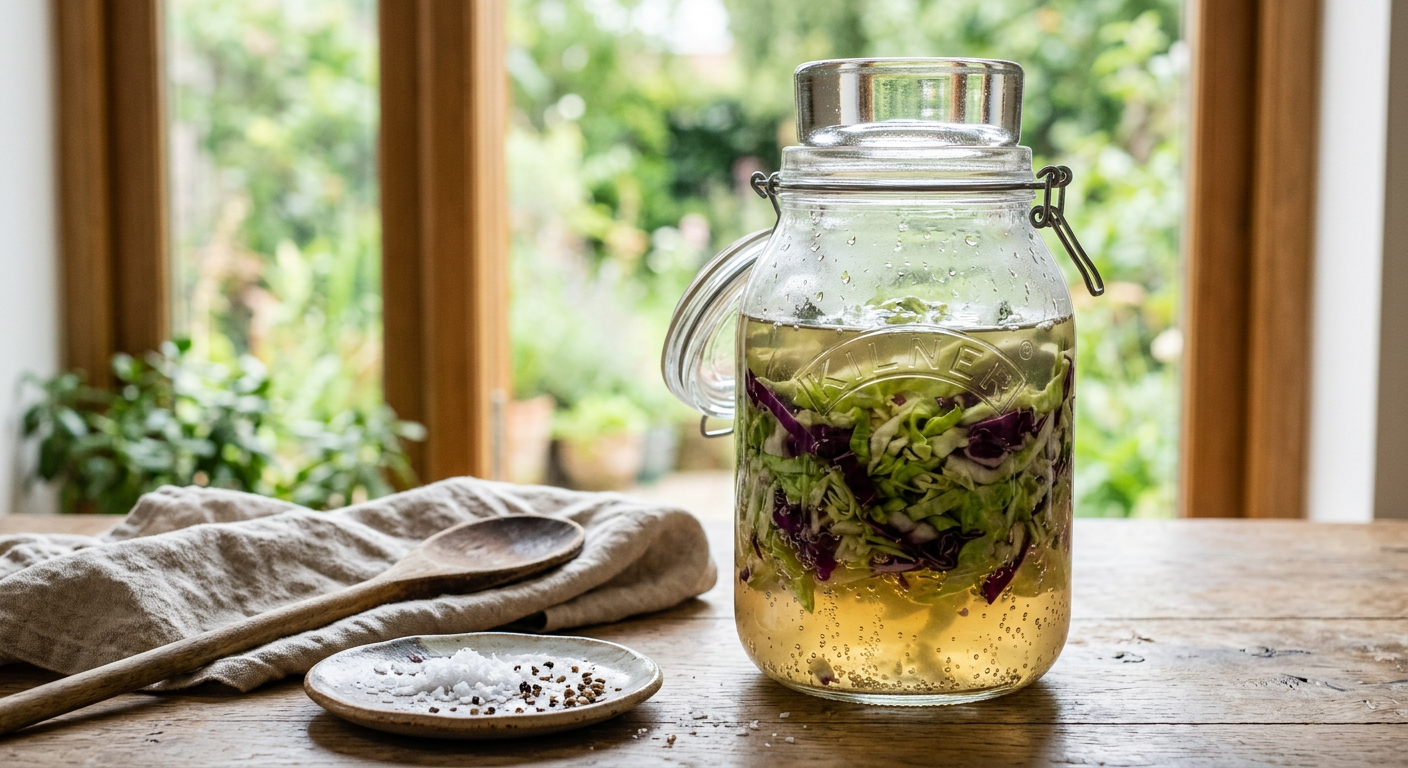
Forget thinking fermentation is some niche foodie skill. Making your own tangy sauerkraut, punchy kimchi, or crisp pickles at home is genuinely simple, especially here in the UK. All you really need is some basic veg, a bit of salt, and a standard Kilner jar. I’ve made all the beginner mistakes so you don’t have to, and by the end of this, you’ll have three dead-simple recipes – a classic sauerkraut, a vegan kimchi, and a quick-pickled cucumber – using ingredients from any British supermarket. Ready to turn your weekly shop into flavourful, shelf-stable goodness? Download the Free Fermentation Starter Checklist and let’s get cracking.
What Do I Need to Start Fermenting in the UK?
To start fermenting vegetables at home, you’ll primarily need good quality salt, fresh vegetables, and a suitable glass container like a Kilner jar. Salt is the real star here – it draws water out of the veg, creates a brine, and lets the good bacteria do their thing. You don’t need fancy pickling salt; a good quality fine sea salt or Maldon flakes are spot on. Just steer clear of salts with anti-caking agents, as they can make your brine cloudy and sometimes impart an odd flavour. Some folks avoid iodised salt too, but honestly, I’ve used it in a pinch without issue – the main thing is avoiding those anti-caking bits. For real success, aim for roughly 1% salt by weight – that’s about 10 g of salt per kilogram of veg. This percentage is crucial because it creates an environment where the ‘good’ bacteria thrive and the ‘bad’ ones don’t, while also drawing out moisture from your vegetables to form the brine.
When it comes to containers, forget the mason‑jar myth. A standard 750 ml Kilner jar with a food‑grade fermentation weight is spot‑on for beginners. The wide mouth makes packing the cabbage a breeze, and the glass lets you see the bubbling action.
UK Equipment Checklist
- Kilner jar (or any wide‑mouth glass jar)
- Fermentation weight or a clean, non‑metallic object to keep veg submerged
- Non‑metallic spoon or butter knife for packing
A quick tip I learned the hard way: I once used a metal spoon to stir my first batch and ended up with a faint metallic taste. Switching to a wooden spoon solved that in a flash. If you’re curious about how I got into all this, you can read a bit more about my fermenting journey here.
Safety first – a thin white film (kahm yeast) on the surface is normal and harmless. If you spot mould that’s fuzzy or black, or if the ferment smells like rotten eggs, give it the boot. For more general guidance on food safety, the Food Standards Agency (FSA) offers practical advice.
Now that you know the basics, download the Free Fermentation Starter Checklist – it’ll walk you through the exact amounts and timings for each recipe.
Recipe 1: The “UK Standard” Sauerkraut
Sauerkraut is the ultimate starter – two ingredients, no fuss, and it stores beautifully.
Ingredients (makes ~1 kg)
- 1 kg green or red cabbage, core removed
- 20 g (≈2 tsp) fine sea salt or Maldon flakes
- 1 tsp caraway seeds (optional, for that classic British twist)
Method
- Shred the cabbage with a mandoline or a sharp knife; aim for thin ribbons.
- Salt the shredded cabbage, then let it sit for 5 minutes.
- Massage the cabbage for about 10 minutes until it softens and releases its juices.
- Pack tightly into a Kilner jar, pressing down so the brine rises above the veg.
- Add caraway seeds, then seal with the lid and place the fermentation weight on top.
- Store the jar at 15–20 °C (a kitchen cupboard works) for 2–4 weeks. Check daily for gas – a gentle “burp” of the lid is normal.
The cabbage will shrink dramatically, filling the jar with a crisp, tangy brine. Serve it alongside a Sunday roast, in a sandwich, or simply as a side.
I once left my sauerkraut in a chilly garage and it took a full month to reach the right flavour – the honest answer is, temperature matters, but you can always speed things up by moving the jar to a warmer spot.
Recipe 2: The “Quick” Vegan Kimchi
Kimchi brings a punch of heat and complexity without any fish sauce, making it perfect for vegans and the UK pantry.
Ingredients (makes ~1 kg)
- 1 medium napa cabbage (about 800 g)
- 1 tsp sea salt (for the initial salting)
- 2 tbsp gochugaru (Korean chili flakes – available at Asian supermarkets or online)
- 2 cloves garlic, minced
- 1 cm piece ginger, grated
- 1 tbsp light soy sauce
- 1 tsp additional salt (to reach the 1% total)
Method
- Slice the cabbage into bite‑size pieces and toss with 1 tsp salt. Let sit for 30 minutes, then rinse and drain.
- Mix gochugaru, garlic, ginger, soy sauce, and the extra salt into a paste.
- Combine the cabbage with the spice paste, ensuring every leaf is coated.
- Pack tightly into a Kilner jar, add a weight, and seal.
- Leave at room temperature for 24–48 hours. Taste at 24 hours – if you prefer more tang, let it go a bit longer.
Spice Level:
- Mild – halve the gochugaru.
- Hot – keep the full amount or add a pinch of crushed red pepper.
The result is a vibrant, slightly fizzy kimchi that brightens any sandwich or rice bowl.
My first attempt used fish sauce out of habit; the smell was off‑putting in a British kitchen. Swapping it for soy sauce not only kept it vegan but also gave a familiar umami that my family loved.
Recipe 3: The “Condiment” Pickle – Quick vs. Fermented
Quick Pickles (Vinegar‑Based)
Ingredients
- 4 cucumber spears, sliced
- 250 ml white vinegar
- 100 ml water
- 1 tbsp sugar
- 1 tsp salt
- A few sprigs of dill
Method
- Combine vinegar, water, sugar, and salt in a saucepan; bring to a simmer.
- Place cucumbers and dill in a jar, pour the hot brine over, seal, and chill.
- Ready in 2 hours, good for up to 2 weeks in the fridge.
Fermented Pickles (Lacto‑Fermentation)
Ingredients
- Same cucumbers, salted with 1% weight of sea salt (≈10 g per kg)
- Optional spices: mustard seeds, coriander, garlic
Method
- Toss cucumbers with salt, let sit 30 minutes, then rinse.
- Pack into a Kilner jar, add spices, weight down, and seal.
- Store at 15–20 °C for 5–7 days; then move to the fridge.
Comparison
- Time: Hours vs. Days.
- Shelf life: Weeks vs. months.
- Flavour: Sharp vinegar bite vs. mellow, tangy depth.
Quick pickles are a great way to use up a glut of garden cucumbers on a rainy Sunday, while fermented pickles reward patience with a subtle funk that pairs beautifully with a cheese board.
Troubleshooting: What to Do When Things Go Wrong
- Cloudy brine – This is live and active bacteria doing their job; it’s a good sign.
- White kahm yeast film – Skim it off; the ferment will continue safely.
- Mould – If it’s only on the surface, discard the film and re‑weigh the veg. If mould has penetrated the veg, bin the whole jar.
- Excess gas – A gentle “burp” of the lid each day releases pressure and prevents the jar from cracking.
Green Light / Red Light Checklist
- Green: Brine covers veg, pleasant sour smell, occasional fizz.
- Red: Foul odour, fuzzy mould, slimy texture on the veg itself.
I once left a jar uncovered for a day; a thin film of mould appeared. Skimming it off saved the batch, but the lesson was clear – always keep the veggies submerged and the lid sealed.
Frequently Asked Questions
Do I need special salt for fermentation?
No, you don’t need anything terribly special. Fine sea salt (like Maldon) or even regular table salt works perfectly, as long as it doesn’t have anti-caking agents added. Those can sometimes make your brine cloudy, and some people feel they affect the flavour. While some suggest avoiding iodised salt, I’ve used it without major issues in a pinch – the key is avoiding the anti-caking stuff.
How long does each ferment take?
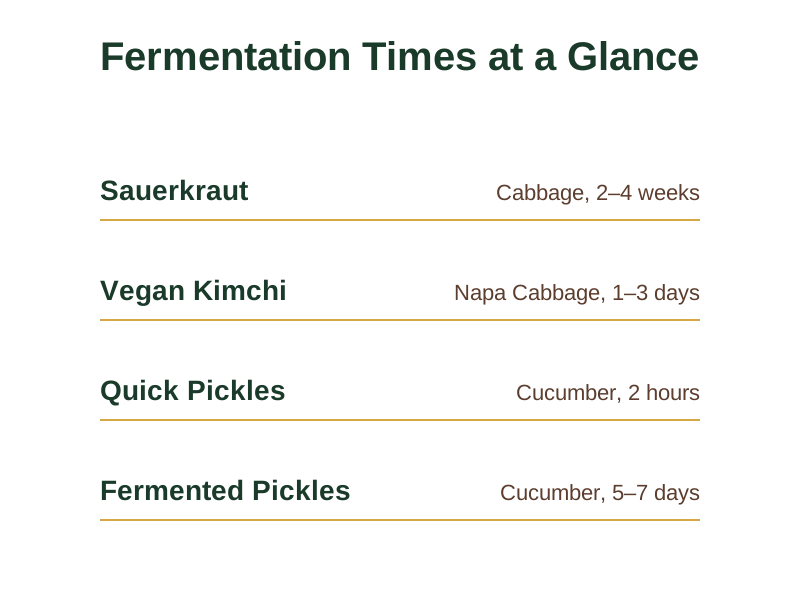
Sauerkraut typically takes 2–4 weeks to develop its full flavour and texture. Vegan kimchi is much quicker, usually ready in 1–3 days. Quick pickles are almost instant, ready in just a few hours.
Can I use a plastic container?
Yes, you can, provided it’s food‑grade and BPA‑free. However, I always recommend glass containers like Kilner jars because they’re inert, easy to clean, and let you see all the exciting bubbling action happening inside.
Why is my brine cloudy?
Cloudiness in your brine is actually a good sign! It comes from the lactobacilli bacteria multiplying and doing their job, which means your ferment is healthy and active. Don’t worry about it; it’s completely normal.
Where should I store the jars?
For the initial fermentation period, keep your jars in a cool, dark cupboard at around 15–20 °C. Once the ferment has reached the flavour you like (give it a taste!), move it to the fridge to slow down the fermentation process and preserve it for longer.
Fermentation Recipe Comparison
| Recipe | Main Veg | Fermentation Time | Key Ingredient | Shelf Life |
|---|---|---|---|---|
| Sauerkraut | Cabbage | 2–4 weeks | Salt | Months |
| Vegan Kimchi | Napa Cabbage | 1–3 days | Gochugaru | Weeks |
| Quick Pickles | Cucumber | 2 hours | Vinegar | 2 weeks |
| Fermented Pickles | Cucumber | 5–7 days | Salt | Months |
Where to Go From Here
You’ve now got three solid recipes, a clear idea of the equipment you need, and a troubleshooting cheat‑sheet for those inevitable hiccups. Remember, fermentation isn’t rocket science – it’s just salt, veg, and a bit of patience.
If you’re ready to dive in and want to make sure you’ve got every step nailed down, download the Free Fermentation Starter Checklist. It walks you through the exact measurements, timelines, and safety checks for each recipe, so you can start with confidence and avoid the common slip‑ups. Plus, if you’re hungry for more ideas, you’ll find plenty of other recipes and tips on my blog.
Happy fermenting, and enjoy the burst of flavour that only homemade sauerkraut, kimchi, and pickles can bring to your kitchen. If you’ve got questions or need a bit of advice, feel free to get in touch.
Explore More Topics
Go deeper on specific topics:
- Easy Sauerkraut Recipe UK: Traditional Fermented Cabbage
- Homemade Vegan Kimchi Recipe UK: A Beginner-Friendly Guide
- Lacto-Fermented Pickles Recipe UK: Crunchy & Delicious
- Fermented Beetroot & Carrot Recipe UK: Simple & Colourful
Sources & Further Reading
- Food Standards Agency - Food Safety Advice
- Royal Horticultural Society - Growing Vegetables
- National Centre for Biotechnology Information - Fermentation Science
Note: General guidance only, verify details with a qualified professional or official source.