The Cheap Seasonal Calendar for UK Fermentation (And 3 Vegetables to Avoid)
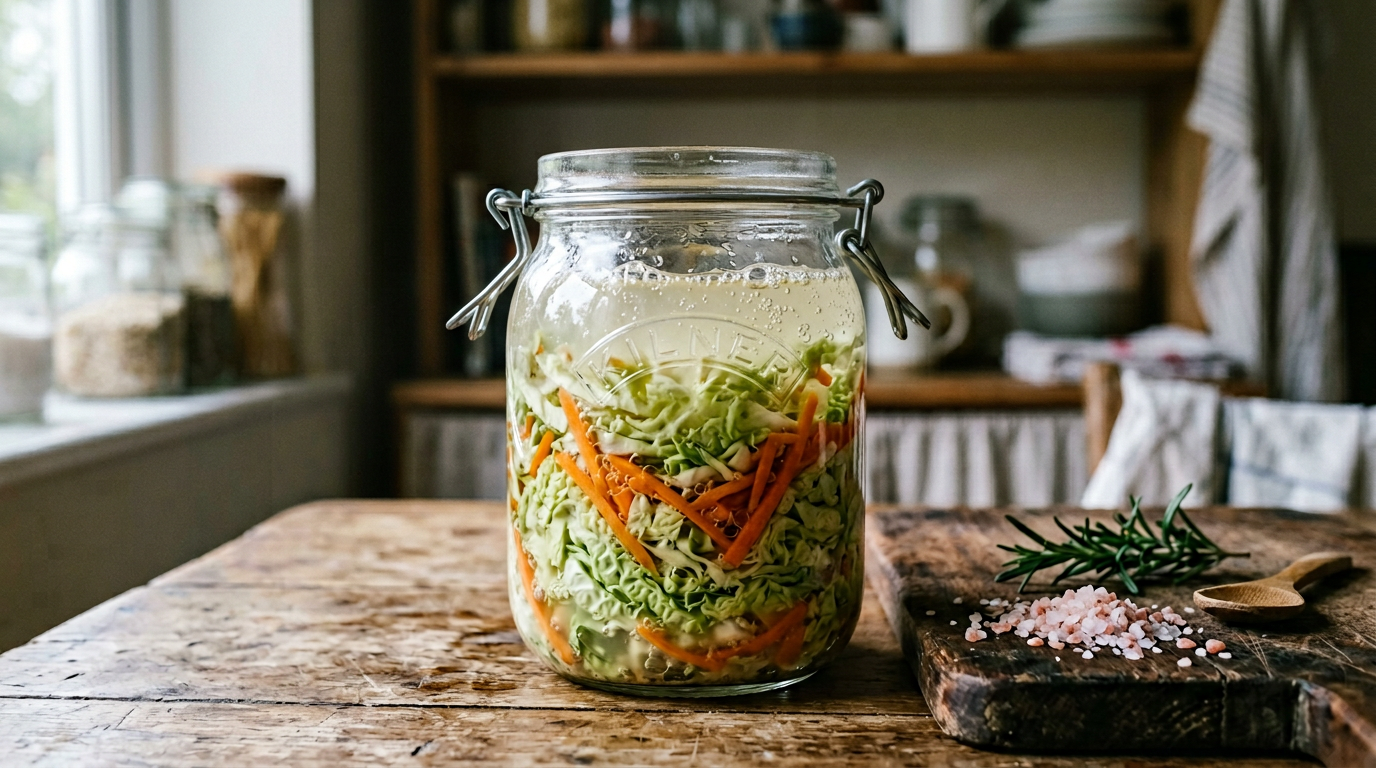
Your homemade sauerkraut sits stubbornly, refusing to bubble. Before you blame your salt or technique, look at the vegetables themselves — and the time of year you bought them. Seasonal UK produce makes all the difference to a lively, crisp ferment. This guide shows you which veg to pick, when to find them, and how their natural quirks affect your brine, so you get active jars and delicious results.
Why Does Seasonality Matter for Fermentation?
Seasonal produce is crucial for successful fermentation because it’s packed with the right balance of natural sugars and fibre density. Lacto-fermentation is a sugar-driven process; friendly bacteria feed on these natural sugars, converting them into lactic acid and creating the brine that keeps everything submerged. When you buy out-of-season carrots in July, for instance, they often lack sufficient sugar and contain too much water, making it harder for the bacteria to generate enough acid quickly. This results in a weak, watery brine that can invite mould or a flat, flavourless ferment.
Seasonal vegetables, on the other hand, hit the sweet spot. They’re brimming with sugars from the sun and possess the ideal fibre density to release their own brine without you needing to add extra water. That’s why a winter cabbage can transform into vibrant sauerkraut in just a few days, while a summer cabbage might sit for weeks before you see any real activity. The honest answer is: successful fermentation needs enough natural sugar to jump-start the bacteria, and seasonal produce gives you that in the most reliable way.
I learned this the hard way when I tried fermenting summer tomatoes for a quick kimchi-style pickle. The jars never fizzed, and after a week I was left with a soggy mess. Switching to autumn kale and a winter carrot batch gave me the fizz and tang I was after – all because the veg were in season.
The UK Seasonal Fermentation Calendar
Mapping the UK growing calendar to your fermenting schedule lets you plan ahead and avoid the “no-bubble” frustration. Below is a month-by-month rundown of the veg that are at their peak, what they bring to the brine, and a quick tip for handling them.
| Season | Main Veg (Peak Months) | Sugar / Water Balance | Fermentation Speed | Quick Prep Tip |
|---|---|---|---|---|
| Autumn (Sept-Nov) | Savoy & White cabbage, Kale, Kohlrabi, Apples | High sugar, moderate water | Fast – 3-5 days for sauerkraut | Shred cabbage with a butter knife; it fits most jars and gives a tidy pile. |
| Winter (Dec-Feb) | Carrots, Beetroot, Winter cabbage, Swede, Brussels sprouts | Medium sugar, low water | Steady – 5-10 days; dense texture needs good shredding | Use a mandoline for carrots and beetroots; thin slices release sugars faster. |
| Spring (Mar-May) | Radishes, Spring onions, Peas, Early peppers | Moderate sugar, crisp water | Quick – 2-4 days for light ferments | Slice radishes thinly; they lose crunch if left too long. |
| Summer (Jun-Aug) | Cucumbers, Green beans, Tomatoes, Courgettes | Low sugar, high water | Very fast – 1-3 days, but risk of mushiness | Salt heavily and weigh down with a fermentation weight to keep them under the brine. |
How the calendar solves the “no-bubble” problem
If you’re trying to make sauerkraut in July, you’ll likely end up with a limp cabbage that never generates enough brine. By switching to the autumn window, you get cabbages that are naturally sweeter and denser, meaning the bacteria have a feast from day one and the brine forms instantly. The same principle applies to carrots, beets and even cucumbers – match the veg’s natural sugar content to the ferment you want, and the bubbles will follow.
Where to Source the Best UK Vegetables
Farmers’ Markets – the gold standard
A Saturday morning at the local market in Bristol’s St. Nicholas Square is worth the early alarm. Here you can spot heritage varieties like “Winter Red” cabbage or “Kohlrabi Purple” that you’ll never find on supermarket shelves. The veg are harvested that morning, so they retain peak sugars. I once bought a batch of kale from a market stall, only to discover the leaves were still coated in a thin layer of soil. A quick rinse and a short soak later, they fermented beautifully – the fresh, earthy flavour was unmistakable.
Veg-Box Schemes – set-and-forget
Schemes such as Farmdrop or Riverford deliver a rotating selection of seasonal veg straight to your door. The advantage is consistency: you know you’ll get winter kale in December without hunting markets. The downside is you have less control over specific varieties, so if you need a particular cabbage for a large batch, you may need to supplement with a market find.
Supermarkets – a reliable fallback
If you’re pressed for time, the big chains (Tesco, Sainsbury’s, Waitrose) can work, but always check the “Country of Origin” label. For a thorough guide on what information should be included, see the gov.uk food labelling guidance. A cabbage marked “Spain” in December will be out of its natural sugar window, meaning you’ll need to add a pinch of sugar or a splash of apple juice to kick-start the brine.
Beginner-Friendly Foraging
A quick stroll in a local wood in late spring can yield wild garlic and elderflower – both fantastic for fermenting drinks or adding a fragrant note to sauerkraut. Only forage plants you can positively identify; mis-identifying a toxic look-alike could ruin the batch and your health. For beginners, a great place to start is The Wildlife Trusts’ foraging guide.
Now that you know where to find the right veg, download the Free Fermentation Starter Checklist to make sure you’ve got everything you need before you head out.
The “Fermentation Profile” of Common UK Veg
Understanding each vegetable’s sugar level and texture helps you tweak salt ratios, shredding methods, and fermentation times.
- Cabbage – High sugar, low water. The classic starter for beginners; it creates its own brine within hours.
- Carrots – Variable sugar, moderate water. Often need a little extra salt or a splash of apple juice to boost acidity.
- Cucumbers – Low sugar, high water. Ferment quickly but can turn mushy; keep them under a weight and consider a 2% salt brine.
- Kale & Kohlrabi – Low sugar, tough texture. Must be finely shredded (mandoline works wonders) to expose enough surface area for the bacteria.
Quick comparison table
| Vegetable | Sugar Level (High / Medium / Low) | Water Content | Typical Ferment Time | Prep Tip |
|---|---|---|---|---|
| Cabbage | High | Low | 3-5 days | Shred with a butter knife |
| Carrots | Medium | Moderate | 5-7 days | Slice thin on a mandoline |
| Cucumbers | Low | High | 1-3 days | Salt heavily, weigh down |
| Kale | Low | Low | 7-10 days | Chop finely, massage with salt |
| Kohlrabi | Low | Low | 5-8 days | Peel and grate |
I once tried fermenting whole carrots straight from the bin, assuming they’d behave like cabbage. The result was a limp, watery jar that never developed a proper brine. After cutting them into match-sticks and adding a touch more salt, the next batch was crisp and tangy – the texture makes all the difference.
Essential Equipment for Seasonal Fermentation
- Mandoline slicer – A cheap (£20-£30) model is worth it for shredding kale, cabbage and carrots quickly; it saves your wrists and ensures uniform slices.
- Fermentation weights – Glass or ceramic weights (roughly £10-£15 for a set) keep dense root veg under the brine, preventing mould.
- Airlock lids – For high-sugar summer ferments like cucumber pickles, an airlock (about £12-£18) stops pressure build-up and keeps the fizz contained.
You don’t need a fancy fermentation cabinet; a simple wide-mouth glass jar, a weight, and a decent salt are enough to get started.
Frequently Asked Questions
Can I ferment vegetables out of season?
Yes, you absolutely can, but you’ll typically need to give them a helping hand. To compensate for lower natural sugars, a splash of apple juice, a pinch of honey, or a slightly higher salt ratio can often kick-start the fermentation.
What is the best vegetable for a beginner?
Cabbage is your go-to, hands down. Its high sugar content and low water level mean it creates a solid brine all on its own, making it almost fool-proof for your first batch of sauerkraut.
Where can I find seasonal veg in the UK?
Your best bets for truly seasonal produce are local farmers’ markets, reputable veg-box schemes, and, as a backup, supermarkets where you can clearly check the country of origin.
Do I need to buy expensive equipment to start?
Not at all. A good quality wide-mouth glass jar, some fine sea salt (expect to pay around £8-£12 for a 1kg bag), and a simple weight are genuinely all you need to get started. The extra tools mentioned just make the process a bit smoother.
Is foraging safe for fermentation?
Only if you are 100% sure of the plant’s identity. While elderflower and wild garlic are wonderful additions that add lovely notes, mis-identifying a toxic look-alike could not only ruin your batch but also be seriously hazardous to your health.
Where to Go From Here
You now have a clear map of which UK veg to buy, when to buy them, and how their natural sugar and water balance shape the brine. By syncing your shopping trips with the seasonal calendar and using the right prep tools, you’ll stop guessing and start bubbling with confidence. If you want to dive deeper into the world of fermentation, why not check out some of the other articles on the blog?
Ready to put this plan into action? Download the Free Fermentation Starter Checklist – it walks you through the exact veg, equipment, and steps you need for a successful batch, every time.
Happy fermenting, and may your jars always be lively and your flavours ever-so-bright.
Related Guides
For a complete overview, see our UK Fermented Condiments & Creative Ways to Use Them.
Sources & Further Reading
- The Wildlife Trusts - How to Forage Wild Food
- gov.uk - Food Labelling: Giving Food Information to Consumers
Note: This information is for general guidance only. Always verify details with a qualified professional or official source before acting on specific advice.