10 Fermentation Problems (And Why Your Sauerkraut Went Pink)
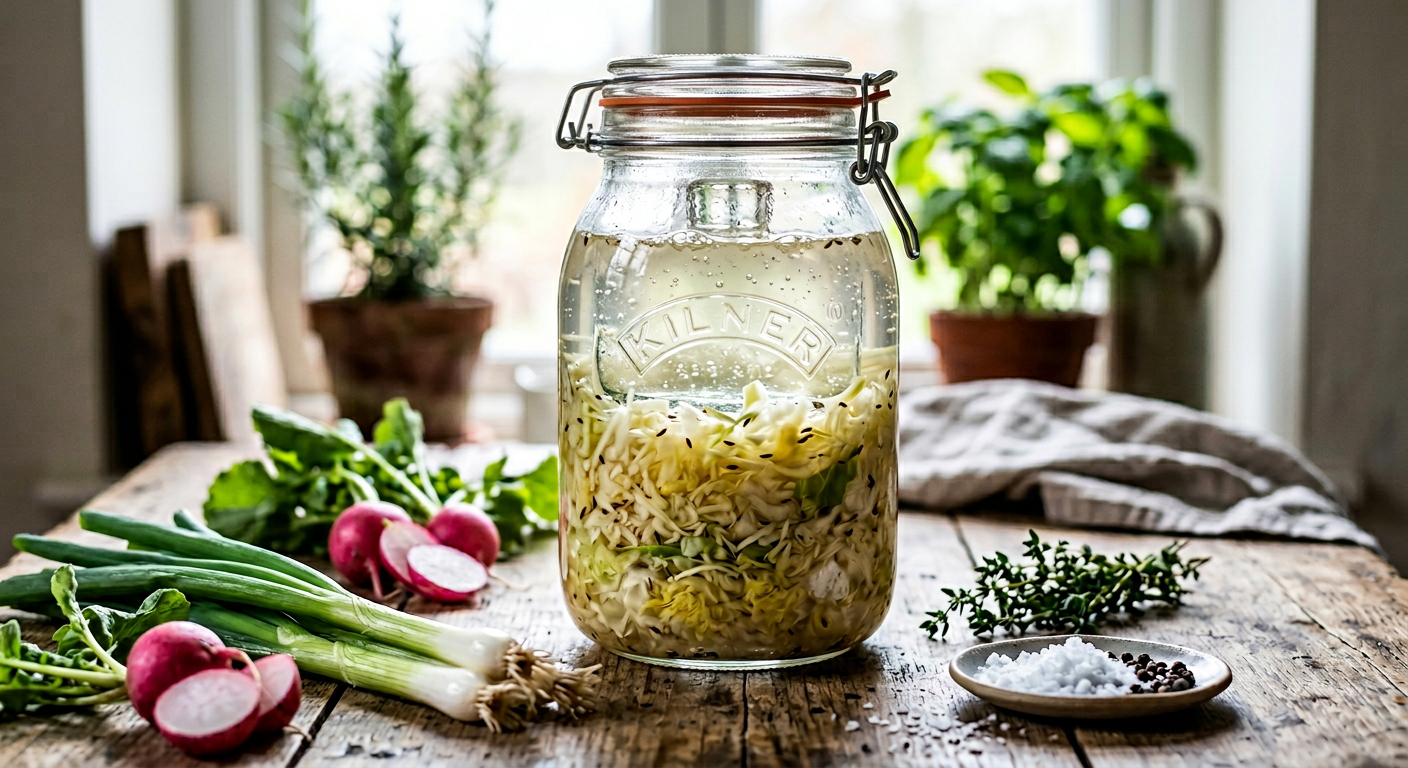
That unsettling moment: you’ve just opened a jar of homemade sauerkraut to find a strange white film and a whiff of something… off. Don’t panic. Most fermentation ‘disasters’ are just misunderstandings, and with a few quick checks, you can often save your batch and avoid waste. I’ve been through every beginner’s worry myself, from harmless Kahm yeast to truly dangerous mould, or a ferment that’s simply gone quiet in a chilly UK kitchen. I’ll show you exactly what to look for, how to fix it, and crucially, when it’s time to bin it. If you want to know a bit more about my journey into all things fermented, you can read my story here.
Ready to keep your next batch on track? Grab the free Fermentation Starter Checklist now – it’s the cheat‑sheet I wish I’d had the first time I tried kimchi.
What is “Kahm Yeast” and Why Is It White?
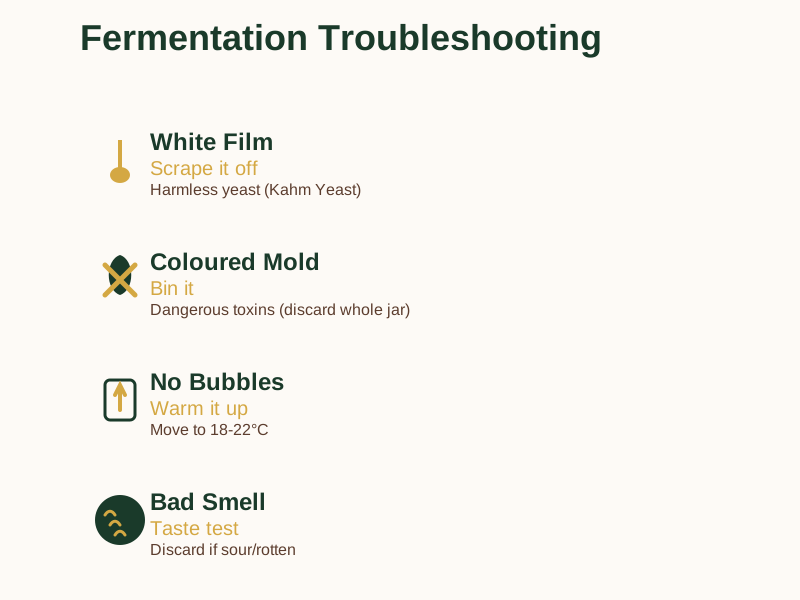
Kahm yeast is a harmless, dusty‑white film that sometimes appears on top of a ferment. It’s not mould; it’s a wild yeast that thrives when the brine is exposed to air, the temperature climbs above 22 °C, or the salt level drops.
- Appearance: Velvety or powdery, like a thin layer of flour.
- Smell: Slightly yeasty, not foul.
- Safety: It doesn’t produce toxins. You can simply scrape it off and taste the rest – if it still has that clean, tangy bite, it’s fine to eat.
| Kahm Yeast | Dangerous Mold | |
|---|---|---|
| Colour | White, grey, sometimes beige | Black, green, blue, pink |
| Texture | Powdery, dry, “dusty” | Fluffy, fuzzy, “hairy” |
| Odour | Mild, yeasty or neutral | Pungent, earthy, sour‑rotten |
| Risk | Low – just unaesthetic | High – mycotoxins, spoilage |
| Action | Scrape off, taste, continue | Discard whole jar |
I first ran into Kahm yeast when I tried a quick‑pickled carrot batch in a warm London flat. I panicked, tossed the whole thing, and later learned that a simple spoon‑scrape would have saved a tasty side. The honest answer is, it’s a sign your brine needs a tighter seal or a cooler spot, not a sign of failure.
Internal link: For a step‑by‑step on making sauerkraut, see my guide on How to Ferment Sauerkraut.
How can you spot dangerous mould, and when should you throw it away?
Dangerous mould appears as coloured, fuzzy colonies that can penetrate the brine and produce mycotoxins. If you see any black, green, blue, or pink growth on the surface, discard the whole jar immediately. Scraping it off is unsafe – the hyphae (root-like structures) have likely spread beneath the brine.
Why it matters in the UK: Our central heating keeps indoor temperatures around 18‑20 °C, but without good ventilation, the relative humidity can climb above 70 %. That damp environment is a mould‑friendly playground. The NHS reminds us that “visible mould on fermented foods is a sign to discard” – a simple, no‑nonsense safety rule that’s worth sticking to NHS Food Safety.
When in doubt, throw it out. It’s a small loss compared to a potential food‑borne illness.
Internal link: For a deeper dive into safety, read the Fermentation Safety Guide.
The “Stuck” Ferment: Why Your Veggies Aren’t Bubbling
A lively ferment should show tiny bubbles rising through the brine within the first 24–48 hours. If your jar sits still, the bacteria are probably dormant because the temperature is too low.
- Ideal range: 18 °C–22 °C for lacto‑fermentation.
- UK reality: In winter, even with central heating, a cupboard can hover around 12 °C. In summer, a sunny windowsill might spike to 25 °C, which can cause over‑fermentation and the dreaded “exploding” jars.
Fixes you can try without splurging:
- Move the jar to a warmer spot – an airing cupboard, on top of the fridge, or near a radiator (but not directly on a hot heater).
- Wrap the jar in a blanket or a towel to retain heat.
- Create a warm water bath: Place the sealed jar in a bowl of warm (not hot) water for a few hours.
- Budget option: A simple heating pad set to low (around £15) can keep the jar cosy for a week.
Checklist – Is Your Ferment Active?
- Bubbles visible in the brine?
- Slight sour aroma developing?
- Veggies are softening gradually?
- No white film or coloured mould?
If you tick all three, you’re good. If not, try one of the warming tricks above and give it another 24 hours.
Internal link: Need a reliable jar? Check out my review of the best options in the Best Fermentation Jars guide.
Bad Smells: When Is It “Sour” and When Is It “Rotten”?
A healthy ferment smells tangy, a bit like a sourdough starter, with faint yeasty notes. That’s the lactobacilli doing their job. A “rotten” smell, on the other hand, can be sulphur (rotten eggs), vomit‑like, or sharp ammonia – a clear warning sign.
- Sour, pleasant: Indicates live lactic acid bacteria.
- Sulphur/rotten‑egg: Often a sign of sulphate‑reducing bacteria, which can thrive in hard water areas (think parts of the Midlands). A short, sharp whiff that fades after a day is usually okay, but a persistent foul odour means discard.
- Ammonia: Indicates protein breakdown beyond the desired level – not safe.
What to do: If the odour is off‑putting, give the jar a quick taste. If it’s still crisp and tangy, you’re probably fine. If it tastes off or the smell lingers, it’s safest to bin it. The Food Standards Agency (FSA) advises that “any fermented product with an off‑odour should be considered unsafe and discarded” FSA General Guidance.
Floating Vegetables and Leaking Jars
Floating veg is more than an aesthetic nuisance; it means parts of the produce are exposed to air, inviting mould. The culprit is usually insufficient weight or too much gas production.
Solutions:
- Weights: A clean glass weight, a stainless‑steel fermentation pebble (around £12–£18), or even a small, food‑grade ceramic dish works.
- DIY weight: A clean, sealed zip‑lock bag filled with water adds just enough pressure.
- Prevent leaks: Fill the jar no more than 2 cm below the rim and ensure the lid is snug. If you’re using a swing‑top jar, double‑check the gasket for wear.
I once bought a set of fancy ceramic weights, only to discover the bottom one cracked after a few months of handling. The honest budget pick is a simple glass measuring cup – it fits most UK jars and costs roughly £5.
Internal link: For a full rundown of weight options, see the Best Fermentation Jars page.
Frequently Asked Questions
Can I scrape mold off the top of my sauerkraut and eat the rest?
No. If coloured mould appears, it’s likely spread beneath the brine. Discard the whole jar to stay safe.
My sauerkraut smells like rotten eggs. Is it safe?
Unfortunately not. A rotten‑egg scent points to spoilage bacteria. Bin it and start fresh.
Why is my fermentation not bubbling in the UK winter?
Cold temperatures slow the lactobacilli. Move the jar to a warmer spot – an airing cupboard or a gentle heating pad – and you should see activity resume.
What is the white film on top of my kimchi?
That’s probably Kahm yeast – a harmless, dusty yeast. Scrape it off, give the kimchi a taste, and if it’s still tangy, it’s fine to eat.
Do I need to boil the water for my brine in the UK?
No. For lacto‑fermentation you just need clean, drinkable water. Boiling can strip minerals that the bacteria love.
Where to Go From Here
You’ve now got the tools to spot the difference between a harmless white veil and a dangerous mould bloom, to coax a sluggish ferment back to life, and to keep your veggies happily submerged. Remember: most problems are temperature‑related or a simple sealing issue – not a sign that you’ve “failed” as a fermenter. For more tips and tricks, why not browse the blog?
If you want a tidy, step‑by‑step checklist to keep every batch on the straight and narrow, download the Free Fermentation Starter Checklist. It walks you through salting, weighting, temperature checks, and the exact signs to watch for, so you can avoid the faff and enjoy flavourful, safe ferments every time.
Happy fermenting, and don’t let a little white fuzz stop you – you’ve got this!
Explore More Topics
Go deeper on specific topics:
- Identifying Mold vs Kahm Yeast in Ferments: A UK Guide
- Why Did My Ferment Go Wrong? Common Issues & Fixes UK
- Safe Storage of Fermented Vegetables UK: Extending Shelf Life
- When is My Ferment Ready? Signs of Successful Fermentation
- Understanding pH Levels in Fermentation for UK Beginners
Sources & Further Reading
- NHS Food Safety - Live Well: Food Safety and Hygiene
- Food Standards Agency - Food Poisoning and Food Hygiene
- Royal Society of Chemistry - Fermentation and Food Safety
Note: This information is for general guidance only. Always verify details with a qualified professional or official source.