UK Fermented Condiments & Creative Ways to Use Them
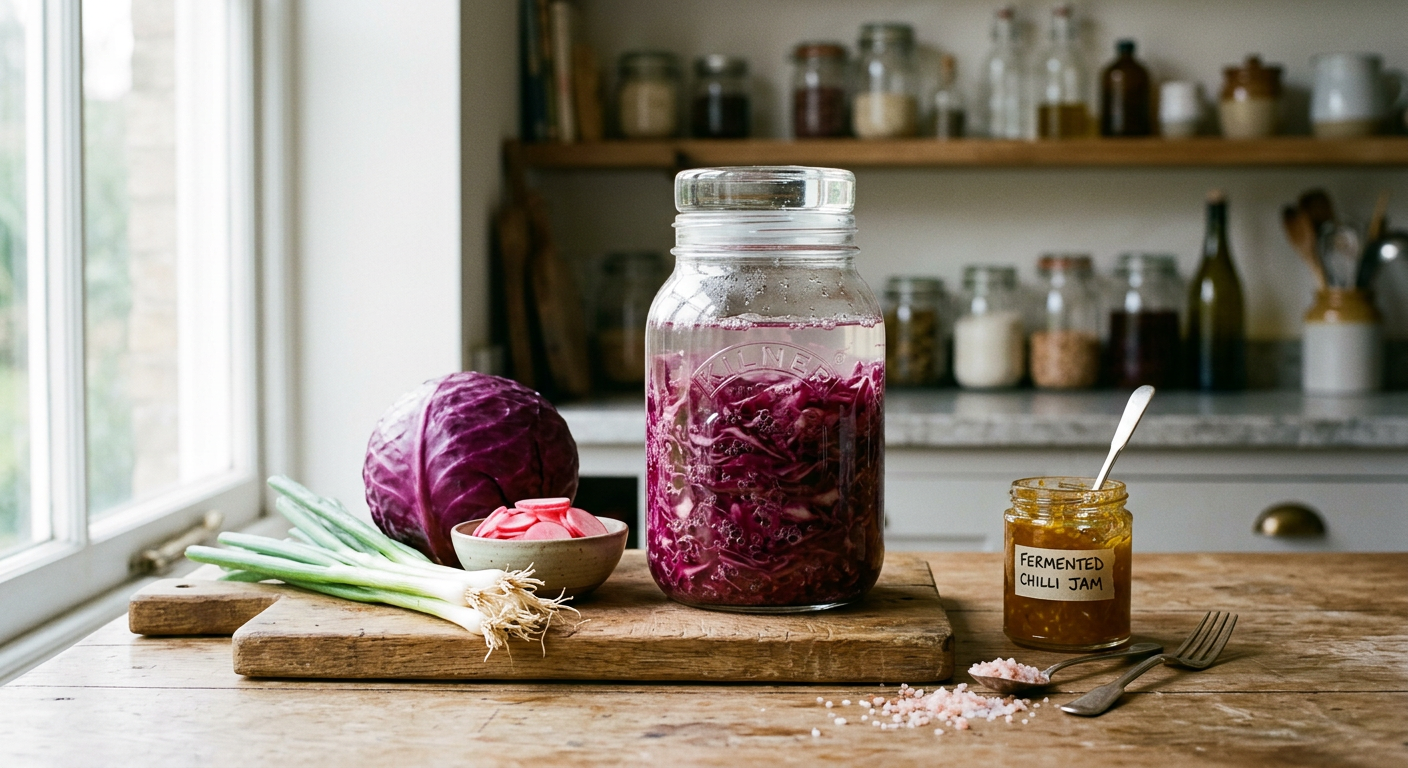
Got a fridge full of fermented jars that only ever see the inside of a sandwich? I know the feeling. Those tangy jars are actually a secret weapon, ready to transform everyday British staples into something truly special. Let’s dig into how to squeeze every last drop of flavour out of your ferments, from breakfast hacks to a “brine bible” that cuts down on waste.
The Breakfast Upgrade: British Classics with a Kick
A full English is a glorious, greasy affair, and that richness is begging for a bright counterpoint. Here are a few ways to add a fermented kick to your morning routine:
- Spicy chilli jam on a full English – Spoon a dollop of fermented chilli jam onto the side of your plate; the heat cuts through the bacon and sausage, leaving the palate refreshed for the next bite.
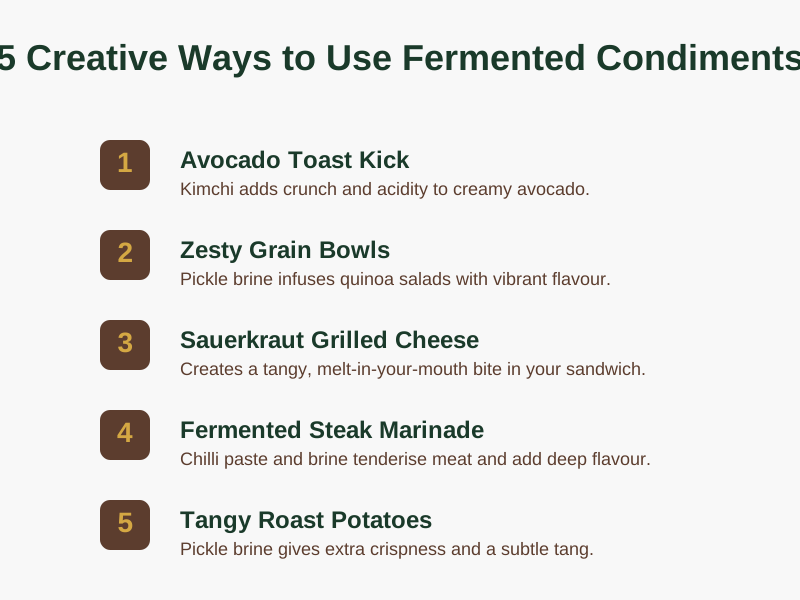
- Kimchi on smashed avocado toast – Toast a slice of sourdough, smash ripe avocado, then top with a generous spoonful of kimchi. The crunch and acidity lift the creamy avocado, making it feel like a café‑level bite.
- Sauerkraut in a fried‑egg sandwich – Mix a handful of sauerkraut into the egg mixture before scrambling, or simply pile it under the fried egg. The result is a tangy, slightly fizzy surprise that makes the sandwich feel less “just another toast”.
- Marmite + fermented kimchi – Spread a thin line of Marmite on toast, then add a sliver of kimchi. The salty‑umami of Marmite meets the funk of kimchi for a truly British‑fusion snack.
I tried the kimchi‑avocado combo for a Sunday brunch and discovered the kimchi’s fizz actually helped the avocado feel less heavy. It’s a tiny tweak, but it turns a simple toast into a flavour‑packed starter. Best Sourdough Recipes
Elevating the Pantry Staples: Cheap Cuts & Basics
When the grocery bill is tight, the trick is to make humble ingredients taste like they’ve come from a high‑street bistro.
- 5‑Minute Steak Marinade – Whisk together 2 tbsp fermented chilli paste, 1 tbsp sauerkraut brine, a drizzle of olive oil and a pinch of black pepper. Toss a cheap flank steak in the mix and let it sit for 15 minutes before pan‑searing. The acidity in the brine tenderises the meat, while the fermented paste adds depth you’d normally get from a fancy sauce.
- Roast potatoes with pickle brine – After boiling your potatoes, drain and give them a quick tumble in leftover pickle brine. Roast as usual; the brine skins the potatoes, giving them an extra crisp and a subtle tang that beats plain salt.
- Sauerkraut‑infused tomato pasta sauce – Stir a quarter cup of finely chopped sauerkraut into a basic marinara while it simmers. The sauerkraut’s fermented notes add a savoury depth that makes the sauce feel “worth its salt”.
I once tried the pickle‑brine potatoes and ended up with a side that even my partner, a self‑declared potato purist, praised. It’s a small hack, but it upgrades a weekend roast without any extra cost. How to Cook Perfect Roast Potatoes
How Can I Use Leftover Fermentation Brine?
That leftover liquid at the bottom of your fermentation jar is pure gold – full of flavour and the good stuff. Don’t even think about tossing it. You can drink it, use it in dressings, or even re-pickle new vegetables to make the most of every last drop.
- Drink it (in moderation) – A splash of sauerkraut brine in a glass of sparkling water gives a probiotic‑rich, salty refresher. The honest answer is, it’s an acquired taste, but it can be a low‑calorie electrolyte boost after a run.
- Salad dressing base – Whisk brine with olive oil, a squeeze of lemon, and a dash of honey for a tangy vinaigrette that brightens any leafy mix.
- Re‑pickling new veg – The “refill” method works like a charm. After you’ve emptied a jar of pickles, rinse the jar, then pack fresh cucumbers, carrots or radishes and pour the saved brine over them. The new batch inherits the original flavour profile.
- Storing brine – Keep brine in a clean glass bottle in the fridge; it stays good for about a month. Freeze the excess in ice‑cube trays for later use in soups or sauces.
Safety note: Only reuse brine that’s clear and free of any fuzzy mould. If you spot white film (kahm yeast) it’s usually harmless, but a sour, rotten smell means it’s time to bin the batch. For a deeper dive on fermentation safety, see the Fermentation Safety Guide. For general food safety advice, you can always check the Food Standards Agency website.
Standalone tip – The best way to gauge whether a brine is still usable is to give it a quick smell test. If it smells pleasantly acidic, like a well‑balanced pickle, it’s fine. If there’s any hint of putrid or yeasty off‑notes, discard it. This simple sniff saves you from a potential food‑waste nightmare.
Now that you’ve got the basics of brine usage, it’s time to make sure your whole fermentation set‑up is safe and ready for the next round of experiments. Download the Free Fermentation Starter Checklist – it’s the quickest way to double‑check you haven’t missed anything.
Condiment Pairings by Meal Type
A quick‑reference cheat‑sheet for when you need inspiration at lunch or dinner.
- Lunch
- Sandwiches: Swap mustard for a thin spread of kimchi; the crunch adds texture.
- Grain bowls: Toss a spoonful of pickle brine into a quinoa salad for a zingy lift.
- Dinner
- Grilled cheese: Layer sauerkraut inside the sandwich before grilling; the melt‑in‑your‑mouth bite is spot on.
- Tacos: Replace store‑bought salsa with fermented salsa (tomatoes, chilli, brine).
- Pizza: Scatter a few dollops of kimchi on a cheese‑laden slice for a funky, fermented edge.
These pairings work because fermented condiments bring a textural crunch and an acidic pop that fresh ingredients often lack.
Zero‑Waste Storage Tips for Leftovers
Keeping your new creations fresh doesn’t have to be a faff.
- Glass jars with airlocks – Perfect for starting a fresh batch of veg using saved brine.
- Freezing brine cubes – Pour brine into an ice‑cube tray, freeze, then pop out cubes as needed for soups or dressings.
- Label everything – Write the date and contents on a sticky label; you’ll thank yourself when the fridge gets crowded.
I swear by the Kilner Clip‑Top Jar for short‑term storage – the snap‑tight seal is worth its salt and fits neatly on a pantry shelf. Best Fermentation Jars
Frequently Asked Questions
Can I reuse the brine from sauerkraut or kimchi?
Absolutely, yes! As long as the brine is clear, free of any fuzzy mould, and smells pleasantly acidic – like a good pickle – it’s perfectly fine. I often use it to kick-start a new batch of veg or as a base for a zesty salad dressing.
How long do fermented condiments last in the fridge?
Typically, you can expect them to last a good 3-6 months in the fridge, sometimes even longer. It really depends on how acidic they are and how well sealed the jar is. Just trust your nose; if it smells off, it’s time to say goodbye.
What’s the best way to use leftover fermented hot sauce?
Oh, the possibilities! I love stirring it into homemade mayo for a fiery sandwich spread, drizzling it over grilled chicken, or adding a cheeky splash to a simmering pot of soup for an instant flavour kick. It’s also brilliant mixed into a savoury mince pie filling.
Is the white film on top of the brine safe?
Most of the time, that white film is just kahm yeast – it’s harmless, though it can sometimes mean your brine is a touch warm or salty. Just skim it off. If it ever looks fuzzy or smells truly rotten, then it’s definitely time to bin the whole thing.
Can I use these condiments on a low‑salt diet?
Fermentation absolutely relies on salt, so these condiments aren’t inherently low-salt. However, you can certainly dilute them with a bit of water or use them sparingly to manage your overall sodium intake. It’s all about balance, isn’t it?
Fermented Condiment Pairing Guide
| Meal Type | Dish | Fermented Condiment | Effect |
|---|---|---|---|
| Breakfast | Full English | Spicy chilli jam | Cuts through richness, refreshes palate |
| Breakfast | Avocado toast | Kimchi | Adds crunch and acidity to creamy avocado |
| Lunch | Sandwich | Kimchi | Provides texture and zingy lift |
| Lunch | Grain bowl | Pickle brine | Adds zesty flavour to quinoa salad |
| Dinner | Grilled cheese | Sauerkraut | Creates a melt-in-your-mouth bite |
| Dinner | Tacos | Fermented salsa | Replaces store-bought salsa with funk |
| Dinner | Pizza | Kimchi | Adds a fermented edge to cheese |
| Pantry | Steak marinade | Fermented chilli paste & brine | Tenderises meat and adds depth |
| Pantry | Roast potatoes | Pickle brine | Gives extra crisp and subtle tang |
| Pantry | Tomato sauce | Sauerkraut | Adds savoury depth to marinara |
| Storage | Brine reuse | Clear brine only | Safe for refilling jars or dressings |
| Storage | Brine storage | Glass bottle in fridge | Keeps brine good for about a month |
Where to Go From Here
You’ve now got a toolbox of flavour hacks that turn ordinary British meals into something a bit more exciting, and you’ve learned how to keep waste to a minimum by championing that golden‑liquid brine. Remember, the honest answer is that every batch will be a little hit‑and‑miss – that’s part of the fun.
If you’re ready to experiment without worrying about safety or missing a step, grab our free resource: Download the Free Fermentation Starter Checklist. It’ll walk you through the essentials, from jar selection to brine storage, so you can keep the creative momentum going. Want to know more about my fermentation journey or just fancy a chat about all things pickled? Pop over to my About page or browse the blog for more ideas.
Happy fermenting, and may your next kitchen creation be as bold as a proper London drizzle!
Explore More Topics
Go deeper on specific topics:
- Homemade Fermented Ketchup Recipe UK: Tangy & Simple
- Quick Fermented Relish & Chutney Recipes UK
- Cooking with Fermented Vegetables: Beyond Eating Them Raw UK
- Sourcing UK Seasonal Vegetables for Fermentation Projects
- Making Fermented Dips & Spreads UK: Easy Recipes
Sources & Further Reading
- Food Standards Agency - Food Safety Advice
- The Royal Horticultural Society - Fermentation and Preservation
- National Centre for Food Safety and Technology - Food Safety Guidelines
Note: The information provided in this article is for general guidance only. Always verify details with a qualified professional or official source before attempting new food preservation methods.