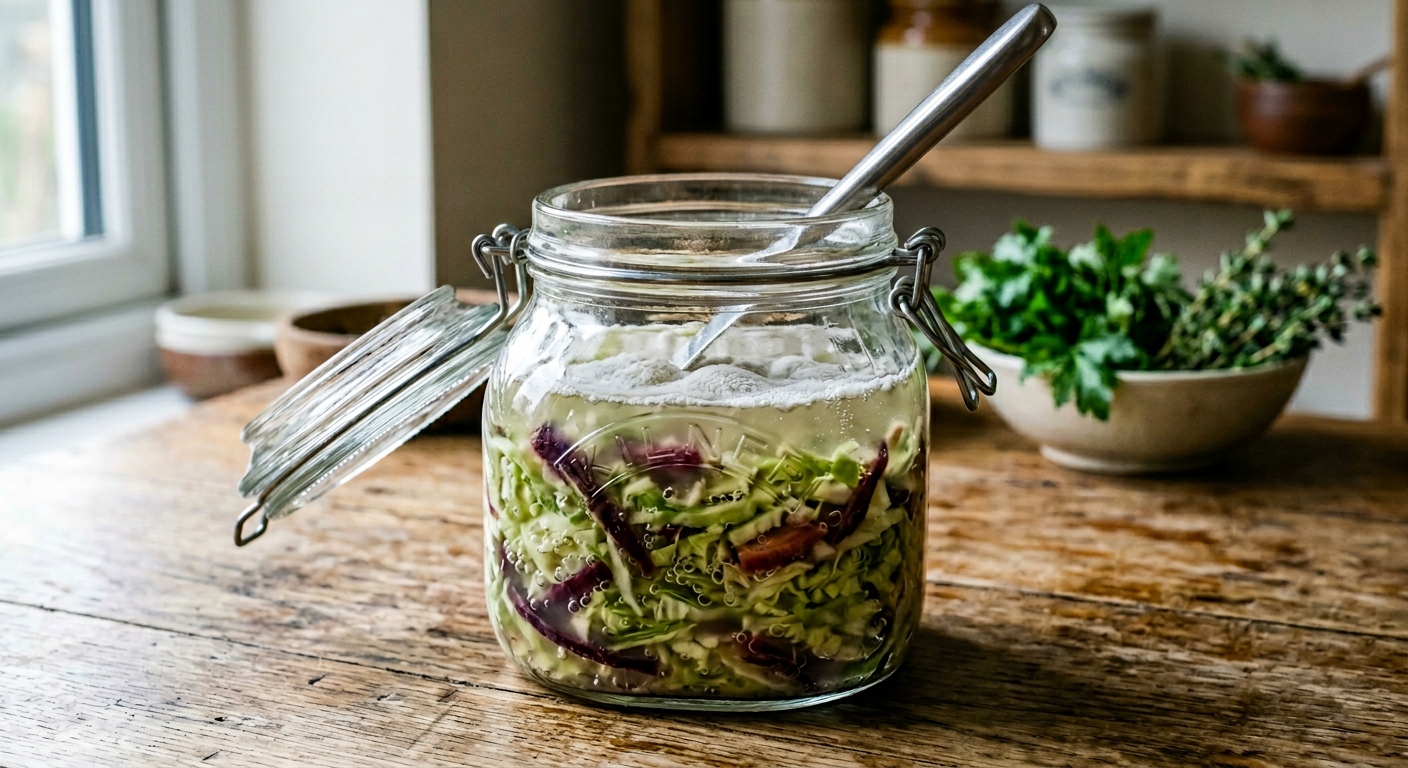
Identifying Mold vs Kahm Yeast in Ferments: A UK Guide
Is that white film on your sauerkraut mold or just Kahm yeast? A UK guide to identifying the difference, saving your batch, and preventing contamination.
Welcome to the fermenting section. Here you’ll find everything you need to start preserving vegetables at home — whether you’re making your first jar of sauerkraut, experimenting with kimchi, or trying to figure out if that white film on your ferment is harmless kahm yeast or something that belongs in the bin.
All guides are written for UK conditions, UK suppliers, and normal British kitchens. No special equipment required to get started — just a jar, some salt, and a bit of patience.
Is that white film on your sauerkraut mold or just Kahm yeast? A UK guide to identifying the difference, saving your batch, and preventing contamination.
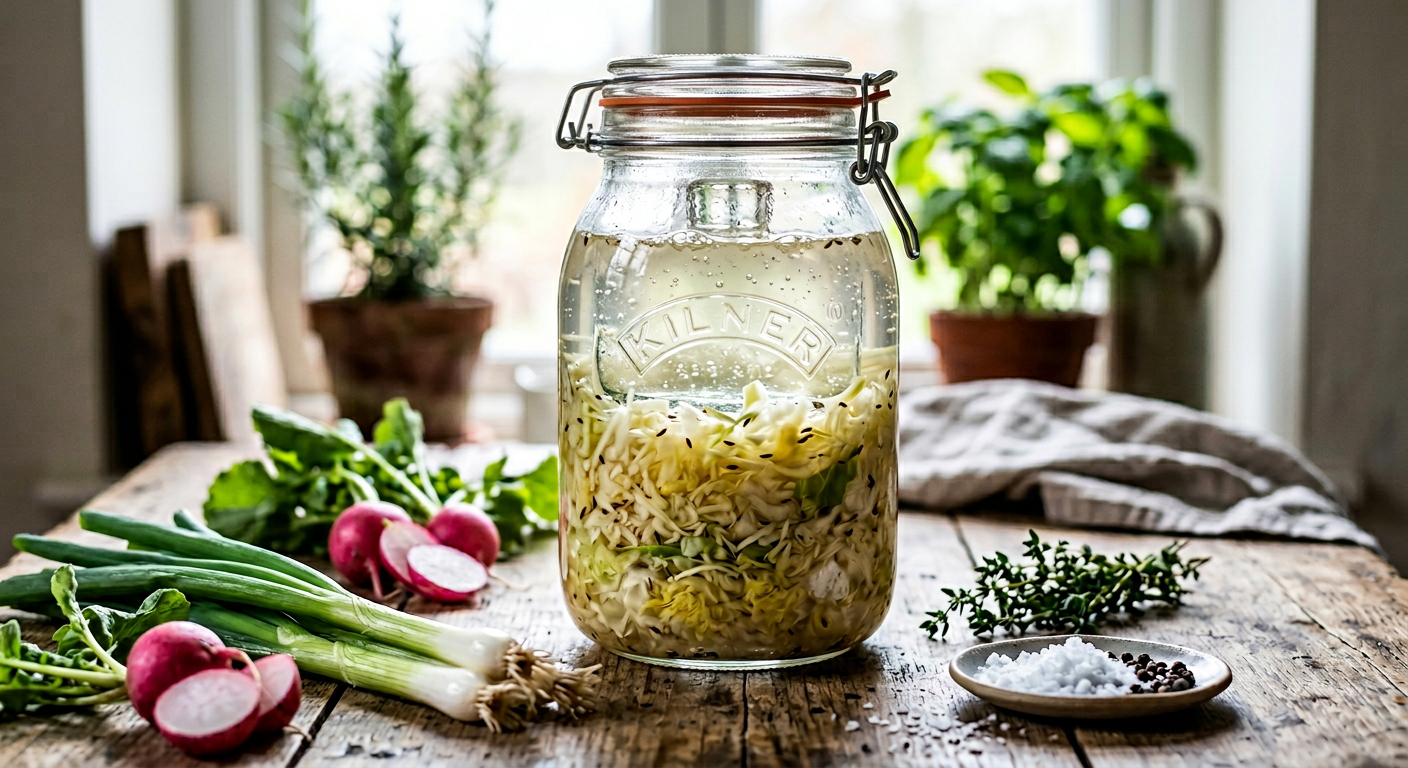
Pink cabbage, slimy kimchi, and jars that smell like old socks. I have made every fermentation mistake possible on a UK countertop. Here are the 10 most common problems — and what actually fixes them.
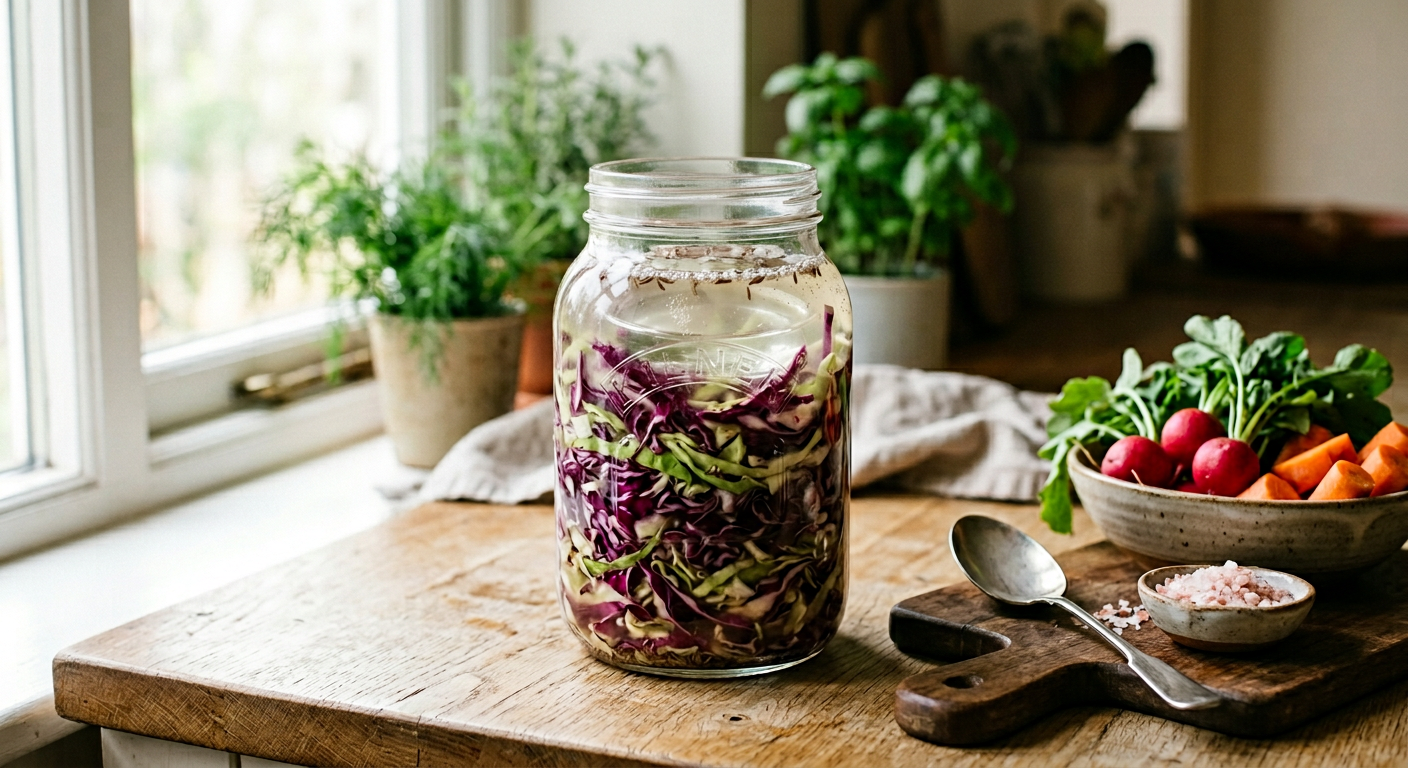
I got mold in three consecutive batches because I thought 'clean' meant 'sterile.' Here is the dead-simple sterilising method that works in a British kitchen — and the common short-cut that guarantees contamination.
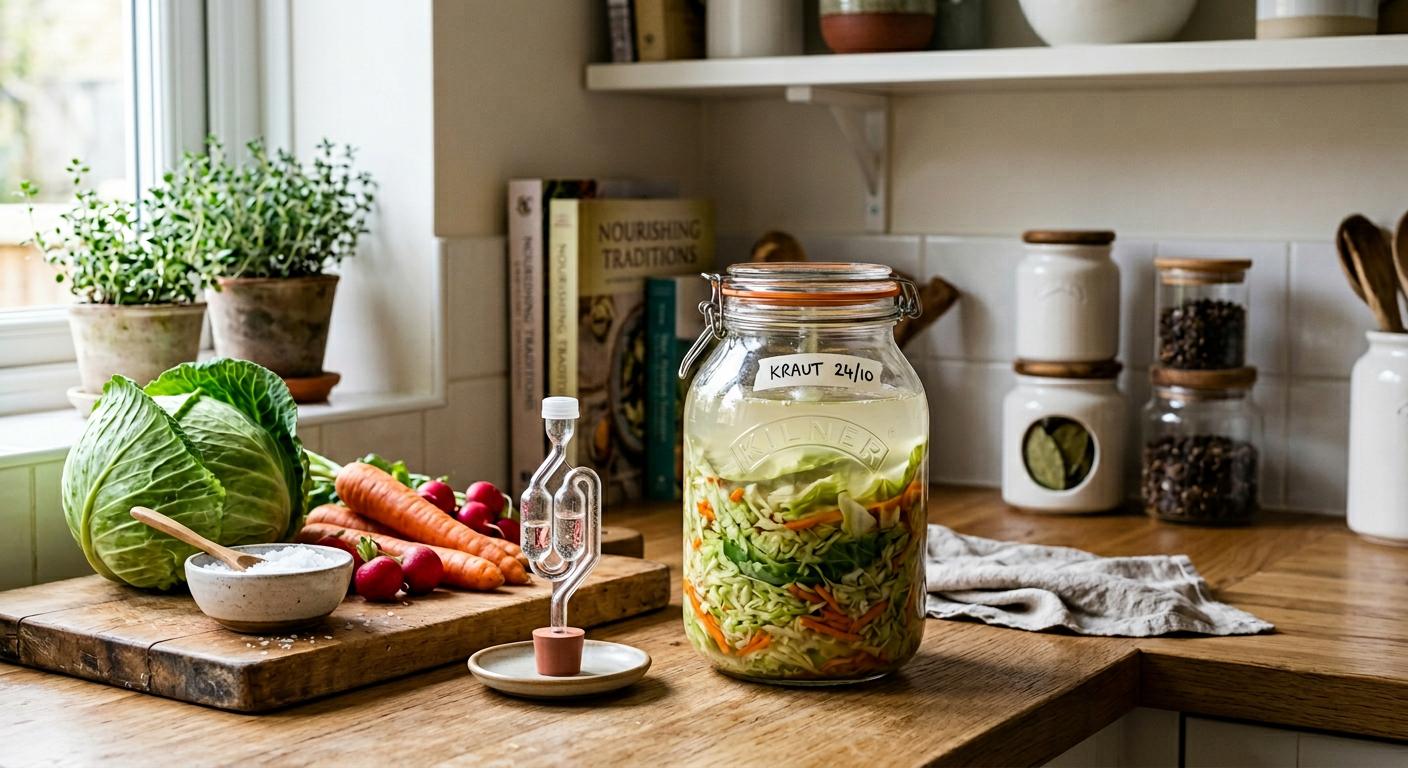
You do not need a dedicated room. A corner of your kitchen, the right temperature, and a system for tracking dates is enough. Here is the setup that stopped me losing batches to forgotten jars.
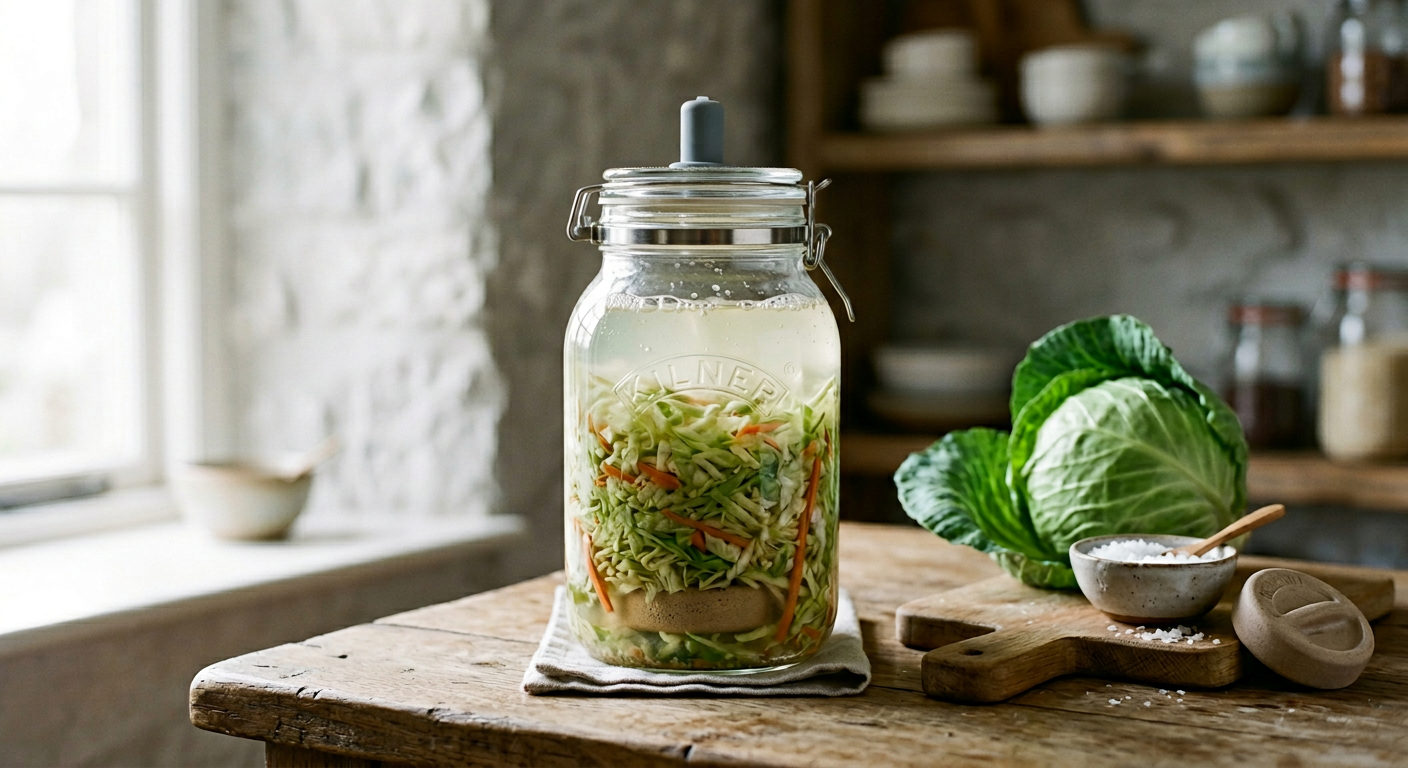
Kilner, Weck, or the cheap supermarket alternative? I tested six jar-and-weight combinations for small-batch fermentation. One leaked brine everywhere. One let vegetables float. Here is what actually works.
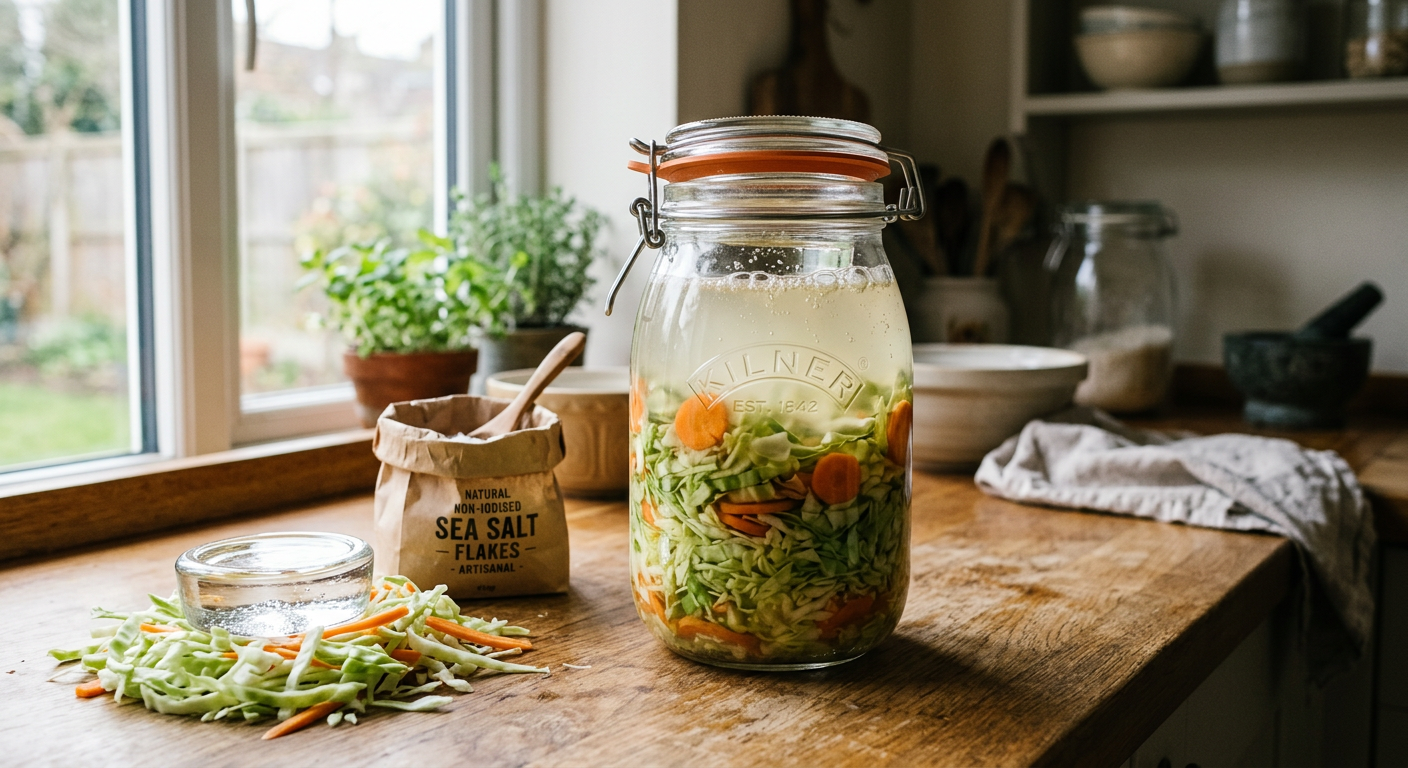
Don't waste money on expensive starter kits. The essential UK fermentation gear you need for sauerkraut and pickles costs under £20, including jars and weights.
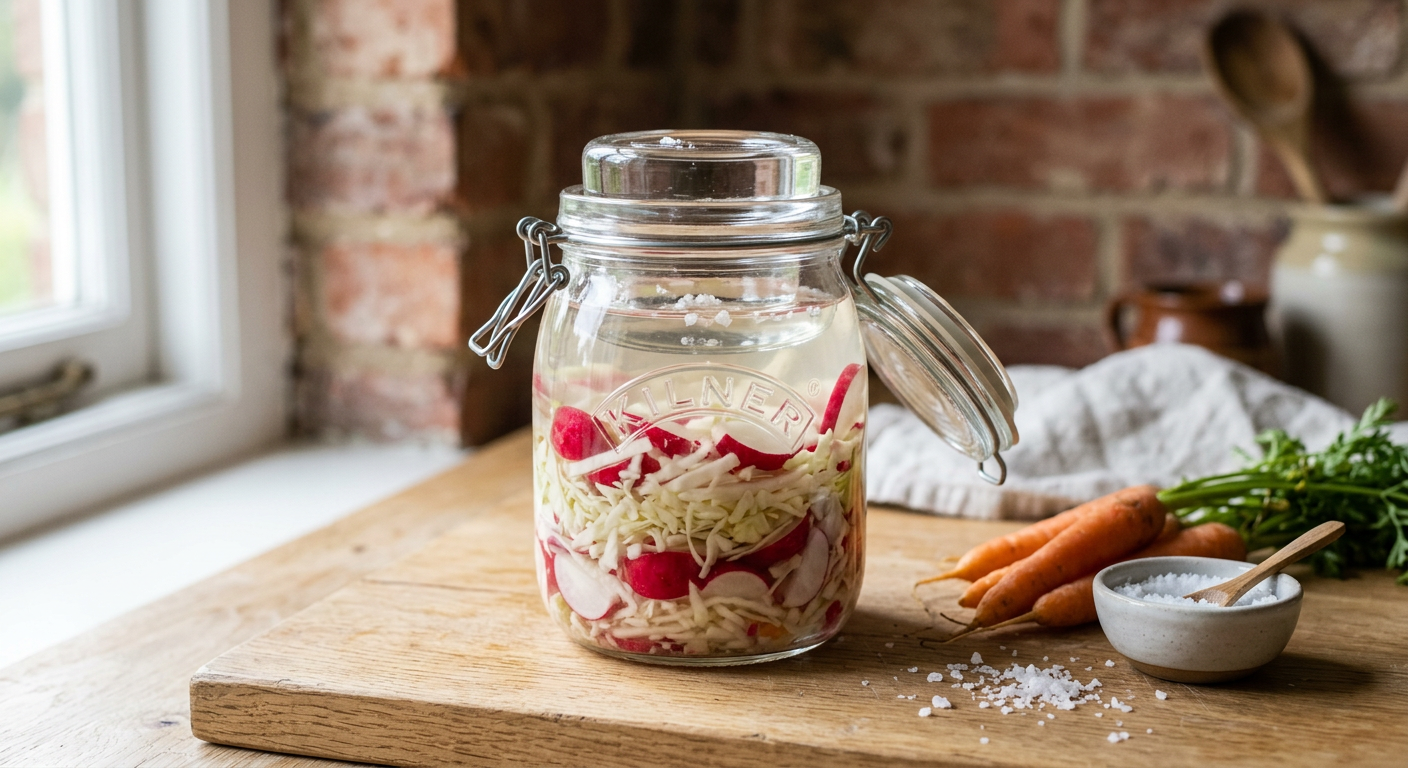
Don't buy the £60 starter kit. You need three things: a proper jar, a weight that actually works, and a thermometer. Here is the honest kit list — and the 'essential' gear you can skip.
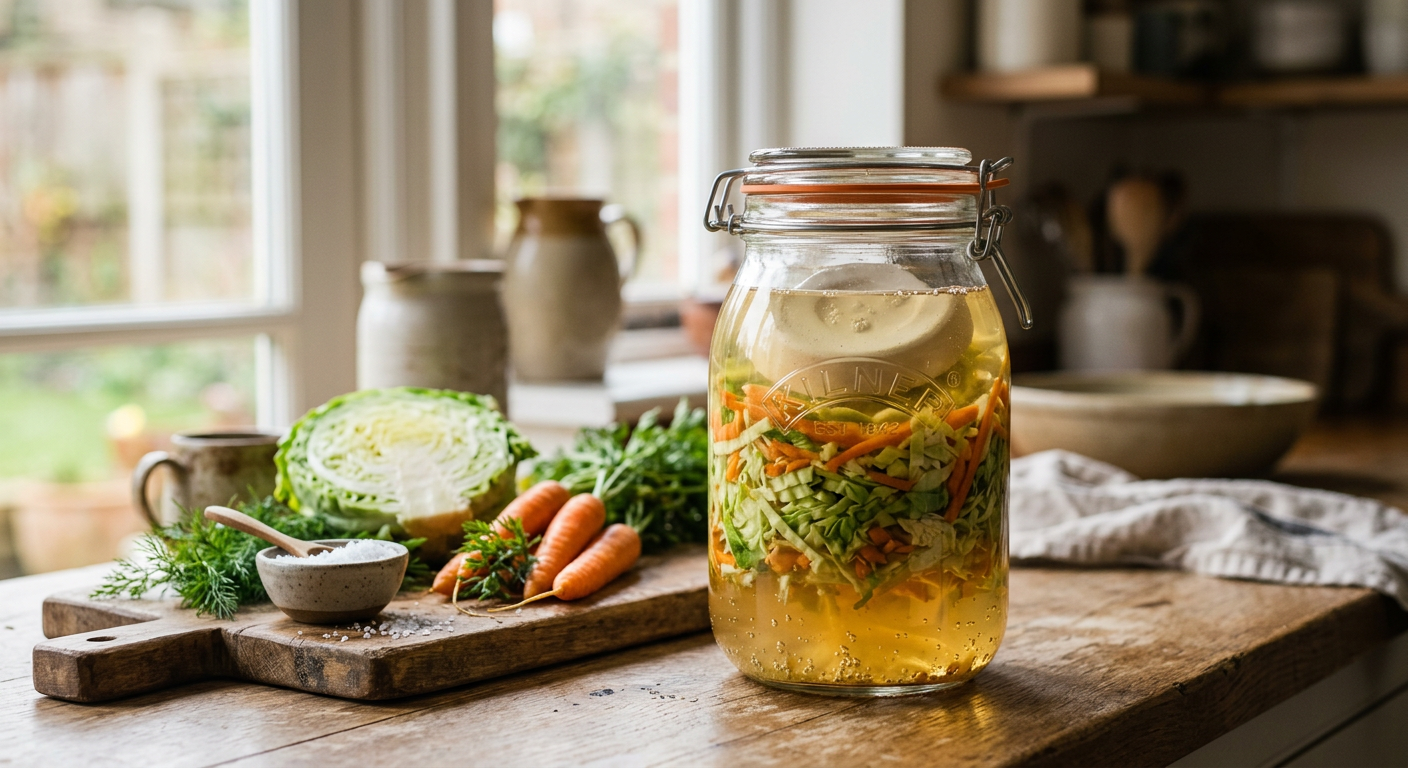
Fermented food does not need to be refrigerated forever. It will not give you botulism if you do it right. And no, that fizzy feeling is not always a bad sign. Here are the myths that still confuse UK beginners — debunked properly.
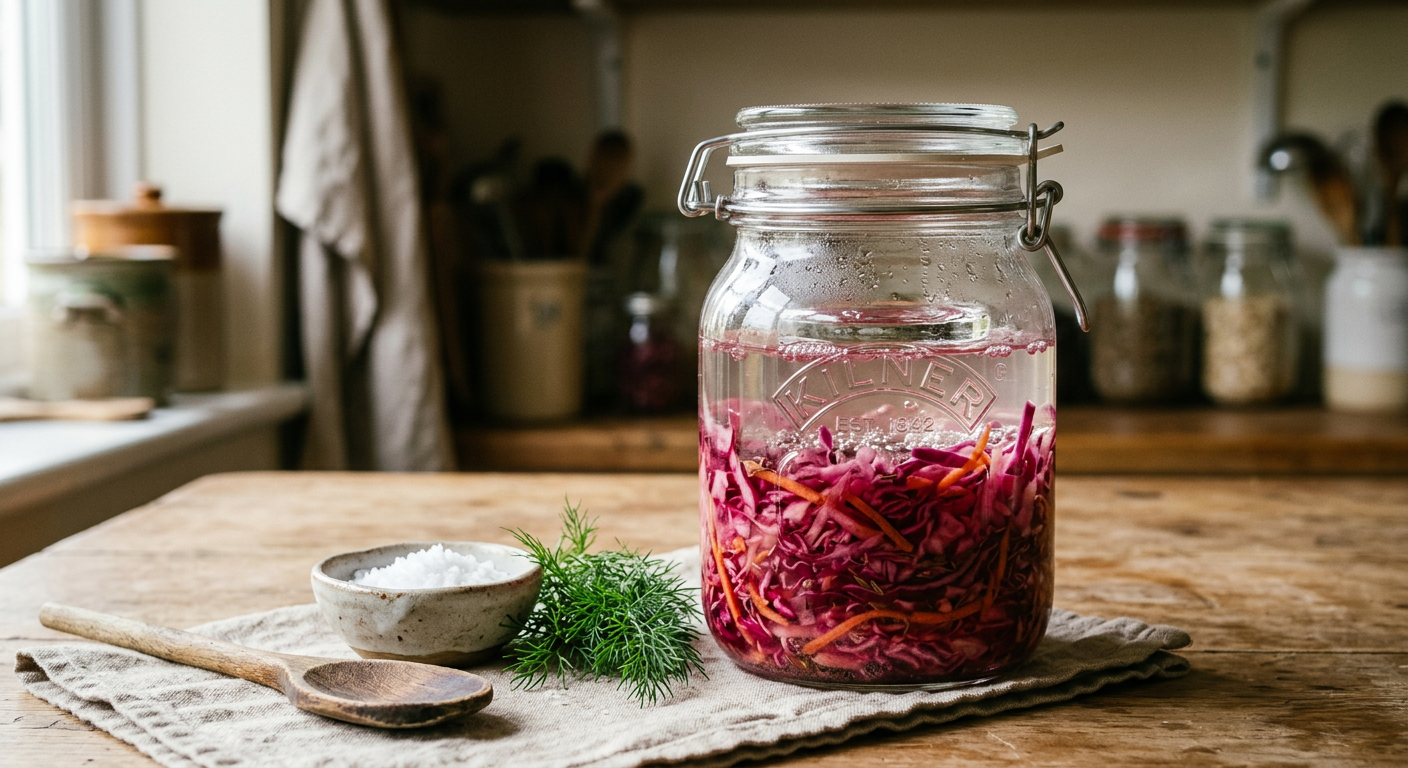
Botulism is the word that terrifies every beginner. The good news: lacto-fermentation makes it almost impossible. Here is the simple science of why fermented vegetables are safe — and the three real warning signs that mean you should throw a batch out.
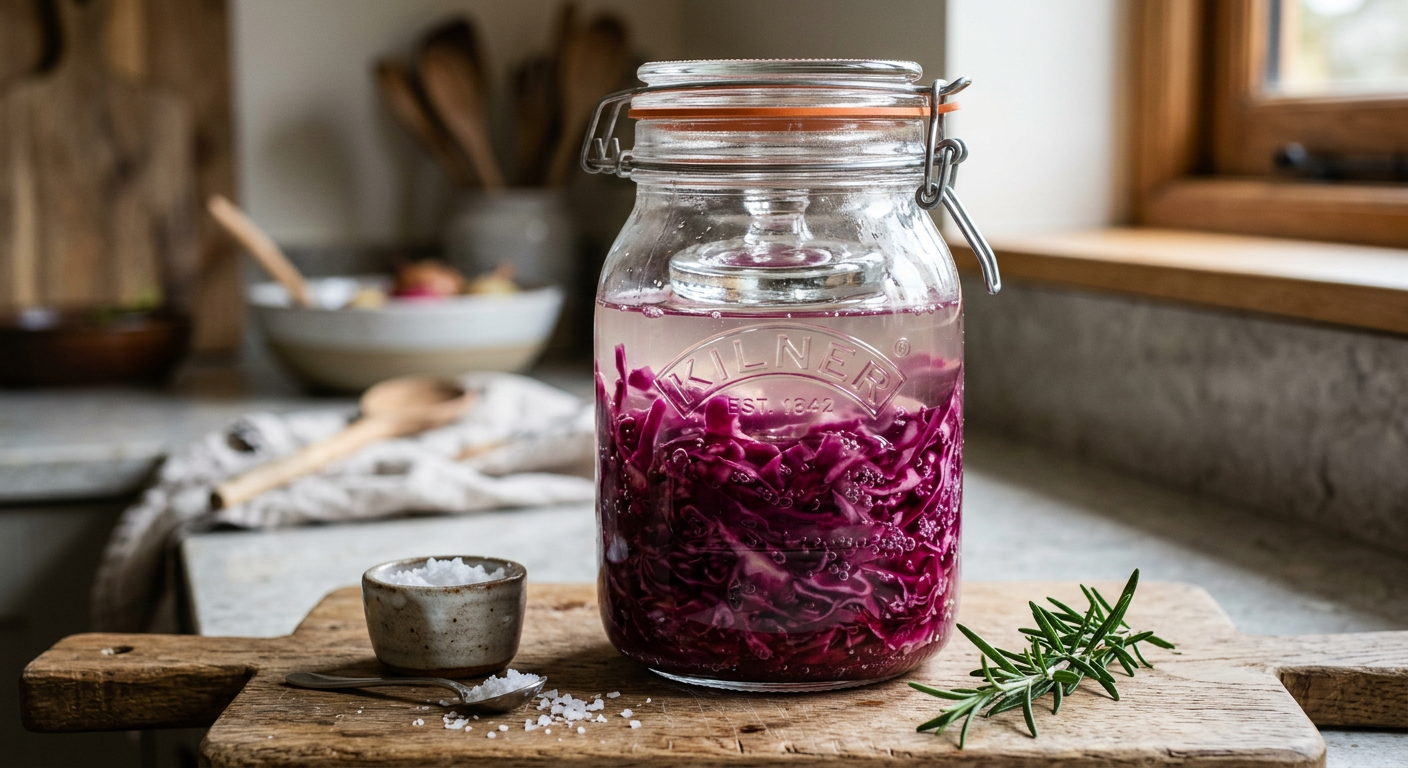
The gut health claims are everywhere — but most ignore the difference between supermarket pickles and real lacto-ferments. Here is what the science actually says, without the wellness industry spin.